TL;DR
Weekly anti-war protests in Tel Aviv grew in size and intensity, with police arresting 21 demonstrators on March 29 as global rallies drew 8 million people.
MSM Perspective
Coverage highlights the tension between the protests' growth and the Netanyahu government's efforts to suppress them under wartime emergency rules.
X Perspective
Israeli anti-war voices describe growing police repression, with signs confiscated and protesters detained at unapproved gatherings.
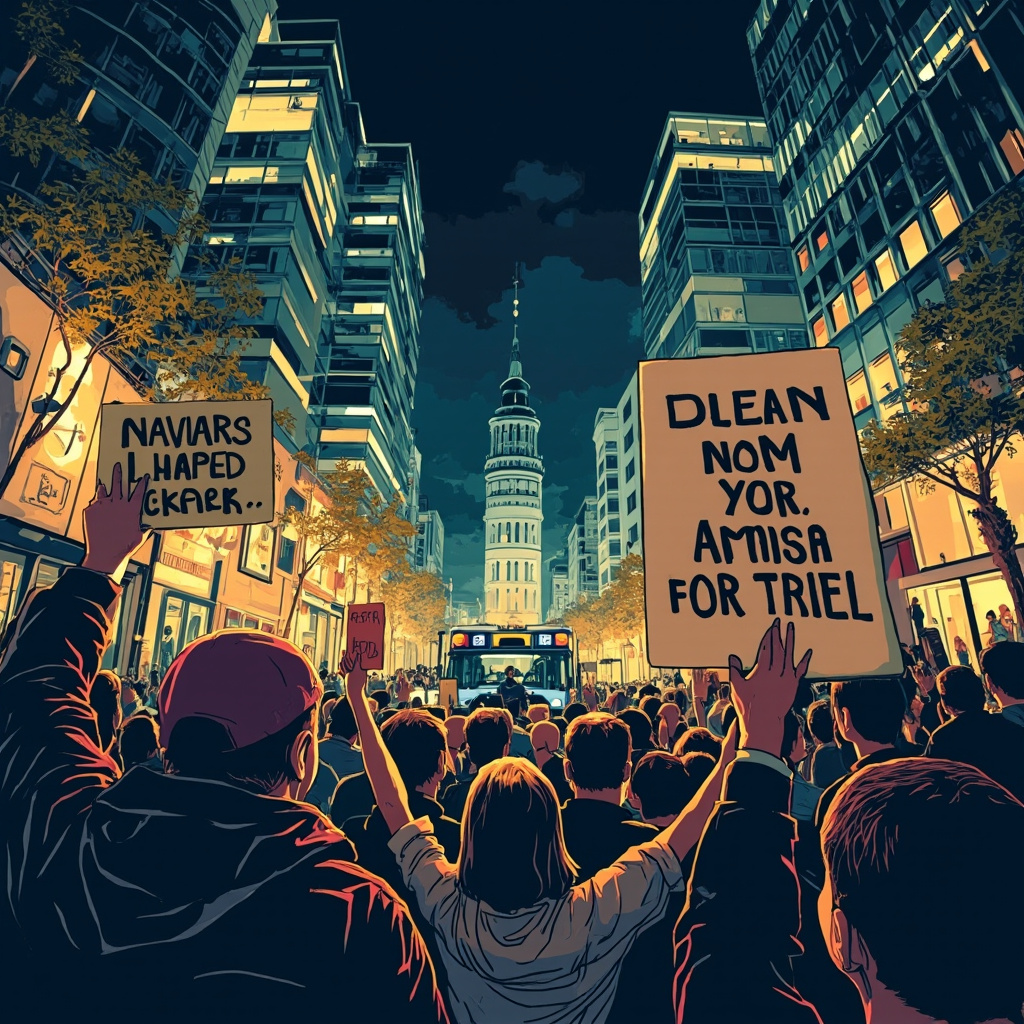
Weekly anti-war demonstrations in Tel Aviv continued to grow on Saturday, March 29, with hundreds gathering at Habima Square to demand an end to the U.S.-Israeli war against Iran [1].
Police arrested 21 demonstrators across Israel that night, 13 in Tel Aviv and eight in Haifa, forcibly dispersing the protests that authorities said were not approved under Home Front Command restrictions [2]. Haaretz reported that the demonstrations have grown in recent weeks, from roughly 200 people at Habima Square the previous week to significantly larger crowds [3].
The protests began shortly after the war launched on February 28 and have occurred weekly since. Democracy Now reported that early demonstrations in Tel Aviv drew crowds demanding that Israel end its attacks on both Iran and Lebanon [4]. An activist who participated in the March 4 protest described police confiscating signs and detaining participants [5].
The Israeli anti-war movement gained global momentum over the weekend. Xinhua reported that rallies against the U.S.-Israeli war on Iran drew an estimated 8 million people worldwide on March 29-30, spanning cities across Europe, Asia, the Middle East, and the Americas [6].
Inside Israel, the protests remain a minority position, but their persistence and growth have drawn comparisons to the judicial reform protests of 2023. The government has shown no sign of softening its stance.
The war is 32 days old. The protests are weekly. Neither shows signs of stopping.
-- Yosef Stern, Tel Aviv
Sources & X Posts
News Sources
X Posts