TL;DR
Fourteen states broke all-time March records while Colorado's snowpack hit a 41-year low and scientists called the heat virtually impossible without climate change.
MSM Perspective
AP calls it one of the most expansive heat waves in American history while World Weather Attribution found it virtually impossible without fossil fuel burning.
X Perspective
Climate scientists on X described the 800x increase in likelihood as the clearest attribution signal they have ever published for a US heat event.
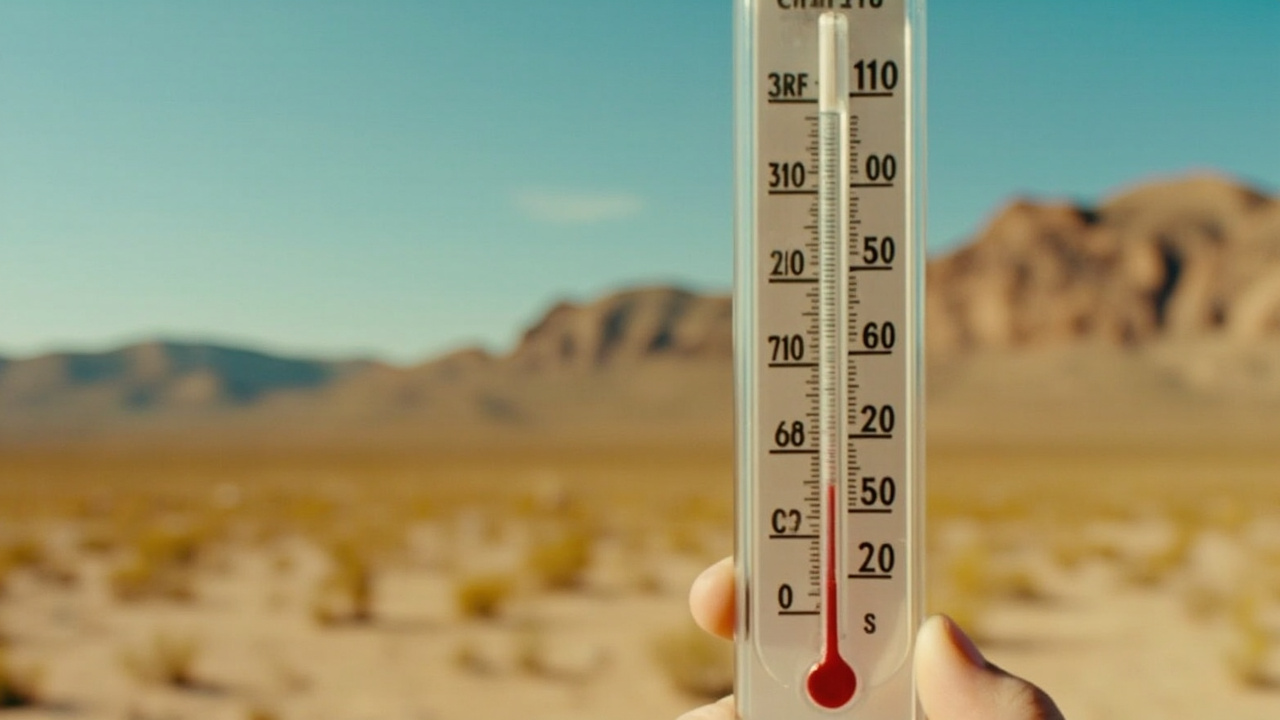
Four locations in Arizona and California hit 112 degrees Fahrenheit on Friday, smashing the previous United States record for March by four degrees [1]. The reading came within one degree of the hottest April day ever recorded anywhere in the Lower 48 — which means the country is now producing, in March, temperatures that were historically extreme for a month and a half later in the year [1].
This paper reported yesterday that 160 cities broke records as the dome pushed east into the Midwest. Since then, the numbers have gotten worse. Between Wednesday and Saturday, 479 weather stations broke their all-time March records. Another 1,472 daily records were shattered [1]. Meteorologist Gregg Gallina of the National Weather Service offered a forecast that reads more like a warning: "Basically the entire U.S. is going to be hot" [1].
Weather historian Chris Burt said the physical area covered by this dome likely dwarfs both the 2012 and 2021 events, making it one of the most expansive heat waves in American history [1]. Fourteen states broke all-time March records: California, Arizona, Nevada, Kansas, New Mexico, Nebraska, Utah, South Dakota, Missouri, Iowa, Colorado, Wyoming, Minnesota, and Idaho. Flagstaff, Arizona — a mountain city at 7,000 feet — recorded eleven to twelve consecutive days above its previous March high. The jet stream has retreated as far west as Hawaii. The dome is not expected to weaken until late next week, well into April [1].
Everyone is talking about the temperature. Almost no one is talking about the water.
What Is Actually Disappearing
The World Weather Attribution group — the consortium that conducts rapid climate analysis of extreme events — published its findings on Tuesday. The heat was "virtually impossible" without human-caused climate change. Burning coal, oil, and natural gas made this event 800 times more likely. The warming added at least 4.7 degrees Fahrenheit to peak temperatures. In the current climate, warmed by 1.3 degrees Celsius above preindustrial levels, an event of this magnitude has a return period of roughly 500 years. Before fossil fuel burning shifted the baseline, it could not have happened at all [2].
But the attribution study contained a finding that received almost no attention in the coverage focused on headline temperatures. March, the researchers found, is the month showing the strongest warming signal of any month in the region. Some locations in western North America have experienced a six-degree Celsius increase in the intensity of five-day heat extremes — not over geological time, but within the span of human-caused warming. March is warming faster than July. And March is when the mountains are supposed to be accumulating the snow that becomes the water supply for the rest of the year [2].
Colorado's snowpack stands at 40 percent of the median — the lowest level since 1981, a 41-year low [2]. That number is doing more structural damage to the American West than any temperature reading, and it barely made the news. Snowpack is not photogenic. It does not produce the kind of images that lead a broadcast. What it produces, months later, is empty reservoirs, mandatory water restrictions, and fires that burn through forests too dry to resist.
The Sierra Nevada received roughly average snowfall this winter. Under normal conditions, that snow would melt gradually through spring and summer, feeding rivers and reservoirs that supply water to 25 million Californians. Under current conditions — March temperatures reaching 112 degrees at lower elevations and running 20 to 30 degrees above normal across the mountain West — the snow is not melting gradually. It is disappearing. The attribution study warned explicitly that early snowmelt will intensify drought, reduce water supply, and elevate wildfire danger heading into summer [2].
The Saving Grace That Isn't One
Meteorologists have offered one piece of comfort: the heat is dry. Unlike a summer event of this magnitude, the low humidity means the heat index roughly equals the actual air temperature [1]. This is true. It is also beside the point. The danger is not that people are dying in the streets today. The danger is what dry heat does to the hydrological cycle — the system of snow, snowmelt, rivers, reservoirs, and groundwater that makes civilization possible in the arid West. Dry heat evaporates snowpack faster. It bakes soil so that when rain arrives, it runs off instead of soaking in. It turns forests into kindling. The absence of humidity is not a reprieve. It is a different mechanism of the same damage.
The Calendar Problem
The dome is not going away until late next week. By then it will be April [1]. Every day it persists is a day of accelerated snowmelt, a day of evaporation from reservoirs already below capacity, a day of soil moisture loss that cannot be recovered until the next winter's snow — if the next winter's snow arrives, and if March does not, once again, melt it before it can do its work.
The American West was built on an assumption: snow falls in winter, melts in spring, flows through summer, and arrives in taps by fall. That assumption is now in open conflict with the atmosphere. The 112-degree readings are the story that makes the news. The snowpack at 40 percent of median is the story that will determine whether cities ration water, whether farms go fallow, whether forests burn.
The heat dome will not stop until it is ready. The snowpack is not waiting.
-- MAYA CALLOWAY, Phoenix
Sources & X Posts
News Sources