TL;DR
NYT Magazine's landmark piece reveals we need fossil fuels to build the renewables that will replace them — and the Iran war is forcing that uncomfortable truth into the open.
MSM Perspective
NYT Magazine frames the piece as a sober reckoning with energy complexity, though critics note it arrives at a moment when fossil fuel companies need exactly this framing.
X Perspective
X splits: climate advocates call it a fossil fuel talking point dressed as nuance; energy engineers call it the most honest thing a major outlet has published about the transition.
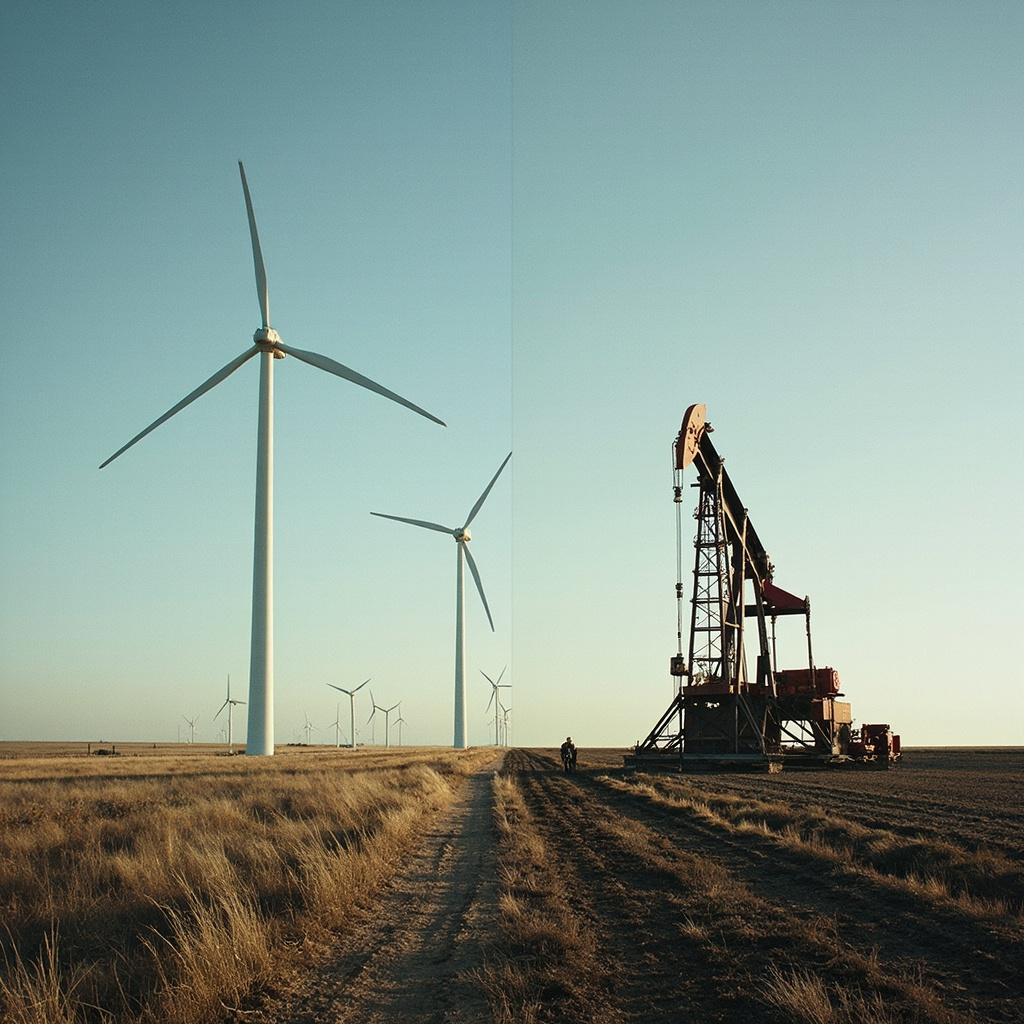
The New York Times Magazine published a piece this week that will be read in policy schools for a decade. The title is direct: "The Iran War Is Revealing the Messy Middle of Our Renewable Energy Transition." The argument is more uncomfortable than the title suggests. [1]
The piece introduces the concept of "midtransition" — the period, now clearly underway, in which the global economy has committed to leaving fossil fuels but cannot yet function without them. Every solar panel requires steel, which is smelted with coking coal. Every wind turbine requires concrete, which is fired with natural gas. Every electric vehicle battery requires lithium, cobalt, and nickel that are shipped across oceans on vessels burning bunker fuel. The transition to renewables is being built from fossil fuels, using fossil fuel supply chains, financed by fossil fuel revenues.
The Iran war has not created this condition. It has illuminated it with the clarity of a $102 oil price and a closed Strait of Hormuz.
The specific mechanism is what makes the piece valuable. The war has disrupted the natural gas supply chains that European countries were using to fuel the industrial processes that manufacture solar panels and wind components. Germany's solar panel installation rate dropped 23% in March — not because demand fell, but because the manufacturing capacity that produces the panels requires energy that the war has made expensive and unreliable. The renewable energy transition is being slowed, in a measurable and documented way, by an oil shock that the transition was supposed to make impossible. [2]
This is what midtransition looks like. It looks like contradictions that cannot be resolved by choosing one side of a binary. You cannot simply say "renewables" and wish away the fossil fuel infrastructure that builds them. You cannot simply say "fossil fuels" and ignore the economic and security arguments that make the transition necessary. You are in the middle, and the middle is, as the piece's title acknowledges, messy.
The political response to the piece has been predictable and instructive. Climate advocates have called it a fossil fuel industry talking point dressed up in journalistic nuance — noting that Chevron's CEO gave a widely quoted interview the same week making essentially the same argument. Energy engineers have called it the most honest public accounting of the transition's actual complexity they have seen in a mainstream publication. Both reactions are partially correct, which is what makes the piece worth reading and the debate worth having. [3]
The war's most durable contribution to energy policy may be this: it has made visible a transition that was happening too slowly and too quietly for its contradictions to become politically salient. Oil at $102 is not a nudge. It is a demand that the question be answered: what do we do right now, with the infrastructure we actually have, in the world as it actually is?
The answer, as the NYT Magazine piece documents, is: both, for longer than anyone wants to admit.
-- DARA OSEI, London
Sources & X Posts
News Sources