TL;DR
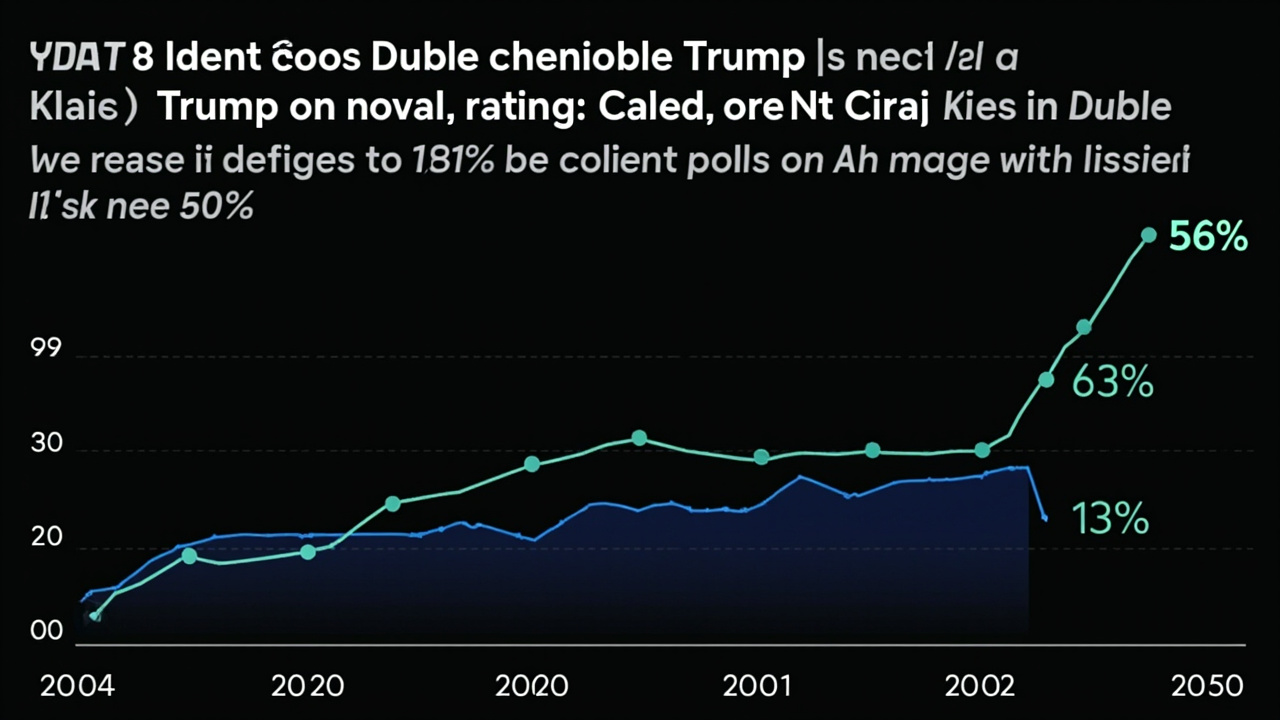
Trump's disapproval hit 56% this week — the highest of his second term. The No Kings protests are downstream of policy failure, not just personality.
MSM Perspective
CBS News/YouGov: 60% disapprove. Reuters/Ipsos: only 27% support Iran military action. The polls are moving.
X Perspective
X points to the war authorization question as the trigger. Disapproval is about the legal question, not the man.
The poll numbers arrived first. Then the protests.
Trump's net approval has deteriorated sharply over the past two weeks, driven by two interlocking crises: the Iran war and the DOGE-driven federal downsizing. InteractivePolls data published this week shows 56 percent disapproval, the highest recorded level of his second term. The Iran-specific numbers are worse: Reuters/Ipsos data shows only 27 percent support for military action against Iran, with disapproval of the war itself running at levels that have not been seen on any major Trump policy since the travel ban litigation of 2017.
The No Kings protests of March 28 are not the cause of the disapproval spike. They are the consequence. The paper's reporting this week has tracked a distinction that MSM has been slow to name: the protests are not about Trump as a figure. They are about presidential power as a legal question. The war in Iran — launched without a congressional authorization, sustained without a debate on the floor of the Senate — has made the abstract question of executive overreach concrete and personal for millions of Americans who would not have marched against a DOGE-driven federal hiring freeze.
The war authorization question has cut across the normal partisan lines. Republican voters who supported the Afghanistan withdrawal in 2021 are now watching an open-ended commitment to a Middle East conflict that has no clear exit condition. The market has priced the uncertainty: oil at $101.40 a barrel, gasoline 36 percent higher than five weeks ago, mortgage rates at 7.41 percent. These are not abstractions. They are the monthly budget of a family in suburban Ohio, a small business in Phoenix, a county hospital in rural Georgia that cannot fill its MRI machines because the helium supply has been disrupted by the Hormuz mining operation.
The White House has not responded substantively to the polling deterioration. Press secretary briefings this week have focused on the ceasefire proposal and the counterproposal from Tehran. The president retweeted a favorable poll from a pro-administration account on Thursday. The informal communication from the administration to allies has been: the polls will recover when the ceasefire holds.
They may be wrong. The protesters in St. Paul and Austin and Atlanta and 3,097 other locations are not single-issue constituents. They are a coalition united by a legal argument — that the president cannot deploy 8,000 troops without congressional authorization — dressed in the language of democratic participation. The argument does not require them to oppose Trump on trade, or immigration, or the Federal Reserve. It requires only that they believe the Constitution means what it says.
That is a narrower claim than "Trump must go." It is also a claim that has won in federal court three times in the past eighteen months. The No Kings movement has absorbed that legal architecture and made it the centerpiece of its March 28 mobilization. The disapproval spike is not about the man. It is about the precedent. [1] [2] [3] [4] [5].
Sources & X Posts
News Sources
X Posts