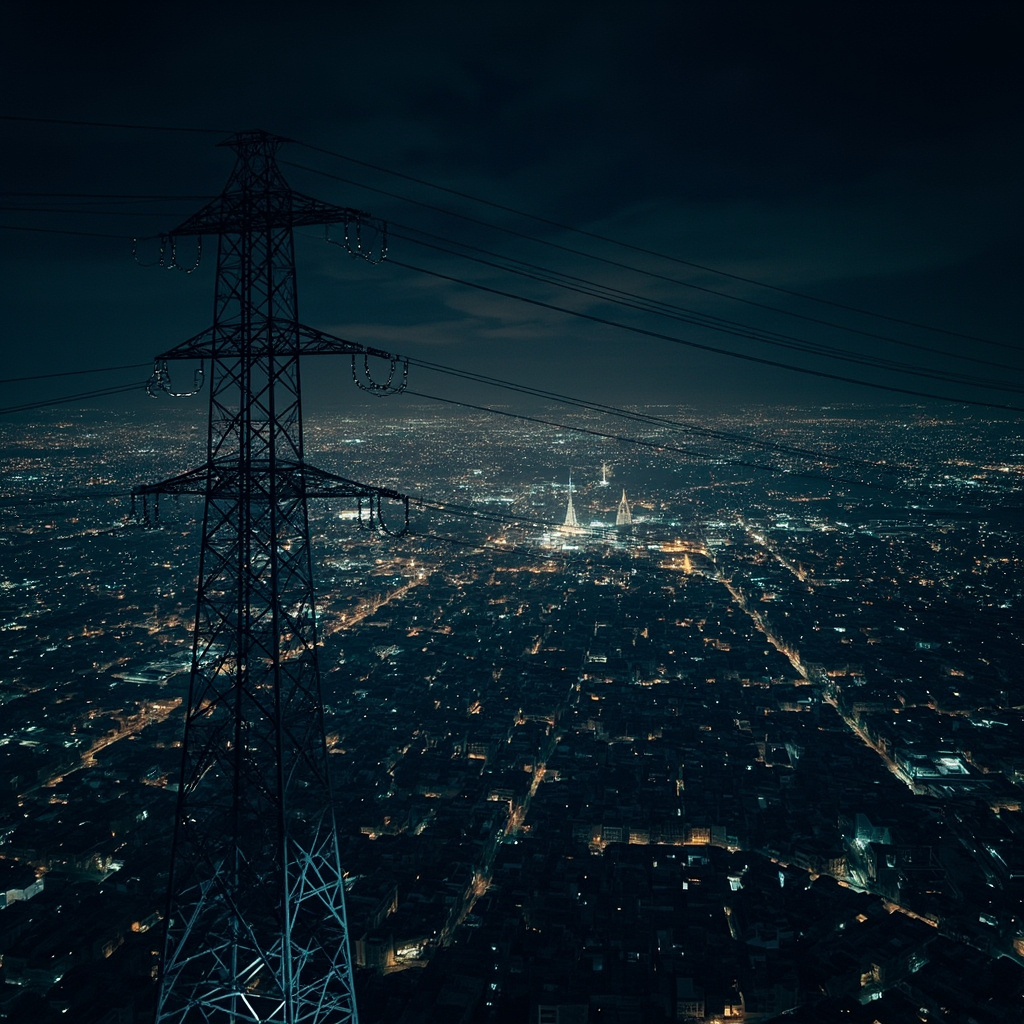
The quote arrived in a Reuters report at 11:43 PM UTC on Monday: "Great progress has been made but, if for any reason a deal is not shortly reached, which it probably will be, and if the Hormuz Strait is not immediately 'Open for Business,' we will conclude our lovely 'stay' in Iran by blowing up and completely obliterating all of their Electric Generating Plants, Oil Wells and Kharg Island," Donald Trump wrote on social media. [1] The threat came four days before the April 6 ceasefire deadline and one day after the Islamabad talks produced nothing.
MSM's coverage framed it as escalation with a purpose. Reuters's own reporting characterized it as "a new warning" to Tehran, noting that Iran had called U.S. peace proposals "unrealistic, illogical and excessive" just hours earlier. The New York Times and Washington Post echoed the diplomatic framing — a last warning before expanded strikes, leverage designed to force compliance.
X heard something different. Within hours of the FT story publishing, the quote had been layered into a different kind of virality. Legal analysts, humanitarian organizations, and independent journalists began circulating the actual text of the Geneva Conventions — specifically the provisions against attacking civilian objects, collective punishment, and indiscriminate attacks on infrastructure that serves no military purpose. "A power grid is not a weapons system," read one post from a former UN investigator that received 1.8 million views. "It is the hospital. It is the water pump. It is the refrigerator that keeps insulin cold. Destroying it is not leverage. It is a war crime."
The paper has covered this ground before. The March 25 edition noted that Iran's threatened desalination plant strikes would constitute a humanitarian catastrophe. The March 29 edition covered Iran's "non-proportional" retaliation doctrine as a departure from established norms. What is new in Tuesday's threat is not its content — Trump has made aggressive statements throughout — but its specificity and its target. The energy grid is not a military installation. It is the civilian infrastructure on which an entire population depends.
The International Committee of the Red Cross defines attacks on civilian infrastructure as prohibited under the principle of distinction — the requirement that combatants separate military from civilian objects. Iran's energy grid, while partially enabling military operations, is not itself a military target. The question legal scholars were asking on X was not whether the threat was aggressive but whether it was lawful. The consensus was not in doubt.
The Istanbul angle — Turkey's position as a NATO member, an American ally, and a country with its own energy vulnerabilities — adds texture to this story. Turkey imports approximately 90% of its natural gas and a significant portion of its electricity generation capacity from Iran via pipeline. A disruption to Iranian energy infrastructure would not be contained at the border. Turkey's own grid would feel it. Ankara has been notably quiet on the latest developments, a silence that speaks louder than the diplomatic communiqués.
MSM has not connected these dots. The coverage treats the energy grid threat as a lever — something Trump uses to force compliance. The frame on X is different: a population held hostage to its government's choices, with the hostage-taker threatening to destroy the building. It is not diplomacy. It is something older and uglier.
Tariq Hassan reported this dispatch from Istanbul.