TL;DR
A NATO member is ferrying messages between Washington and Tehran — diplomacy conducted by a country that technically might have to fight one of them.
MSM Perspective
MSM is framing Turkey's role as constructive diplomacy — Reuters leads with Ankara 'playing a role passing messages' while outlets like Axios confirm the mediation is 'ongoing and making progress.'
X Perspective
X notes the bitter irony of a NATO member facilitating backchannel talks while publicly insisting it won't join the war — Turkey calling for ceasefire while the alliance builds a coalition.
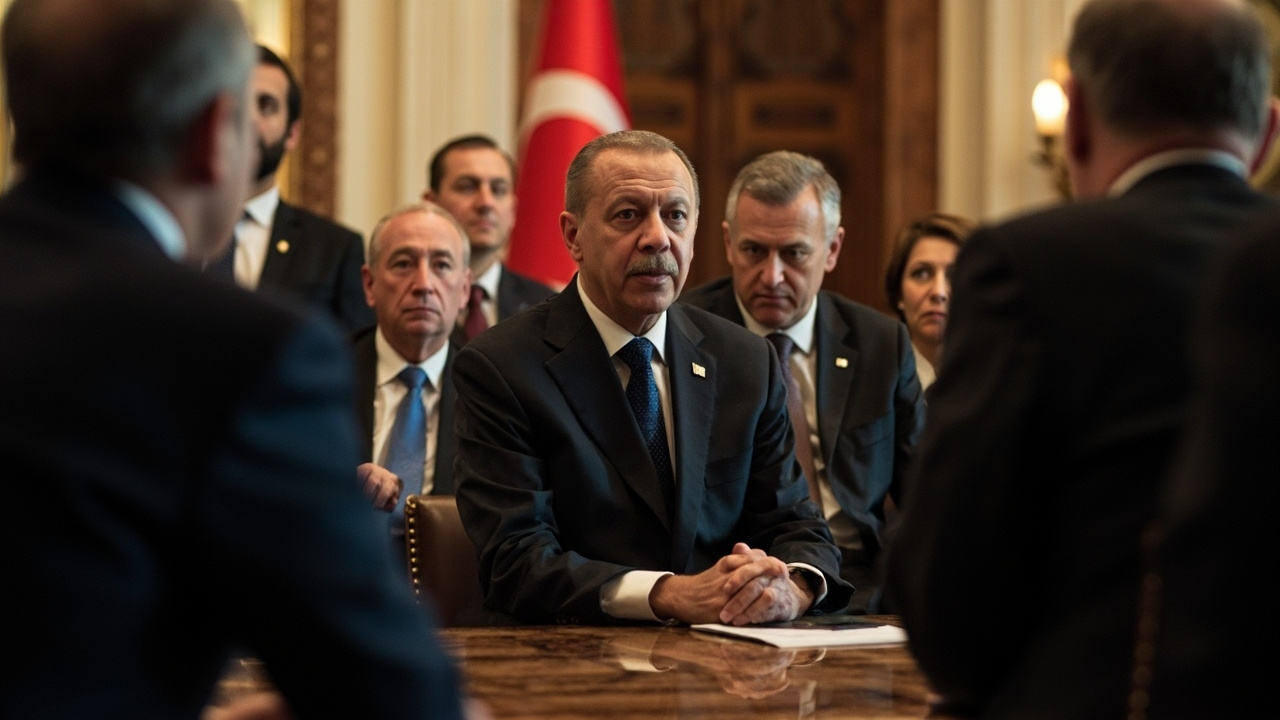
Turkey is playing a role that only a country with the right geography, the right history, and the right contradictions can play: carrying messages between enemies. [1]
Ankara confirmed Wednesday what Washington had been suggesting for days — that backchannel communications are happening through Turkish intermediaries. A senior official in President Recep Tayyip Erdogan's ruling party told Reuters that Turkey "is playing a role passing messages" between the United States and Iran. The admission placed Turkey at the centre of the war's quietest front: the one where nobody admits to talking to anybody. [2]
Turkey, a NATO member, has sought to mediate between Washington and Tehran since before the conflict escalated nearly a month ago. It has repeatedly called for an immediate ceasefire and has maintained communication channels with both sides — a diplomatic posture that puts it at growing distance from an alliance that is deepening its involvement in the Gulf.
The gap between Turkey's position and the alliance's direction is widening. The United States has ordered the 82nd Airborne to the Gulf, deployed 5,000 Marines to arrive Friday, and refused to rule out a ground campaign. NATO Secretary General Mark Rutte has backed every American escalation. Europe, meanwhile, is watching its energy supply chain get tangled in the same strait that Turkey is trying to keep open through diplomacy.
Turkey's effort is not formal mediation. Three countries — Turkey, Egypt, and Pakistan — have been relaying messages between White House envoy Steve Witkoff and Iranian Foreign Minister Abbas Araghchi. The distinction is deliberate: message exchanges are not negotiations. Nobody sits in the same room. Nobody acknowledges the conversation officially. It is diplomacy conducted in the subjunctive mood.
"Turkey has been passing messages for a long time," said Harun Armagan, vice-chair of foreign affairs for Erdogan's party. "The mediation is ongoing." Whether it is making progress is a different question.
Iran's public answer is consistently no. Military officials in Tehran have dismissed the prospect of talks in terms that leave no diplomatic room: "People like us can never get along with people like you." The spokesman for Iran's joint military command taunted Trump directly: "Has the level of your inner struggle reached the stage of you negotiating with yourself?"
But the gap between Iran's public posture and its private engagement has been the defining feature of this war since the first negotiations collapsed in Geneva. Araghchi publicly rules out talks while his government receives American proposals through Pakistan. The military taunts Trump while Turkish diplomats quietly pass notes.
Turkey is comfortable in this ambiguity. It has historical ties to Tehran, a NATO membership that constrains its options, and a refugee population — 4 million displaced persons, many from Afghanistan and Syria — that makes any regional escalation a domestic emergency. Ankara cannot afford a war on its southern border. It also cannot afford to be seen as soft on Iran within the alliance.
The result is a foreign policy conducted in parallel: public statements calling for ceasefire, private channels keeping communications open, and a careful silence on what happens if the Friday deadline produces escalation rather than extension.
The message-passing is not a peace process. It is the architecture of a communication channel that both sides need but neither can acknowledge. Turkey is building what every war eventually requires: a place where enemies can exchange ideas without meeting. Whether that is enough before Friday arrives is the only question that matters.
-- Tariq Hassan, Istanbul
Sources & X Posts
News Sources