Here are the numbers, because the numbers are where the absurdity lives.
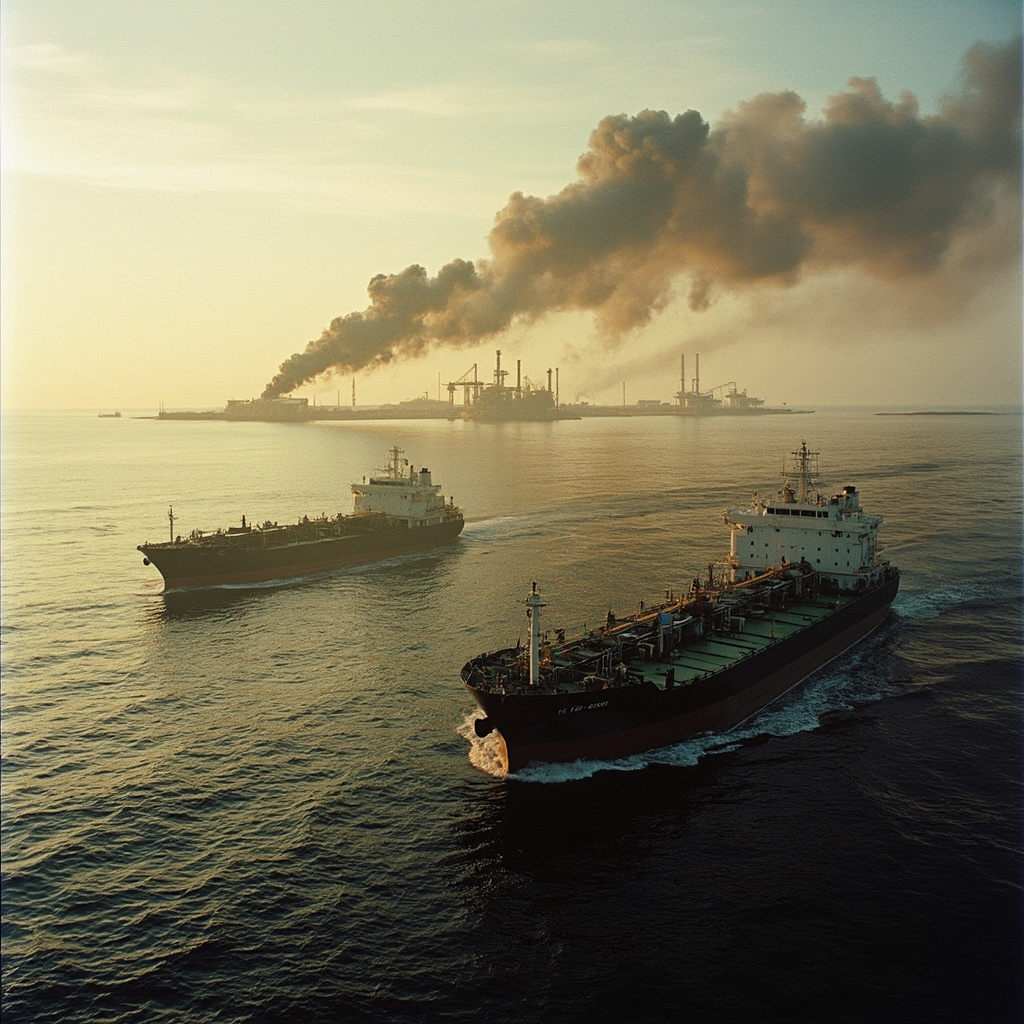
One hundred and forty million barrels of Iranian crude oil sit on tankers at sea. They were loaded before the war. They have been stranded since the war began, unable to offload because of U.S. sanctions and unable to return because the export terminals they departed from -- Kharg Island chief among them -- have been bombed by the U.S. military [1].
On Friday, Treasury Secretary Scott Bessent issued a one-month sanctions license allowing buyers to purchase that oil. The license covers crude loaded onto ships by 12:01 a.m. Eastern time on March 21 and expires April 19. It does not apply to buyers in North Korea, Cuba, or Russian-occupied Ukraine [1].
Bessent framed this as a weapon: "In essence, we will be using the Iranian barrels against Tehran to keep the price down as we continue Operation Epic Fury" [1]. The logic is that releasing Iranian supply onto global markets depresses the price Iran can charge for future production -- production that, in theory, should be impossible because the United States has been systematically destroying the infrastructure that enables it.
Follow the chain. The U.S. bombed Kharg Island, which handles approximately 90 percent of Iran's oil exports. The U.S. struck South Pars, Iran's largest natural gas field. The campaign destabilized Gulf shipping to the point where tanker operators will not transit the Strait of Hormuz without military escort. Oil prices rose approximately 50 percent in three weeks, pushing Brent above $100 per barrel [2]. American gasoline prices surged. The administration's own war created the supply shock it is now scrambling to mitigate.
The solution: release Iranian oil.
The Circular Logic
This is not sanctions relief in the traditional sense. The administration did not lift sanctions on Iran's oil industry. It issued a narrow, time-limited license covering oil that was already at sea -- oil that, in practical terms, was going nowhere because buyers feared secondary sanctions [1].
The 140 million barrels represent roughly 70 fully loaded VLCCs (Very Large Crude Carriers). Much of this oil was being "hoarded by China on the cheap," as Bessent put it [1]. China is the largest importer of Iranian crude, and Chinese refiners have been the primary buyers operating in the sanctions grey zone for years. By licensing the sale, the Treasury is formalising transactions that were already occurring through sanction-evasion networks -- and hoping the additional supply pressure pushes prices down.
But the structure is self-defeating. The administration's stated policy is "maximum pressure" on Iran. Maximum pressure means sanctions. Sanctions mean constrained supply. Constrained supply means higher prices. Higher prices mean political pain at the pump. Political pain means sanctions relief.
The loop closed in twenty days.
What the Market Sees
Oil traders are not sentimental. They see a 140-million-barrel release and they model the price impact. The immediate question is whether this volume actually reaches the market in sufficient quantities to move the needle.
The answer, so far, is probably not. Oil has remained near multi-year highs despite the announcement [2]. The Strait of Hormuz remains effectively closed to commercial traffic. Iraqi force majeure declarations have already removed additional supply from the market. And the administration simultaneously signaled that Kharg Island remains a military target -- undermining any buyer confidence that Iranian supply can be sustained beyond the one-month window [3].
The Strategic Petroleum Reserve, which Trump ordered tapped for 172 million barrels earlier this month, has not meaningfully arrested the price rise either. Nor has the decision, also made this month, to allow foreign-flagged vessels to move oil between U.S. ports [1]. Each measure is a tourniquet applied to a wound the administration itself inflicted.
The Russia Parallel
This is not the first wartime sanctions loosening. Last week, the administration greenlit the purchase of Russian oil already at sea, a one-month reprieve from sanctions that have hampered Russia's economy since the full-scale invasion of Ukraine [1].
Congressional Democrats were sharply critical. Senate Minority Leader Chuck Schumer and several other senators issued a joint statement warning that "the new channels for evasion the President is opening, coupled with dramatically higher global energy prices, are giving Putin a huge financial boost and the means to continue his bloody war in Ukraine" [1].
The Iran waiver draws from the same playbook. In both cases, the administration has concluded that the price of enforcing its own sanctions regime is higher than the price of relaxing it. The war's energy shock has forced a choice between strategic consistency and domestic economic management. The administration chose the latter, twice, in two weeks.
The $108 Question
Oil was hovering around $108 per barrel based on Friday reporting [2]. At that price, the war's economic cost is not abstract. It is visible every time an American fills a tank. Gasoline prices have surged to levels not seen since the COVID-19 pandemic. The political calculus is straightforward: November's congressional elections will be fought partly on energy prices, and every dollar increase at the pump erodes Republican margins.
Bessent's waiver is a bet that releasing stranded Iranian crude can shave enough off the price to provide political cover. But the structural problem remains. The Strait of Hormuz carries approximately 20 percent of the world's oil [1]. It is not open. Iran has blocked commercial shipping and allowed only its own exports through. No sanctions waiver changes that geography.
The administration has floated military escorts for tankers through the Strait, but on Friday, Trump said he wants other countries to lead that effort. "If asked, we will help these Countries in their Hormuz efforts, but it shouldn't be necessary once Iran's threat is eradicated," he wrote on Truth Social [3].
"Once Iran's threat is eradicated" is doing the same work as "winding down" -- suggesting proximity to an endpoint that every observable fact contradicts.
April 19
The sanctions license expires in one month. If the war is still ongoing -- and no current indicator suggests otherwise -- the administration will face the same choice again: extend the waiver and formally acknowledge that its war has broken its sanctions policy, or let it lapse and watch prices climb further.
Bessent insists that "the United States will continue to maintain maximum pressure on Iran and its ability to access the international financial system" [1]. But maximum pressure on a country whose oil you are simultaneously releasing is not maximum pressure. It is a contradiction that the market already understands, even if the administration does not yet acknowledge it.
The U.S. bombed Iran's oil. Then it released Iran's oil. The policy is not incoherent by accident. It is incoherent because the war's economic consequences were not modelled at the scale they have materialised. And now the market is doing what markets do: forcing corrections that policy will not make voluntarily.