TL;DR
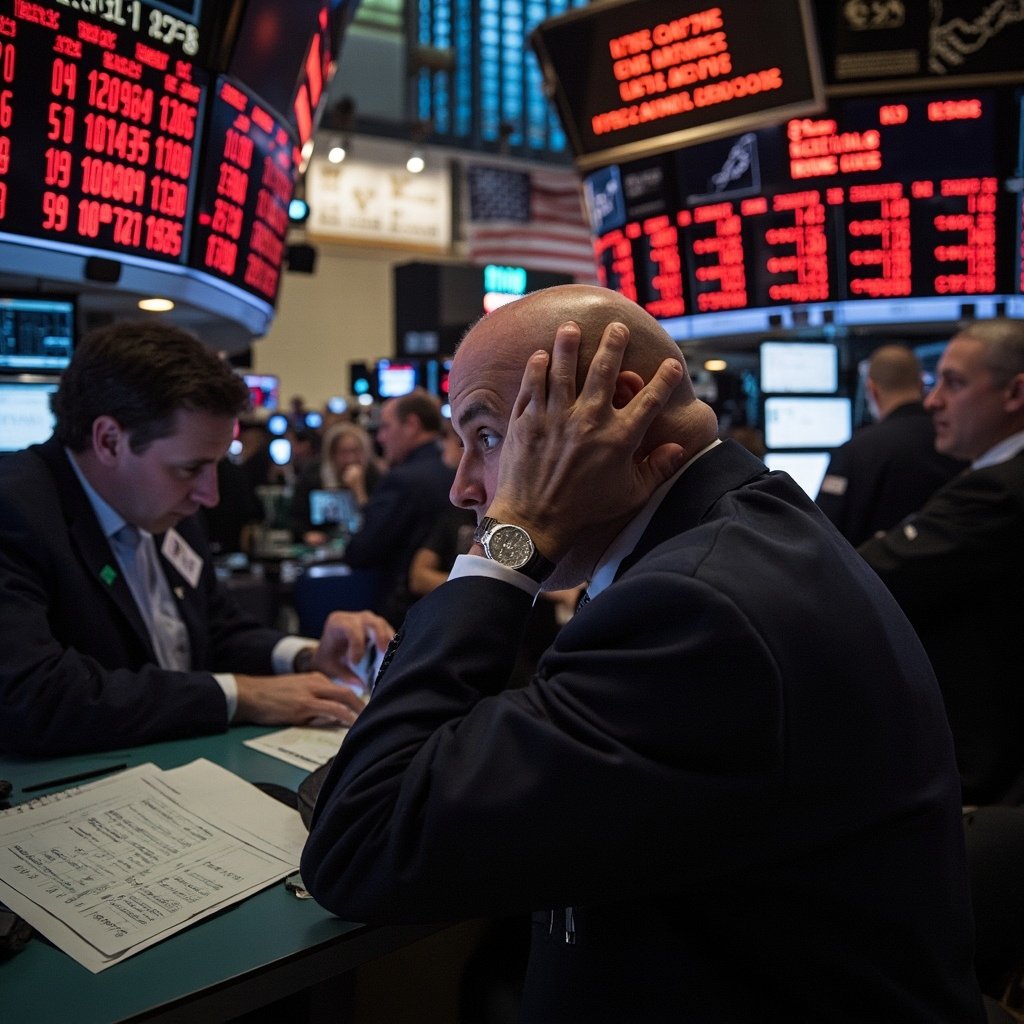
S&P 500 ended March down 6.8 percent — worst since 2022 — as oil-driven inflation reversed rate-cut expectations and five straight weekly losses compounded into a quarter no earnings call can explain.
MSM Perspective
CNBC and Reuters framed it as a war-driven market event; The Middle East Insider's 6.8 percent figure was widely cited; Bloomberg flagged the Magnificent 7 losing $300 billion in a single week.
X Perspective
X's financial community has converged on a single observation: the Fed cannot cut rates while oil is doing this, and the market had priced in three cuts this year.
March 2026 ended as the worst month for the S&P 500 since 2022. The index fell 6.8 percent over thirty days, logging five consecutive weeks of losses — a streak not seen since the second half of that year, when the Federal Reserve was tightening aggressively and the bond market was repricing a decade of zero-rate assumptions. This time, the Fed is not tightening. The oil market is doing the work instead. [1][2]
The mechanism is less dramatic than a rate cycle but more durable. Brent crude moved from $82 a barrel when the war began on February 28 to $114 on March 14 — a 39 percent increase in fourteen days — and has since settled in the $106 to $110 range. At that price level, energy costs are running through the American economy in ways that make the Fed's inflation calculus untenable. In January, markets had priced in three quarter-point rate cuts before December. That expectation has been systematically withdrawn as each CPI print confirms that oil-driven costs are not yet in the data but will be. [1][3]
The Magnificent 7 — Nvidia, Apple, Microsoft, Alphabet, Amazon, Meta, and Tesla — lost approximately $300 billion in market capitalization in the week ending March 27, according to Bloomberg. The losses were not uniformly distributed: Nvidia and Tesla took the largest hits, the former on worries about data center power costs, the latter on fuel price sensitivity in its supply chain and the general risk-off disposition that follows a prolonged period of equity underperformance. [2][3]
The earnings story for Q1 is not yet visible — reports begin in mid-April — but the analyst estimate revisions that precede earnings have been moving in one direction. Goldman Sachs revised S&P 500 earnings growth projections for 2026 from 11 percent to 6.5 percent on March 24, citing "sustained oil price pressure above $100 per barrel" as the primary driver. JP Morgan followed two days later with a revision to 7 percent. The two banks agree on the direction if not the number. [3][4]
The defense sector bucked the trend, predictably. Lockheed Martin, Raytheon parent RTX, Northrop Grumman, and General Dynamics all finished March positive, collectively gaining approximately $120 billion in market capitalization since the war began. The energy sector was also positive: ExxonMobil and Chevron together added $95 billion. The gains in these two sectors represent roughly 60 percent of the losses in consumer discretionary — the cost redistribution from spending to defense and fuel is visible in the sector-level data. [4]
The retail sector offers the clearest signal of what oil prices do to consumer behavior. Target issued a pre-announcement on March 25 warning that comparable store sales for Q1 would come in below guidance, citing "fuel-cost-driven reductions in discretionary spending." Walmart did not pre-announce but lowered its same-store sales growth estimate in an investor note. The companies that sell Americans what they do not strictly need are feeling the pressure before the inflation data fully reflects it. [3][4]
CNBC's headline for the final trading day of March read "Oil Broke Everything." It is close enough. What oil does in a war is not simply raise prices at the pump. It raises the cost of producing everything that requires energy to make or transport, which is nearly everything. It raises the cost of borrowing by pushing inflation expectations higher. It raises the political cost of any policy response that requires either more government spending or higher consumer costs. The month's losses are the market pricing those truths, serially, as they become undeniable.
The war is not over. The 6.8 percent is a progress report, not an invoice.
-- THEO KAPLAN, New York
Sources & X Posts
News Sources