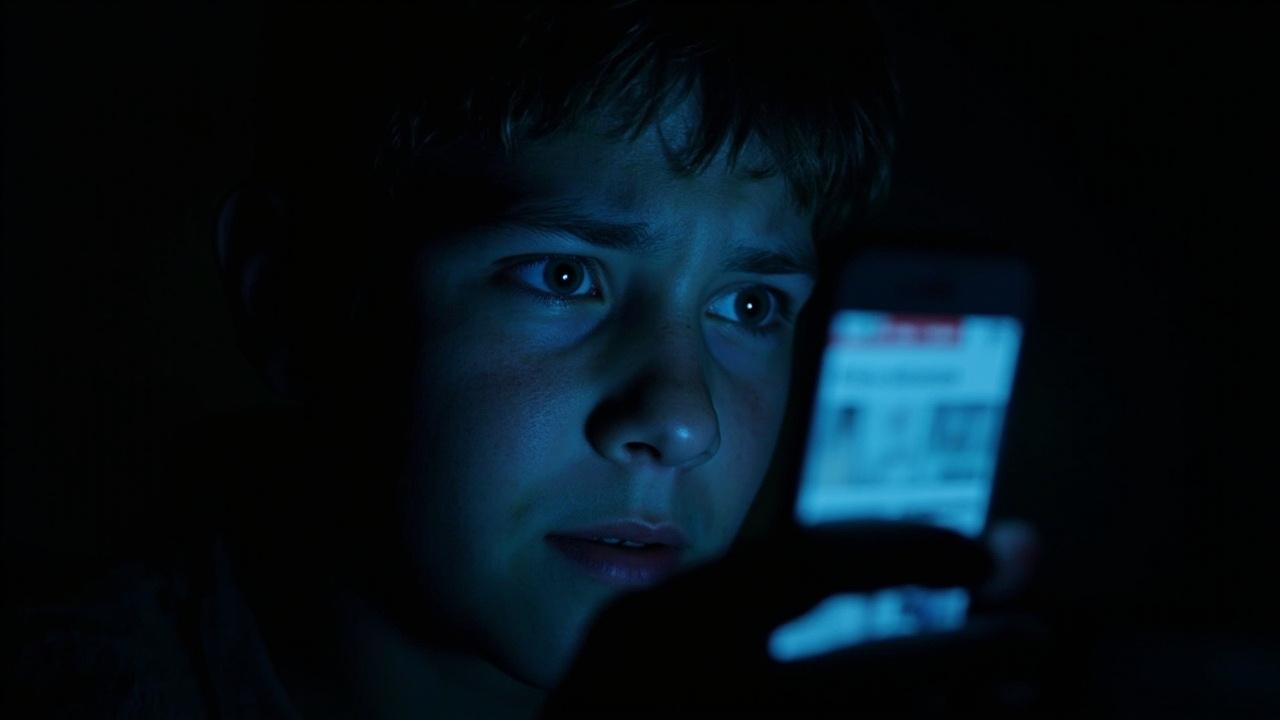
The number is fourteen minutes. That is how long a person needs to watch war news before measurable symptoms of anxiety and depression begin to appear, according to research cited by the Mental Health Association of Connecticut [1]. The finding predates the current conflict. But the current conflict -- now in its thirty-seventh day -- has turned fourteen minutes into a rounding error. The average American consumes far more than that before breakfast.
Therapists in the United States and Europe are reporting what amounts to a new clinical pattern: patients who are not in danger, not enlisted, not displaced, and not personally connected to anyone in the theater of operations, presenting with symptoms that look remarkably like those of people who are. The Guardian published a therapist's account last week describing the surge in war-related anxiety filling clinical sessions [2]. The pattern is consistent: sleep disruption, hypervigilance, intrusive thoughts about escalation, difficulty concentrating on anything unrelated to the conflict. The patients are not soldiers. They are accountants, teachers, parents, retirees. The war arrived through their phones.
The physiological mechanism is not mysterious. Exposure to distressing conflict coverage activates the body's threat-response system, releasing adrenaline and cortisol in a cascade designed to prepare a human being to fight or flee [1]. The problem is that neither option is available. The viewer cannot fight the war. The viewer cannot flee the war. The viewer can only watch the war, and the watching itself produces the chemistry of danger in a body that is sitting on a couch. Fourteen minutes is enough to trigger the response. Thirty-seven days is enough to make it chronic.
Forbes reported in early March on the disproportionate toll on women, under the headline "War Is In Your Pocket" [3]. The framing was precise. The phone is not a window to the war. It is the delivery mechanism. Social media algorithms, designed to maximize engagement, preferentially surface the most distressing content because distressing content holds attention. More than half of Americans get their news through social media [1], which means more than half of Americans are receiving their war coverage through a system engineered to show them the worst of it, as often as possible, for as long as possible.
The clinical term gaining traction is "secondary traumatic stress" -- a condition previously associated with first responders, emergency-room nurses, and journalists embedded in conflict zones. The defining feature is that the trauma is not experienced directly but absorbed through exposure to the traumatic experiences of others. What therapists are now describing is secondary traumatic stress at population scale, mediated not by professional obligation but by algorithmic delivery.
A CBS News poll from March found that most Americans do not believe the war is going well, with economic anxiety compounding the psychological toll [4]. The combination is particularly corrosive: the war produces fear, the economic consequences of the war produce insecurity, and the constant media coverage of both produces a feedback loop in which the only relief available -- putting down the phone -- feels like an abdication of civic responsibility. Euronews reported expert recommendations to maintain daily routines and social connections, with psychiatrist Kazuhiro Tajima warning that abandoning leisure and exercise during a crisis is "a mistake because they help us to disconnect from our worries" [5]. The advice is sound. The compliance rate is low.
The research on media-induced psychological distress is not new. Studies following the Ukraine conflict documented a measurable decline in global well-being associated with social media coverage of war, demonstrating how large-scale conflicts can influence mental health far beyond the conflict zone [1]. What is new is the intensity of the current exposure cycle. The Iran war is the first major American military engagement of the short-video era, the first in which TikTok and Instagram Reels deliver thirty-second clips of missile strikes to eighteen-year-olds between cooking videos and dance challenges. The contextual whiplash -- a recipe, an explosion, a beauty tutorial, a destroyed building -- produces a kind of cognitive dissonance that the brain was not designed to process.
The therapists interviewed by the Guardian describe patients who know, intellectually, that they are safe. They know they are not in Iran. They know the missile will not hit their apartment. But their cortisol levels do not know that [2]. The body responds to the image of danger with the chemistry of danger, and thirty-seven days of that chemistry has consequences: disrupted sleep architecture, elevated resting heart rate, shortened attention span, emotional flatness punctuated by spikes of dread. These are not symptoms of weakness. They are symptoms of a nervous system doing exactly what evolution designed it to do, in an information environment that evolution never anticipated.
The clinical question is whether this pattern will resolve when the conflict ends or whether prolonged exposure will produce lasting changes in the anxiety baseline of an entire population. The honest answer is that nobody knows. The research on long-term effects of chronic media-mediated stress exposure is still being written, largely because the phenomenon at this scale is still being invented.
What the therapists can say with certainty is that the demand is real and it is growing. Offices that once had two-week waitlists now have six-week waitlists. Patients who had been in maintenance mode -- stable, checking in monthly -- are calling for weekly sessions. The presenting complaint varies. The underlying current does not. The war is in their pockets. The war is on their nightstands. The war is the last thing they see before sleep and the first thing they reach for upon waking. Fourteen minutes is the threshold. Most people crossed it weeks ago.
-- NORA WHITFIELD, Chicago