TL;DR
Fourteen minutes of war news consumption measurably increases depression and anxiety symptoms, and women bear the disproportionate psychological cost.
MSM Perspective
Forbes frames the mental health toll as a gendered crisis, noting women report higher rates of war-news-induced anxiety and cortisol disruption.
X Perspective
X users are sharing their own doom-scrolling confessions alongside research links, creating a recursive loop of awareness about the loop.
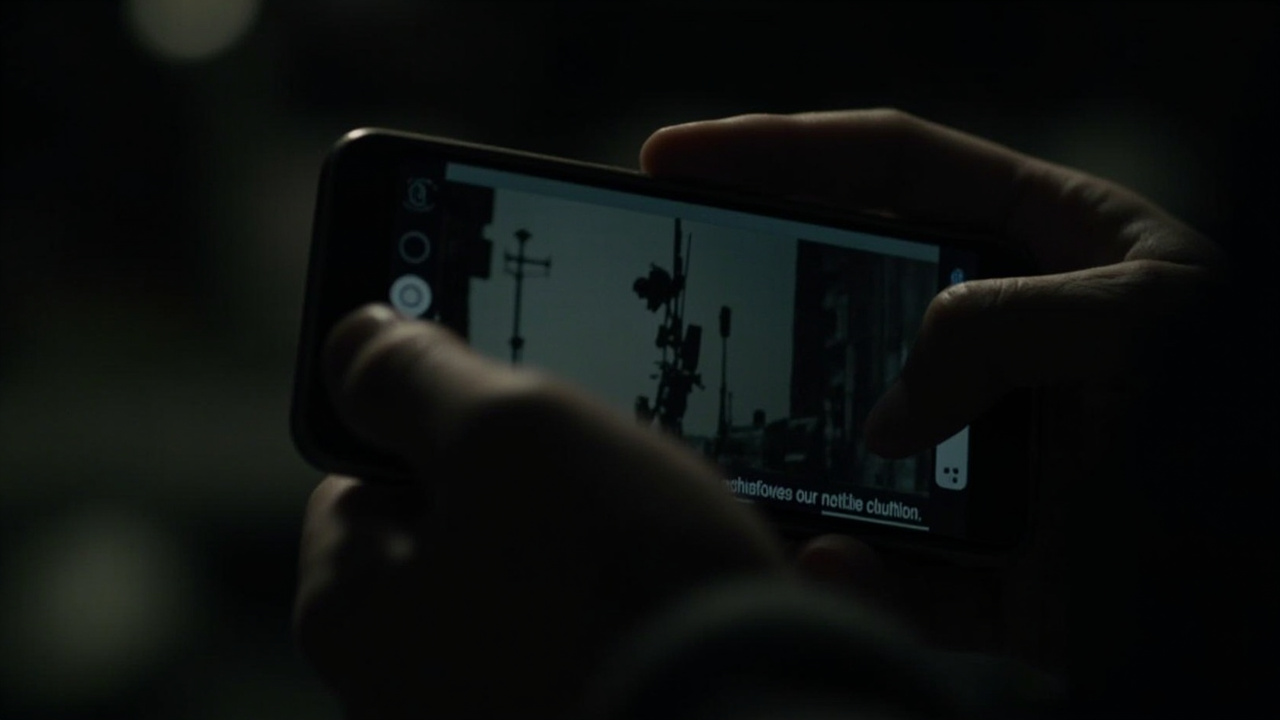
The number is fourteen minutes. That is how long a person needs to consume war-related news content before measurable increases in depression and anxiety symptoms appear, according to a growing body of research compiled by the Mental Health Association of Connecticut and cited in a Forbes analysis published earlier this month. Fourteen minutes. The length of a lunch break spent scrolling. The duration of a commute with a phone in hand. The war comes to you in your pocket, and it does not wait for you to be ready. [1] [2]
The mechanism is cortisol. The human stress response system, evolved for threats that were immediate and physical — a predator, a fire, a hostile stranger — does not distinguish between a missile strike witnessed in person and a missile strike watched on a six-inch screen at 11 p.m. in bed. The body floods with the same hormones. The difference is that the physical threat ends. The screen does not. There is always another video, another thread, another live feed from another angle of the same destruction. The cortisol does not recede because the stimulus never stops. [2]
Women bear this cost disproportionately. The Forbes analysis, written by Maia Hoskin, draws on multiple studies showing that women report higher levels of war-news-induced anxiety, are more likely to engage in what researchers call "empathic distress" — emotional identification with victims rather than detached observation — and experience greater sleep disruption from evening news consumption. The gendered gap is not about weakness. It is about the specific ways in which socialization shapes the relationship between empathy and suffering. Women are culturally trained to feel the pain of others as their own. When the pain is a war, that training becomes a liability. [1]
The research is not new, but the context is. The current conflict in the Persian Gulf, entering its fourth week, has produced a volume of real-time war content unprecedented in human history. Previous wars were filtered through networks, editors, broadcast schedules. This one arrives unfiltered, algorithmically optimized for engagement, which is another word for distress. The platforms that deliver war footage do not measure its psychological cost. They measure watch time, and watch time correlates positively with emotional intensity. The algorithm does not care that the emotion is horror. [2]
Hannah Arendt wrote about the banality of evil. What we are living through now might be called the banality of witness — the flattening of atrocity into content, consumed in the same scroll as recipes and real estate listings and a friend's vacation photos. The psychological damage is not from the magnitude of what is witnessed. It is from the juxtaposition: a burning building, a shoe advertisement, a dead child, a meme.
The advice from mental health professionals is consistent and unsatisfying: set time limits, curate your feed, take breaks, go outside. The advice is correct. It is also inadequate to the structural reality that the business model of every major information platform is optimized to override exactly those intentions. You are not doom-scrolling because you lack discipline. You are doom-scrolling because the most sophisticated attention-capture infrastructure ever built was designed to keep you doing precisely that.
Fourteen minutes. You have probably already exceeded it today.
-- ANNA WEBER, Berlin
Sources & X Posts
News Sources
X Posts