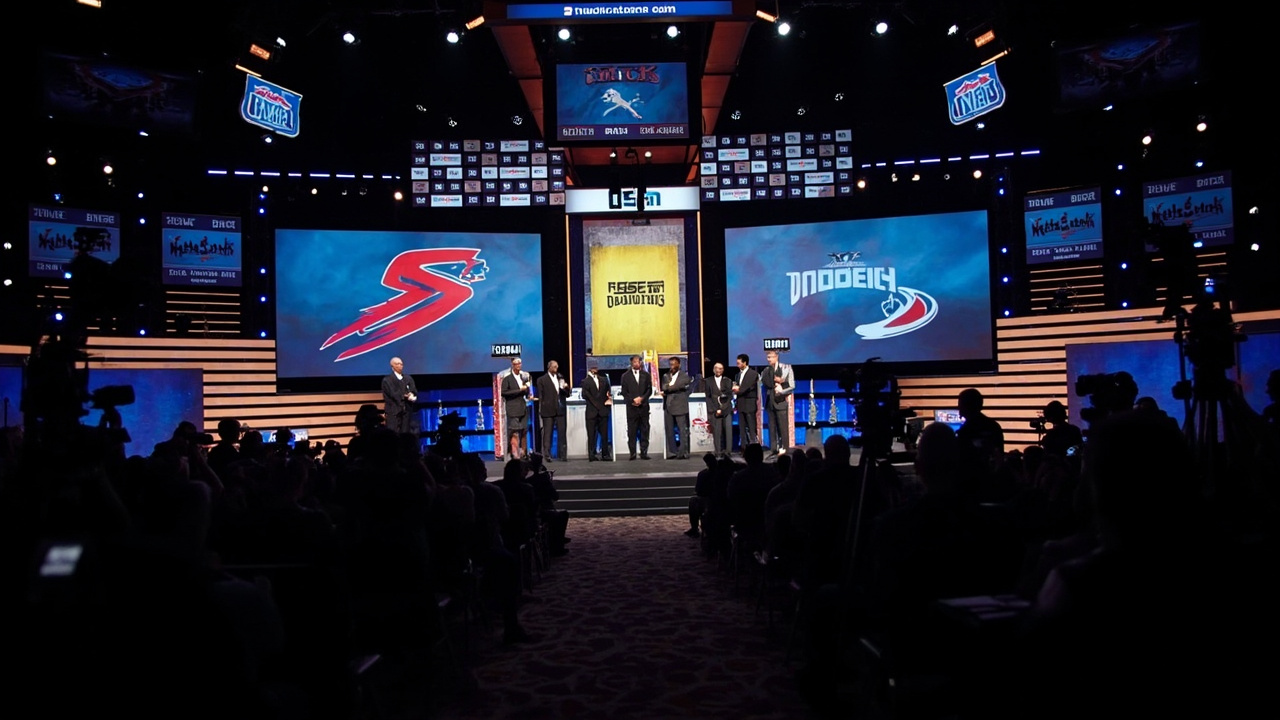
The 2026 WNBA Expansion Draft is complete. Twenty-two players were selected Friday afternoon in a two-round draft that gave the Portland Fire and Toronto Tempo their inaugural rosters. [1] The results, which landed hours before the Women's Final Four tipped off in Phoenix, produced an immediate consensus among analysts: Portland built a team. Toronto built a collection.
As the preview we published yesterday anticipated, Portland picked first and chose Bridget Carleton, the Minnesota Lynx forward who averaged 6.5 points, 3.6 rebounds, and 2.0 assists on 40.2 percent shooting and 37.3 percent from three last season. [2] Carleton is not a star. She is a connector -- the kind of versatile wing who makes an offense function without demanding the ball. Portland then added guard Carla Leite from the Golden State Valkyries, center Luisa Geiselsoeder from the Dallas Wings, forward Emily Engstler from the Washington Mystics, and guard Maya Caldwell from the Atlanta Dream. [3] The Fire's full eleven picks -- Chloe Bibby, Haley Jones, Nyadiew Puoch, Sarah Ashlee Barker, Sug Sutton, and Nika Muhl rounding out the roster -- emphasize length, defensive disruption, and what Sports Illustrated called "efficient shot profiles," players who attempt most of their shots at the rim or beyond the arc. [4]
Toronto's first pick was Julie Allemand, the LA Sparks guard who served as the team's starting point guard last season. [2] The Tempo followed with center Nyara Sabally from the New York Liberty, guard Marina Mabrey from the Connecticut Sun, and guard Aaliyah Nye from the Las Vegas Aces. The remaining picks -- Lexi Held, Maria Conde, Maria Kliundikova, Adja Kane, Nikolina Milic, Kitija Laksa, and Kristy Wallace -- filled out a roster heavy on guards and specialists. [3] Only Mabrey, SI's analysis noted, can function as a "do-everything scorer." [4] The rest are role players without the defensive identity that Portland constructed.
The grades arrived before the Final Four's first timeout. Sports Illustrated gave Portland an A and Toronto a C. [4] The consensus held across outlets: Portland's roster has a philosophy. Coach Alex Sarama's stated emphasis on adaptability and efficient offense is reflected in every pick. Toronto's roster, assembled under Coach Sandy Brondello, lacks the versatility Brondello publicly prioritized. [4]
Portland also executed the draft's sharpest trade, acquiring the Chicago Sky's seventeenth pick in exchange for the twenty-first, part of Chicago's pre-draft agreements to keep its roster intact. [4] Toronto made a similar deal. Both trades were small. Portland's was smarter.
The Fire return professional basketball to Portland after a 24-year absence. [5] The Tempo bring women's professional sports to Canada for the first time at the major-league level. Both franchises paid expansion fees reportedly exceeding $100 million. [6] The rosters they built Friday will be supplemented by the WNBA Draft on April 13, where Toronto holds the sixth pick and Portland the seventh. The expansion draft was the foundation. The regular draft is the ceiling.
-- AMARA OKONKWO, Lagos