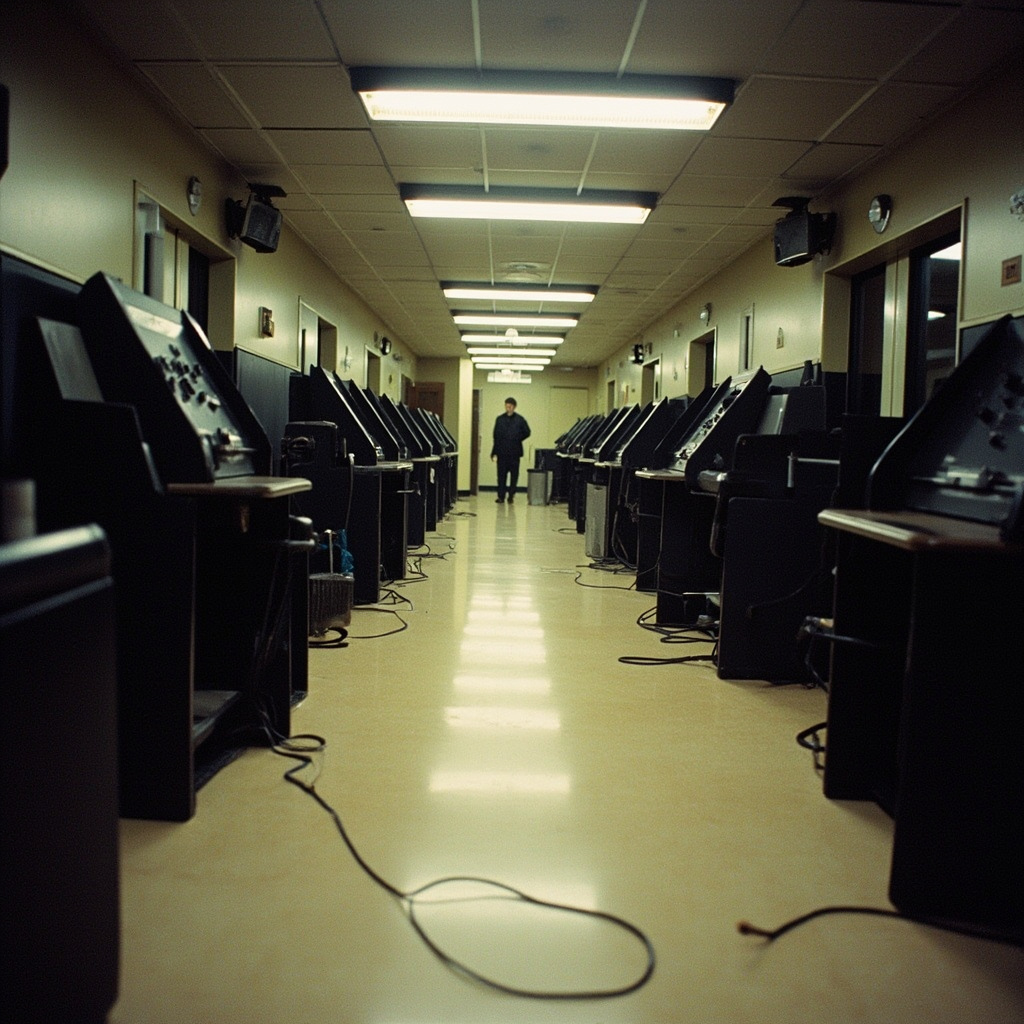
The hallway is quiet now. For decades, the Correspondents' Corridor inside the Pentagon was where the daily work of defense journalism happened — reporters waiting outside officials' offices, catching deputy secretaries on their way to meetings, overhearing the ambient intelligence that seeps through the walls of a building where wars are planned. As of April 2, the corridor has been closed for more than 30 days, and the silence is not incidental. It is the point.
On March 23, less than 72 hours after U.S. District Judge Paul Friedman ruled that the Pentagon's press access policy was unconstitutional and ordered the immediate restoration of revoked press passes, the Department of Defense announced it was closing the Correspondents' Corridor entirely [1]. Journalists would be relocated to an "annex facility" outside the Pentagon building. The Pentagon said it was complying with the court order. Press freedom advocates said it was retaliating against it.
"This is malicious compliance in its purest form," said Bruce Brown, executive director of the Reporters Committee for Freedom of the Press [2]. "The court said you can't screen out journalists you don't like. So the Pentagon's answer is to screen out all journalists."
The Architecture of Access
The Correspondents' Corridor was not a perk. It was infrastructure. Located on the Pentagon's E Ring, it gave reporters physical proximity to the officials they covered. That proximity produced accountability — not through formal briefings, which are carefully managed, but through the informal encounters that happen when reporters and officials share a building.
A defense reporter could catch the undersecretary of defense for policy walking to lunch. A bureau chief could ask a passing colonel a question about troop deployments that would never be answered in a press conference. The corridor was, in the language of journalism, a place where news leaked through the walls.
The annex has none of these properties. Located outside the Pentagon's security perimeter, it requires reporters to request access to the building for specific meetings, eliminating the serendipitous encounters that produced much of the Pentagon press corps' best work [3].
Court Order, Pentagon Response
Judge Friedman's March 20 ruling was unambiguous. He found that the Pentagon's October 2025 policy — which gave the Department of Defense unilateral authority to revoke press credentials — violated the First Amendment and journalists' due process rights. He specifically ordered the Pentagon to restore passes for seven New York Times journalists whose credentials had been pulled [4].
The Pentagon complied with the letter of the ruling. It restored the passes. It issued new credentials under a revised policy. And then it eliminated the workspace those credentials were meant to access.
The revised policy, announced March 23, maintains press credentialing but closes the corridor "effective immediately" and establishes what Pentagon spokesman Sean Parnell called a "new and improved press workspace" in the external annex [5]. Parnell described the change as a security measure necessitated by the court's invalidation of the previous screening policy. If the Pentagon cannot choose which journalists enter the building, the logic goes, it will simply keep all journalists out.
Wartime Implications
The closure carries particular weight because it is happening during active combat operations. The Iran war, now in its 33rd day, has produced a stream of questions about targeting decisions, civilian casualties, operational timelines, and diplomatic strategy — the very categories of information that benefit from the kind of informal, proximity-based reporting the corridor enabled.
Instead, the Pentagon press corps now works from a facility where access to the building requires advance coordination, where chance encounters with officials are impossible, and where the physical distance from the decision-making apparatus is both literal and symbolic [1].
A federal judge expressed skepticism about the new arrangement during a hearing on March 30, questioning whether the annex constitutes meaningful press access [6]. The legal challenge continues, but the practical damage compounds daily. Every day the corridor stays closed is a day of defense reporting conducted from the outside looking in.
"They've turned the Pentagon press corps into a mailing list," said one veteran defense reporter who spoke on condition of anonymity. "We submit questions. Sometimes we get answers. That's not journalism. That's customer service."
The microphones in the Correspondents' Corridor sit on empty desks. The officials still walk the E Ring. The reporters just can't hear them anymore.