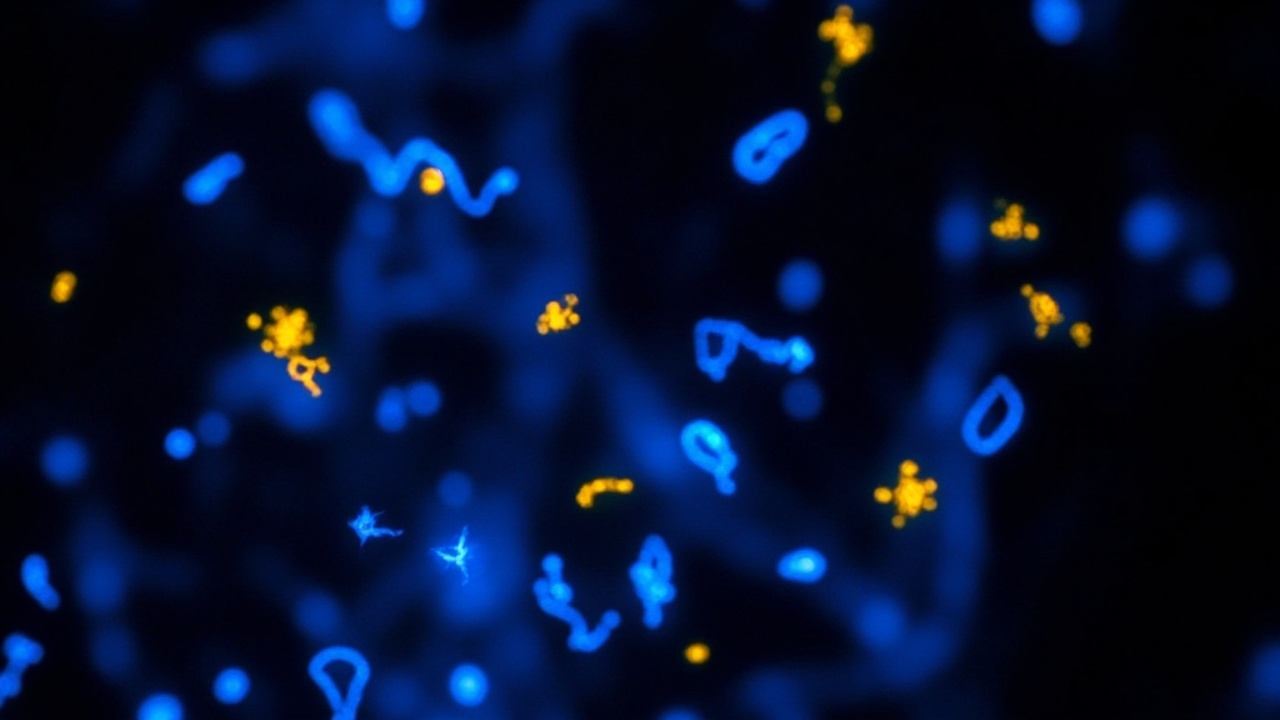
In January, researchers at the National University of Singapore published findings in Science Advances that have since circulated through biology labs with unusual speed: a transcription factor called DMTF1, when artificially restored in aged neural stem cells, partially recovers their ability to proliferate and regenerate.
The mechanism is specific and worth understanding. Neural stem cells are the brain's maintenance crew — responsible for generating new neurons and supporting the repair of existing ones. As the brain ages, these cells enter a state of quiescence: they are still present, but increasingly reluctant to divide. The NUS team found that DMTF1 levels decline in aged neural stem cells, and that this decline is a proximate cause of their reduced activity, not merely a correlate of it.
When the researchers restored DMTF1 expression in aged cells — through genetic manipulation in laboratory conditions — the cells behaved more like young ones. The regenerative capacity partially returned. The team's conclusion, stated carefully, is that DMTF1 is "sufficient" to restore stem cell function in aged tissue.
What this is not: a treatment, a supplement, a drug, or anything close to a clinical application. The experiments were conducted in cultured cells and animal models. The gap between "this protein does something useful in a dish" and "this protein can be therapeutically targeted in a living human brain without side effects" is substantial. Transcription factors regulate many genes simultaneously; manipulating them is not like adjusting a single dial.
What this is: a mechanistically coherent explanation of one pathway by which the brain ages, which is more than neuroscientists had two years ago. The finding also suggests a direction for drug discovery — not DMTF1 itself as a therapeutic, but the downstream targets it regulates, which may be more tractable. The paper names this as a priority for future research.
The broader interest in DMTF1 has grown partly because the finding connects to earlier work on the aging brain's failure to remyelinate neurons — the process by which damaged nerve sheaths are repaired. Whether DMTF1 plays a role across multiple aging-related neural processes is an open question.
For now, the honest summary is this: the brain does not age uniformly or mysteriously. It ages through specific molecular processes that, in principle, can be identified and eventually interrupted. DMTF1 is one such process. It is not the last one that will be found.
-- KENJI NAKAMURA, Tokyo
Sources: