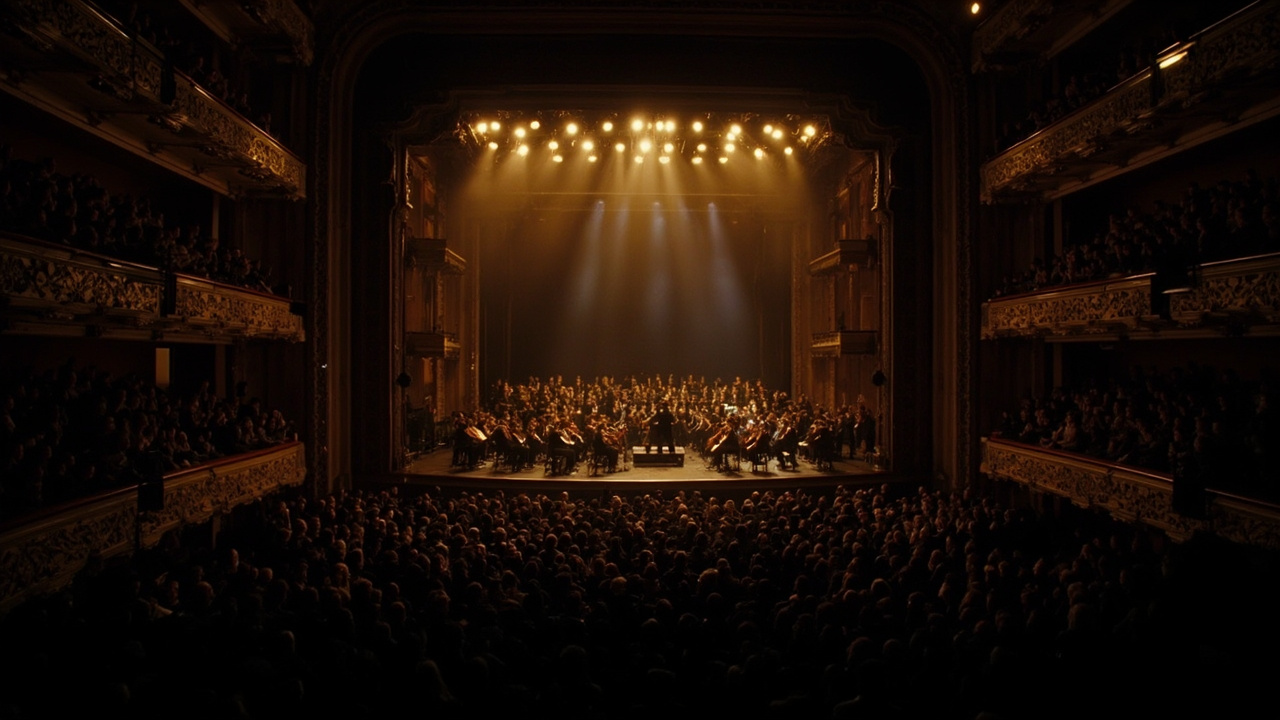
LONDON -- The 2026 Salzburg Easter Festival closes today with a third and final performance of Wagner's Das Rheingold — the opening installment of a new Ring cycle that will unfold across five Easter festivals, concluding in 2030. [1]
The festival, which ran from March 27 through April 6, marked the return of the Berlin Philharmonic as the festival's founding orchestra after a 14-year absence. Chief conductor Kirill Petrenko led the pit; Russian exile and dissident director Kirill Serebrennikov staged the production, which reviewers described as post-apocalyptic — featuring large-scale sculptures by the art collective Recycle Group set against imagery of environmental collapse and authoritarian ruin. [2]
The pairing of the two Kirills — one at the podium, one in exile — is not incidental. Serebrennikov spent years under house arrest in Russia before ultimately leaving the country. Staging his first major European operatic work in Salzburg, with the Berlin Philharmonic under an orchestra he has built into the world's most scrutinized ensemble, gives the production a political gravity that the festival's programming notes addressed only obliquely. [3]
Critical reception has been strong. Seen and Heard International called Petrenko's account of Mahler's Eighth Symphony — performed in a separate choral concert earlier in the festival — "outstanding." Reviews of the Rheingold itself praised the visual imagination of the staging and the orchestral playing, while noting that Serebrennikov's concept will only fully emerge as the cycle continues. [4]
The festival also presented two choral concerts, chamber performances, and a program of orchestral works. Tickets for 2027's Walküre — the cycle's second installment — went on sale during the festival run. [5]