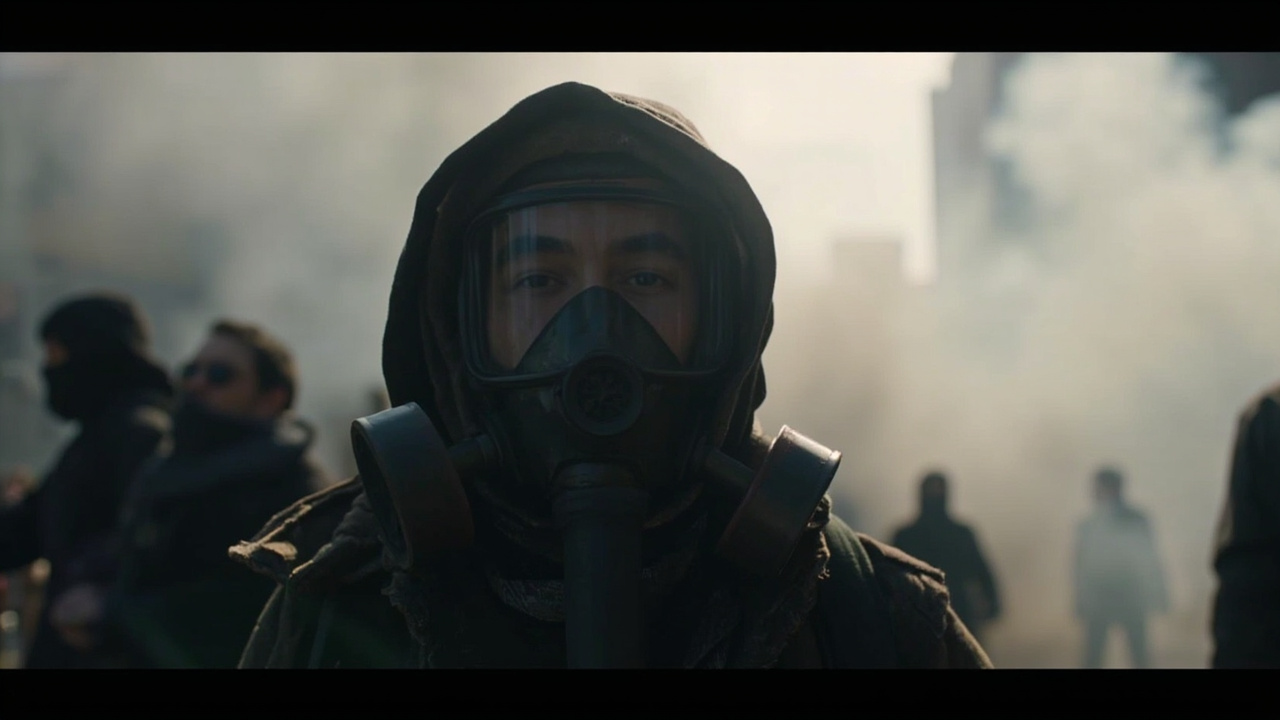
CHICAGO -- The tear gas canister hits the pavement, the crowd scatters, the images cycle through the news, and the story moves on. What the story does not follow is what happens to the people who inhaled the gas, and it turns out nobody has been systematically following them either.
That is the central finding of a review published in Science News in February, synthesizing research on the long-term health effects of tear gas and pepper spray. Dr. Rohini Haar, an emergency physician and medical advisor for Physicians for Human Rights, has spent years compiling what the evidence actually shows about these chemicals, which are marketed as non-lethal and used worldwide to disperse crowds, including at protests that have occurred in Tehran in recent months. The picture she describes is not the one embedded in the phrase "non-lethal." [1]
"The long-term impacts were, you know, catastrophic, like lung problems, asthma, breathing issues, skin allergies," Haar told Science News. The qualifier "you know" is doing significant work in that sentence. She is describing documented medical findings, not impressions. [1]
What the research shows
Tear gas and pepper spray can damage the lungs, heart, and skin for weeks and even months after a single exposure. The Hofstra University Medical News summary of the review puts it plainly: "For weeks and even months after exposure, tear gas and pepper spray can continue to sabotage the organs that allow people to breathe, pump blood and fight off disease." [2]
The cardiovascular findings are among the least expected. A study published in Toxicology Reports in November 2025, examining protest participants in Georgia who had been exposed to CS gas, found that 33 percent of exposed individuals showed abnormal ECG readings -- right bundle branch block -- compared to 6.6 percent of unexposed controls. T-wave inversions were present in 29 percent of exposed participants versus just 3 percent of controls. The researchers hypothesized that chemical deposition in lung tissue creates microvascular overload, which in turn increases strain on the right ventricle. [3]
Respiratory effects followed a similar pattern. Among exposed participants in the same study, 48 percent reported shortness of breath during exposure, and 28 percent reported it persisting thirty or more days later. Cough persisted at thirty days in 34 percent of cases. Two participants developed clinically documented hypersensitivity pneumonitis and unresolved pneumonia -- conditions that do not resolve on their own and require sustained medical management. [3]
The American Thoracic Society has called for a moratorium on tear gas use in crowd control, warning that even minimal exposure can weaken respiratory defenses, making people more susceptible to bronchitis and pneumonia. People with pre-existing conditions -- asthma, COPD, heart disease -- face compounded risk. [4]
The gap nobody filled
The larger problem documented by Haar's review is the absence of systematic follow-up. Chemical agents classified as riot control weapons were never required to demonstrate long-term safety before deployment. Manufacturers are not obligated to fund longitudinal studies. Governments that purchase and deploy these agents are not required to track health outcomes in the populations exposed. [1]
The result is that the health literature on long-term effects of tear gas and pepper spray is built almost entirely from observational studies of protest populations -- self-selected, difficult to control, often conducted in the aftermath of political violence where institutional cooperation is limited. The Georgian study stands out precisely because it included a control group and ECG measurements. Most do not.
Haar's review is not the first to document this gap, but it arrives at a moment when the use of crowd-control agents has expanded beyond protest management into active military conflict zones. Tear gas has been reported in multiple protest and civil unrest incidents inside Iran since the war began. The research on what happens to a person's lungs and heart six months after a single exposure is incomplete. The research on what happens after repeated exposure over weeks of unrest is barely begun.
-- NORA WHITFIELD, Chicago