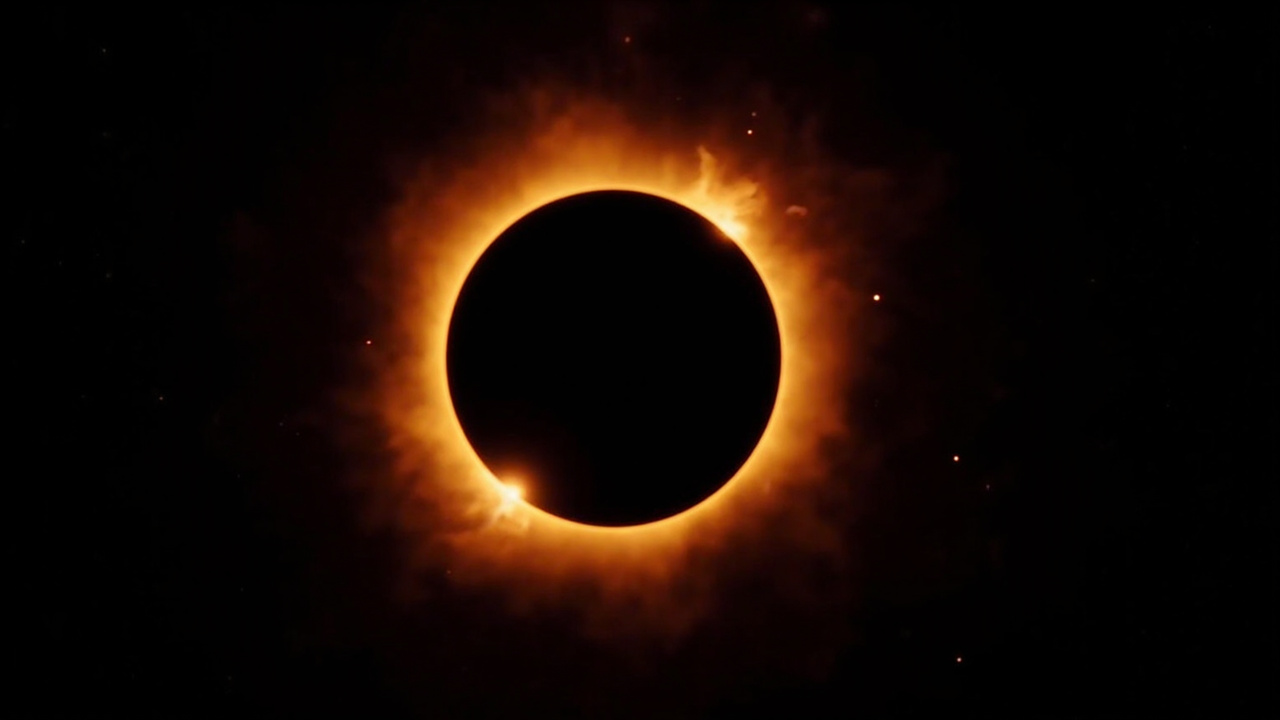
Christina Koch described it in her daily press conference from the Orion capsule: "The most beautiful thing I have ever seen." [1]
The thing she saw was the Sun eclipsed by the Moon from behind the Moon. In every solar eclipse visible from Earth, the Moon passes between Earth and the Sun. What Koch and her crewmates witnessed on April 6 was its inverse — the Sun visible only as a corona ring around the Moon's silhouette, from a vantage point on the far side where no human has stood since December 1972, when the Apollo 17 crew made the same trip and took the Blue Marble photograph that defined the environmental movement. [2]
The Artemis II crew released footage of the eclipse during their Wednesday press conference. They also recorded the Earth from lunar distance — a blue sphere with visible weather systems, small enough to cover with an outstretched thumb. They observed six meteoroid impacts flashing across the lunar surface during the observation window. They flew through the communications blackout — 40 minutes of silence when the Moon blocked all signal to Earth — and emerged from it on a trajectory home. [3]
The splashdown is Friday at 8:07 PM Eastern off San Diego. The Orion capsule will enter Earth's atmosphere at approximately 25,000 miles per hour, decelerate through heat shields to parachute deployment, and land in the Pacific where Navy recovery vessels are positioned. The crew has 48 hours of flight time remaining. [4]
Every piece of the mission performed nominally. After a decade of planning, delays, cost overruns, and the ongoing question of why NASA is going back to the Moon when other priorities press, the Artemis II crew made the journey work. That is its own kind of answer.
-- KENJI NAKAMURA, Tokyo