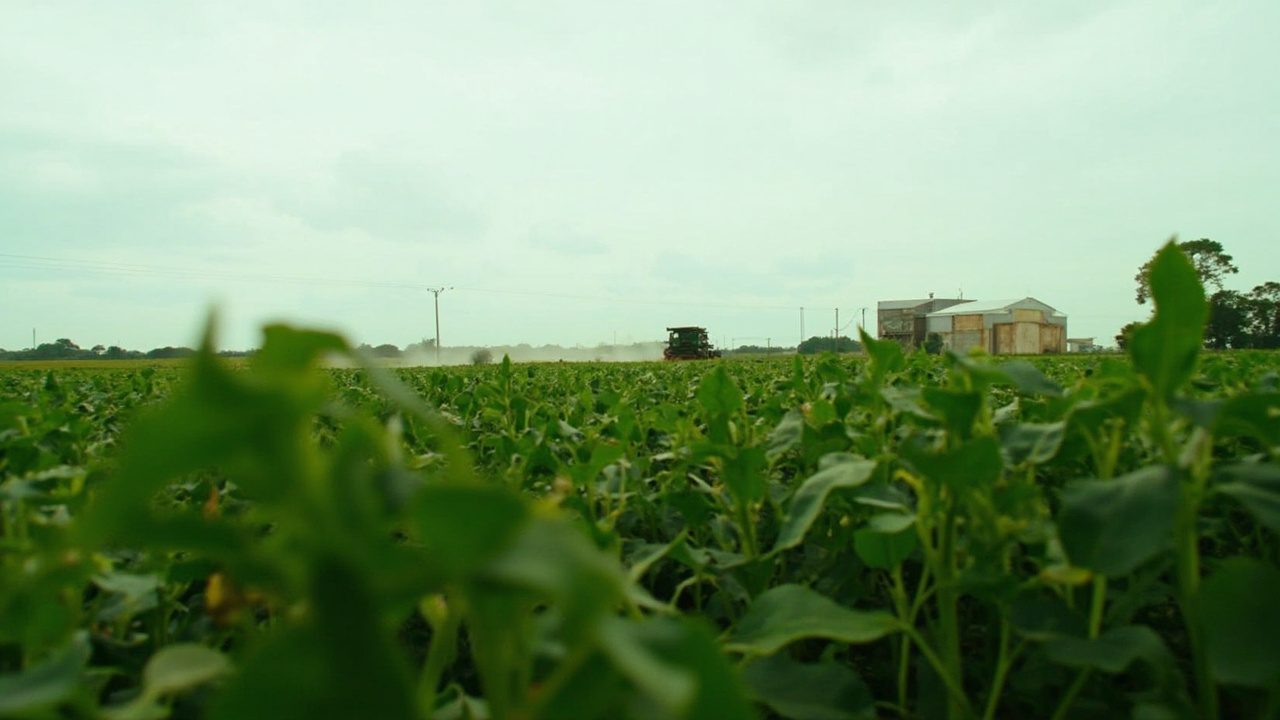
Brazil is not Iran's enemy, not a US ally in the war, and not a major Gulf oil importer. It should, by most accounts, be largely insulated from a conflict it had no part in. And yet the ceasefire announcement reached Brazilian farming communities through the price of fertilizer. [1]
Brazil is the world's largest soybean exporter and one of the largest agricultural producers by volume. Its farming sector depends heavily on imported fertilizers — particularly ammonia and urea compounds, whose global trade routes include Gulf logistics chains that connect to gas precursor production in Qatar and Iran. When the Hormuz blockade disrupted those routes, ammonia prices rose. Urea prices rose. The input cost for Brazilian soy planting, which runs through October and November, rose. [2]
The second-order effect runs further. Brazilian livestock farmers use soy meal as feed. Higher input costs for soy production flow through to feed costs, then to meat prices, then to consumer inflation. The Brazilian consumer felt the Iran war not as a fuel price spike — Brazil produces enough domestic oil to partially buffer that — but as a quietly expanding cost of food. [1]
The ceasefire, if it holds and fertilizer supply chains normalize, will restore some of that cost pressure over the coming planting season. But analysts note that the fertilizer shock peak arrives three to six months after the supply chain disruption — meaning the Brazilian farming season most affected by this war is still months away. [2]
The world is interconnected in ways that war planners rarely model. Brazil is one of the nodes those models missed.
-- LUCIA VEGA, São Paulo