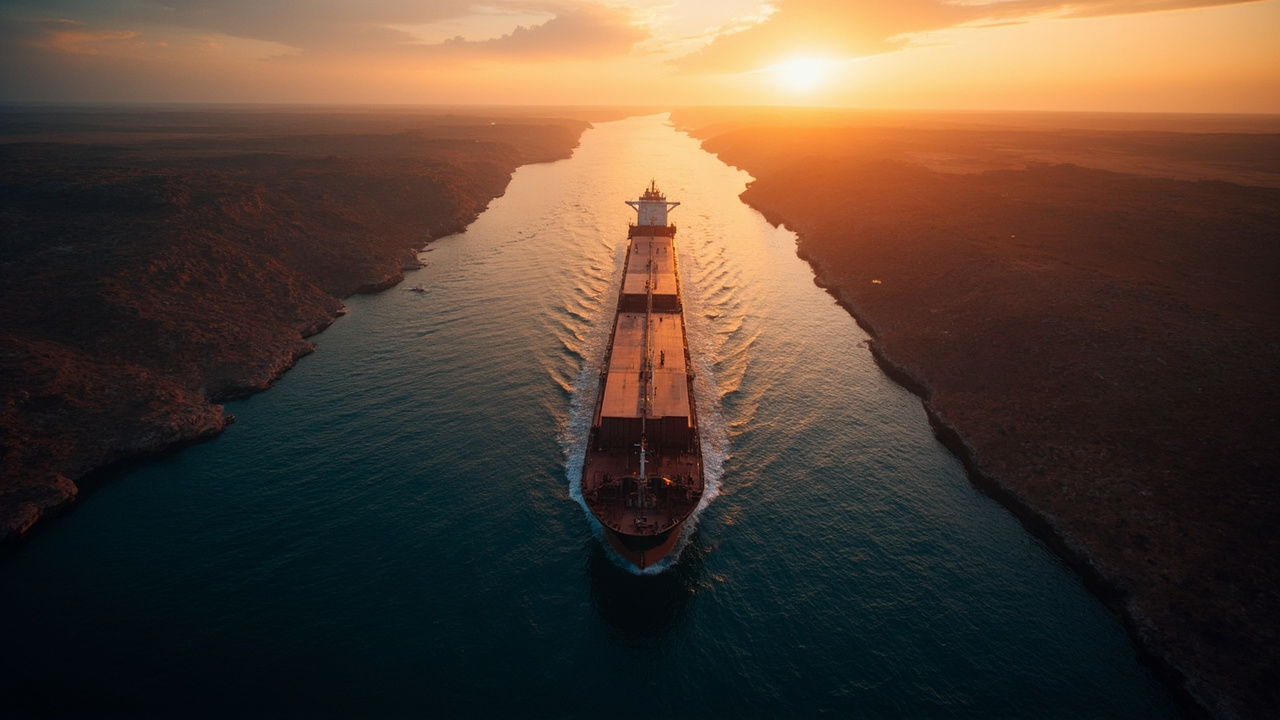
Their names were published by MarineTraffic before most people had finished reading the ceasefire announcement: the NJ Earth, a Greek-owned bulk carrier, and the Daytona Beach, flying a Liberian flag, both departed Bandar Abbas and began moving south through the Strait of Hormuz in the early hours of Wednesday morning. [1]
For roughly 39 days, that passage had been effectively closed. No major Western shipping company had transited under war conditions. Insurance underwriters had suspended normal coverage. The strait that carries roughly 20 percent of the world's oil and about one-third of global liquefied natural gas had, by the most conservative estimates, seen traffic fall to near zero from its normal daily volume of hundreds of vessels. [2]
Two ships is not a reopening. Two ships is a proof of concept.
The shipping industry's response to Tuesday's ceasefire was immediate and cautious in equal measure. Maersk, the Danish shipping giant, said the ceasefire "may create transit opportunities" but that the company had not changed its routing decisions and would await clarity on insurance terms. [3] That formulation — may create opportunities, not will restore transit — reflects the gap between a ceasefire announcement and an actual operational environment.
Bloomberg reported approximately 800 vessels are still waiting for clarity on whether to enter the strait. [3] That backlog does not clear in 24 hours. Each company faces its own insurance, flag state, and cargo considerations. Many of the vessels waiting are laden tankers or LNG carriers whose cargo owners are themselves waiting for guidance.
The physical oil market analysts were right this morning: futures celebrated, physical delivery did not. [2] The two ships that transited are a beginning. What they have begun is not yet clear — a genuine reopening, or a brief window between two states of danger.
For now, the NJ Earth and the Daytona Beach are through. The rest of the world's shipping fleet is watching their tracking data with an attention nobody would have predicted six weeks ago. [1]
-- DARA OSEI, London