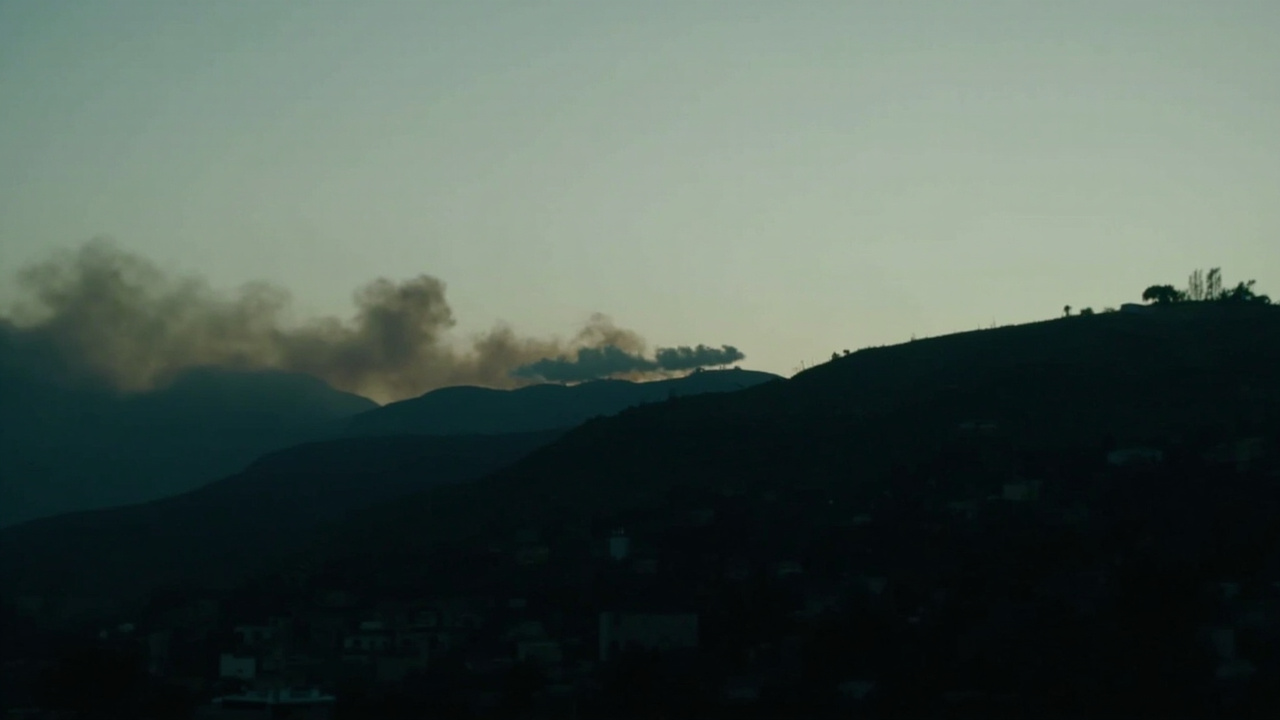
Lebanon was not in the deal. Benjamin Netanyahu said so explicitly Tuesday night, within an hour of the ceasefire announcement. Israel would continue operations against Hezbollah, he said, because no agreement covered Lebanese territory. [1]
And yet, by Wednesday morning, Hezbollah had stopped firing.
Sources close to the group, speaking to Reuters on condition of anonymity, said Hezbollah halted fire on northern Israel and on Israeli troops in Lebanon as a gesture of solidarity with Iran — not as a condition of any agreement. [2] The distinction matters enormously to the movement. To be included in a ceasefire it was explicitly excluded from would diminish it. To voluntarily pause, in coordination with Tehran, preserves the fiction of autonomy.
Ibrahim Moussawi, a Hezbollah member of parliament, was direct about the logic: if Israel stops its strikes, the pause holds. If Israel continues, Hezbollah will respond. [1] That is not a ceasefire. That is a conditional quiet, the kind that has collapsed before.
Israel's position is equally clear. The IDF launched what analysts described as its largest single wave of strikes on Lebanon since March 2, within hours of Trump's announcement. Fourteen people were killed. [3] For Israel, the US-Iran ceasefire created a window — a moment when Hezbollah might be off-balance, uncertain whether to escalate and risk disrupting a deal Iran had just accepted.
The geometry is strange. Iran agreed to a pause it cannot fully enforce on its most capable proxy. Israel is striking a country covered by no agreement. Hezbollah is observing a ceasefire nobody asked it to observe, while reserving the right to resume at any moment.
This is not peace in Lebanon. It is the absence of fire, which is a different thing — smaller, more fragile, and considerably more dangerous when it ends. [2]
-- KATYA VOLKOV, Moscow