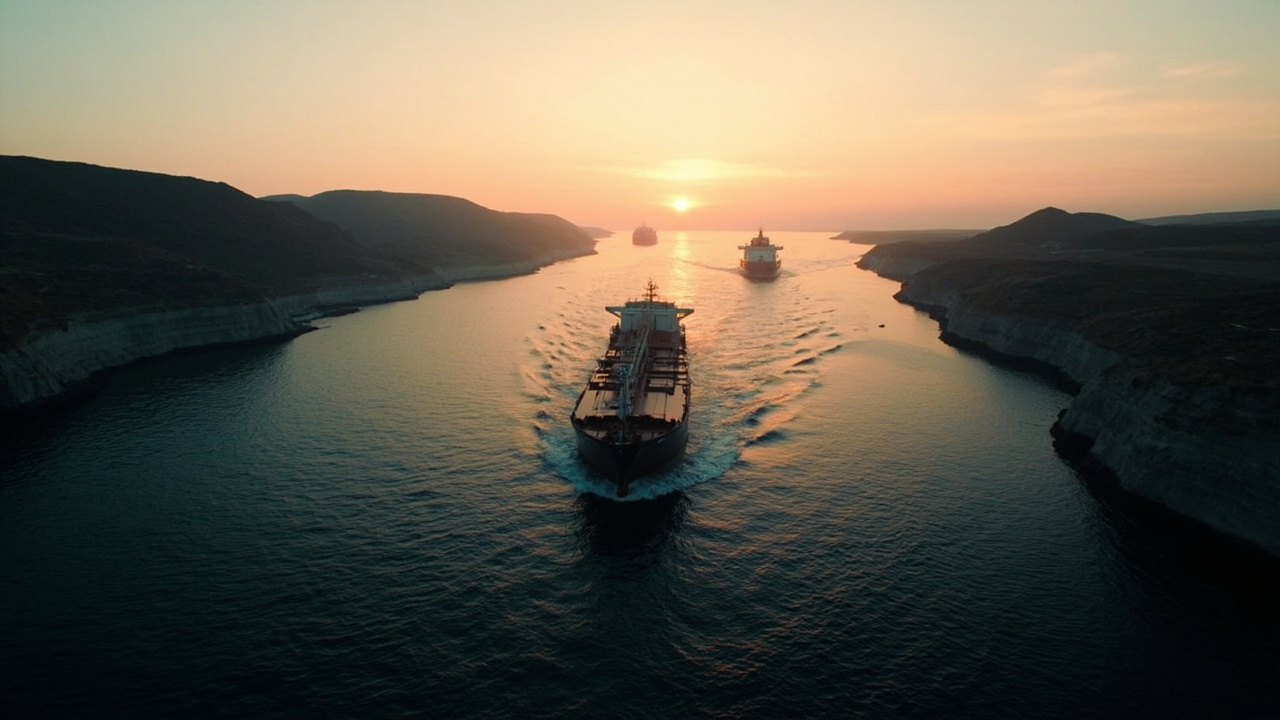
The Greek-owned bulk carrier NJ Earth transited the Strait of Hormuz on Wednesday morning, becoming the first commercial vessel to complete the passage since Iran's blockade began 40 days ago. At least two additional tankers followed. By mid-morning, Reuters confirmed at least five vessels had made the transit under what shipping industry analysts described as "cautious optimism." [1]
Maersk, the world's largest container shipping line and the company whose rerouting decisions function as a real-time proxy for global shipping confidence, said Wednesday it was "seeking clarity" on Hormuz logistics before committing its vessels to the route. The clarity it is seeking includes: confirmation that IRGC patrol boat positioning has changed, verification that naval mines — if any were placed during the blockade — have been cleared, and revised war-risk insurance rates from Lloyd's and the major maritime underwriters. None of those conditions were confirmed by Wednesday morning. [2]
The IRGC's vow that Hormuz would never return to its former state lasted approximately 36 hours. But the gap between "technically open" and "commercially operational" is the gap the ceasefire announcement does not close. Iran agreed to reopen the Strait to commercial shipping. Iran has not withdrawn its naval forces. Iran has not announced a mine-clearance operation. Iran has said it will "manage" Hormuz shipping — a formulation that leaves open significant questions about what that management looks like and who controls the protocol. [3]
Physical crude prices lag futures by days to weeks. The Brent futures market fell 14% on Tuesday night. The physical market — the oil that tanker operators actually purchase for specific voyages to specific refineries — moves when ships move, not when politicians announce ceasefires. European refineries that have been running at emergency capacity for five weeks, relying on alternative supply routes, will not switch back to Hormuz-routed crude until the route's reliability is established over multiple transits without incident. [4]
The sanctions waiver — 140 million barrels of Iranian oil licensed for sale under the March 20 waiver, expiring April 19 — creates an 11-day window in which the physical and financial architecture of the Hormuz reopening must be established or the oil market faces another crisis trigger. If the ceasefire holds through April 19, the waiver's expiration becomes a formality. If the ceasefire wobbles, April 19 becomes the next market event. [5]
This paper reported on April 5 that the physical-futures split represented the war's clearest market divergence. The ceasefire narrowed that gap in futures. Whether the physical market follows depends on what happens in Hormuz this week.
-- DARA OSEI, London