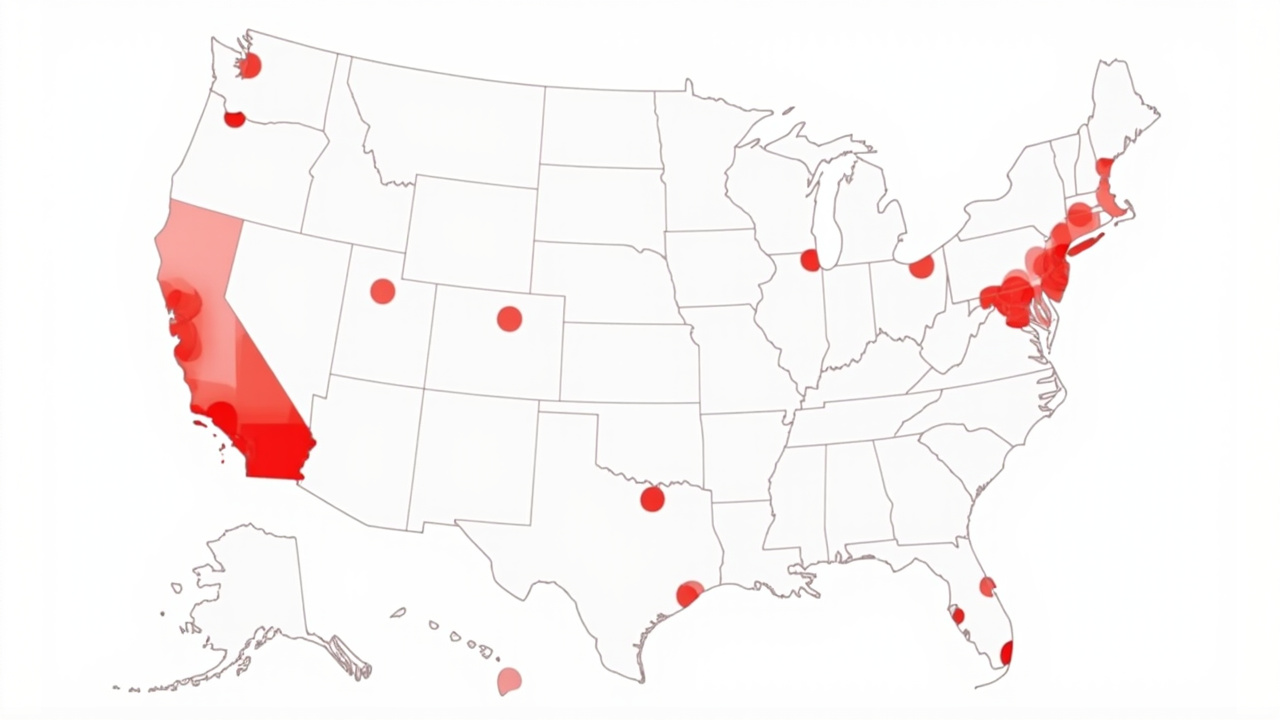
South Carolina's Department of Public Health reported 44 new measles cases in its Upstate region on Monday, bringing the single-outbreak total to 920 cases. Nationally, the United States is now tracking more than 1,700 confirmed measles cases across 31 states — up from the 1,671 cases across 31 states reported Tuesday — a rate that, if it holds through the year, will produce the worst domestic measles year since 1990. [1]
The 2000 declaration of measles elimination in the United States — a declaration that required sustained 95% vaccination coverage in every community — depended on a specific assumption: that vaccination rates would not fall below the herd immunity threshold in any significant region. They have. [2]
The outbreak's distribution maps onto vaccination exemption rates with precision that researchers describe as "straightforward." Counties with high personal belief exemptions from school vaccination requirements have high measles case rates. Counties with high two-dose MMR coverage have low case rates. The epidemiology is not ambiguous. The MMR vaccine is 97% effective against measles with two doses. Two doses administered in childhood prevent infection. [3]
What has changed in 2026 is the political structure of vaccine skepticism. What was once confined to specific communities — some religious groups, some holistic health networks — has been incorporated into mainstream political alignment. Federal positions held by people who publicly questioned vaccine safety have changed the regulatory and public health messaging landscape in ways that are now producing measurable consequences. [4]
The South Carolina outbreak began in an unvaccinated school community and spread through inadequate contact tracing capacity. State health departments have been operating at reduced staffing levels since early 2025. The federal public health communication that would normally accompany an outbreak of this scale has been muted. [1]
Two doses of MMR vaccine given within 72 hours of exposure can prevent infection in unvaccinated individuals. The vaccine is widely available. The outbreak is preventable. The gap between those two facts is a policy question with a political answer.
-- NORA WHITFIELD, Chicago