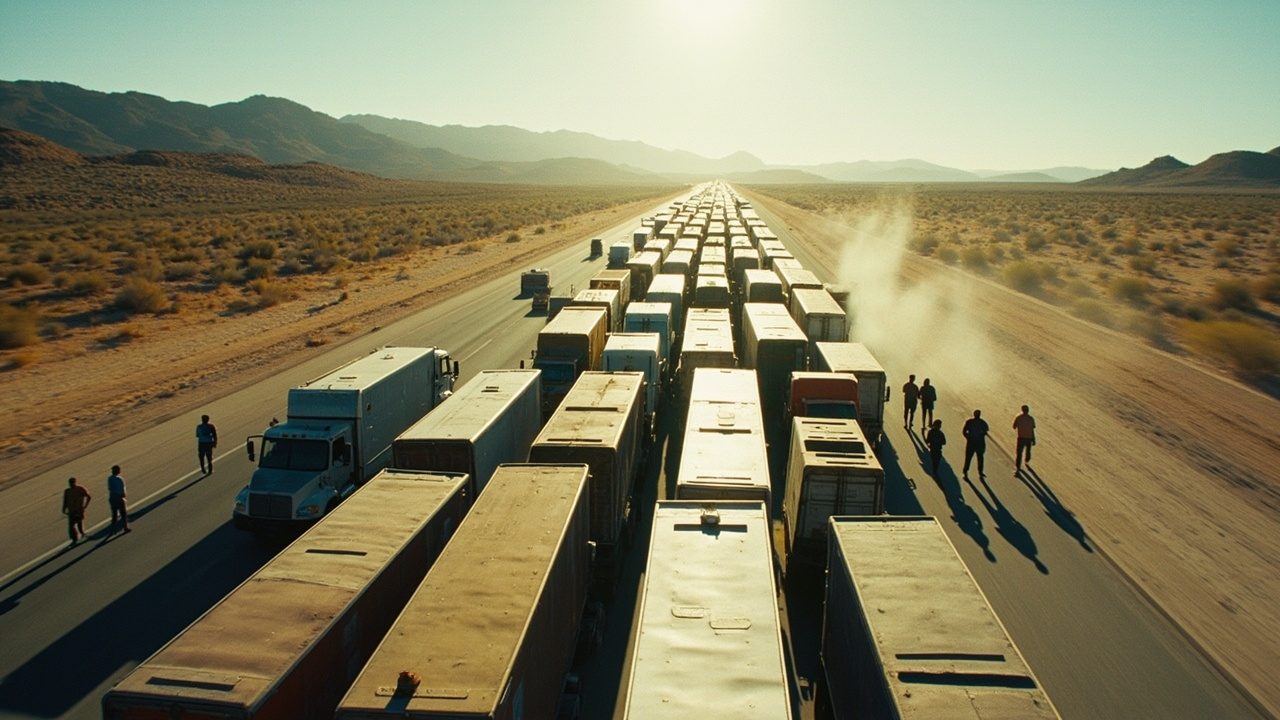
The trucks have been parked since Monday, when a nationwide freight blockade shut down major corridors across the country. Blockades on the 21st Century Highway in Morelos, on the access routes to Mexico City, on the freight corridors linking the capital to the northern maquiladora belt — a slow arterial tightening that the country's logistics industry estimated would cost millions of pesos per day if it persisted. [1]
The demands are old, the grievances are structural, and the fuel prices are new. [2] The associations behind the strike — ANTAC and the FNRCM — have been raising highway insecurity and diesel costs for years. What changed this spring was the arithmetic. When the Iran war pushed global oil above $109 a barrel, Mexican diesel prices followed. For a trucker running 400 kilometres a day, the fuel line item that was already thin became a question of viability. The strike was a business decision as much as a protest.
The government had been stalling. Industry groups pushed back. The agriculture ministry offered dialogue. Nobody offered money. [3]
Then Tuesday happened. Oil fell 15 percent on the ceasefire announcement. Brent settled below $94. [2] This is not a trivial movement in the context of a dispute driven by fuel costs. The IEPS fuel tax — which the truckers want eliminated — was set partly in response to higher import costs. If oil stabilises at these levels for two weeks, the fiscal argument for keeping the IEPS so high weakens.
The question now is whether the government moves fast enough to make use of this window. The truckers are watching oil prices with the same attention as traders. They understand that a 14-day ceasefire is provisional, that Brent at $93 today could be $100 next week if Lebanon escalates and ships stay out of Hormuz. [1]
For now, the blockades are still in place. But the negotiating table looks different this morning than it did 24 hours ago. In the long corridor of Mexican grievance, sometimes all you need is a different room.
-- LUCIA VEGA, São Paulo