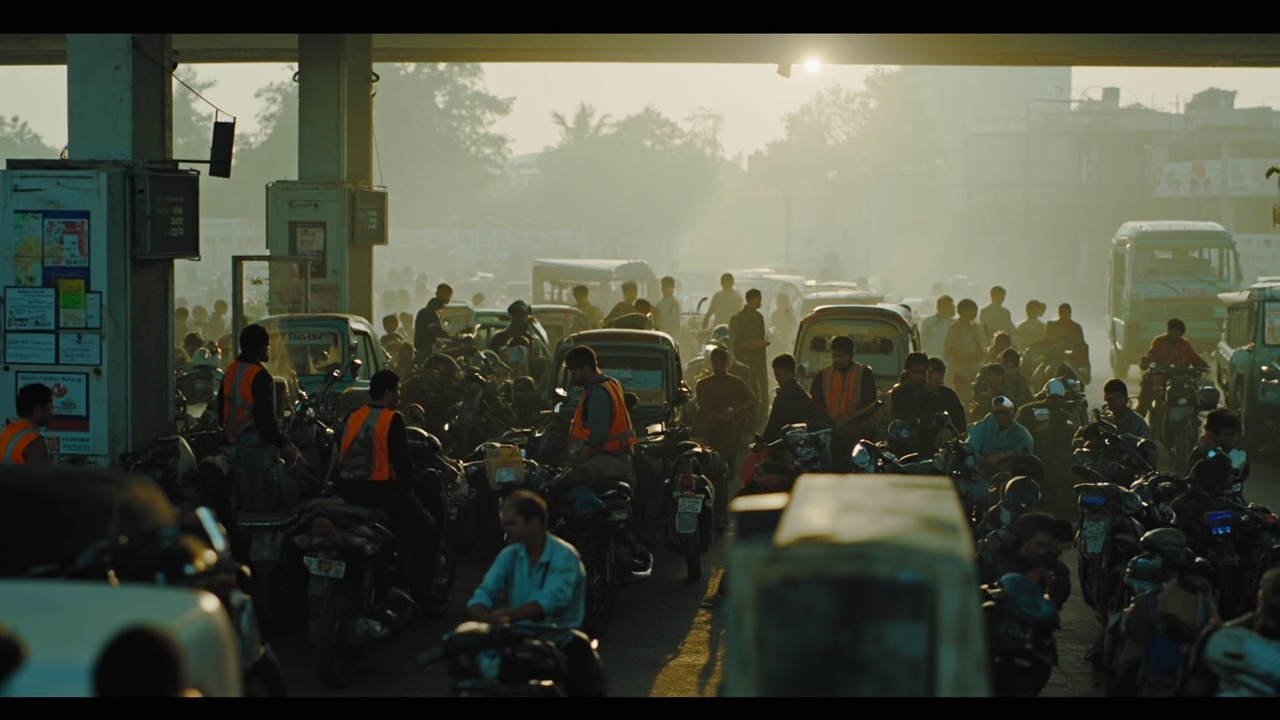
Pakistan imports more than 80 percent of its oil. When the Strait of Hormuz closed, that arithmetic became a national emergency almost overnight. [1]
Petrol prices have risen roughly 40 percent since fighting began in late February, according to analysts tracking official and grey-market rates. The jet fuel and kerosene lines moved first — quietly, without formal announcement — as the government tried to absorb the shock before passing it fully to consumers. [2] By March, the absorption strategy had failed. Pakistan unfroze prices, and the full weight of a $109-per-barrel world landed on the pump.
The ceasefire announced late Tuesday changed the calculus — at least on paper. Brent crude fell 15 percent in the hours after the announcement, settling at $93.73. [3] For Islamabad, that is meaningful. The import bill, which had swelled to historic levels, begins to ease the moment oil markets believe Hormuz will reopen. And the markets, for now, seem willing to believe.
But economists are urging caution. Fuel price adjustments in Pakistan move through layers of regulation, subsidy accounting, and political signaling. Even if Brent stabilises at current levels, domestic prices are unlikely to fall for at least two to three weeks — assuming the ceasefire holds. [1]
There are also the structural debts to reckon with. Pakistan's energy sector carries billions in circular debt, a chronic problem that worsened during the war. Some of that money was borrowed at emergency interest rates. Lower oil prices help, but they do not erase the arrears. [2]
The prime minister has not announced a timeline for relief. His office issued a statement welcoming the ceasefire and noting that Pakistan had played "a constructive role in facilitating dialogue" — a reference to Islamabad's brokering role in the talks that led to Tuesday's deal. That diplomatic investment may yet yield economic dividends, but they will arrive slowly.
On the streets of Karachi and Lahore, the drivers who have spent five weeks calculating whether a fare can still cover the petrol needed to earn it are watching oil screens they never watched before. They have learned, in the most direct way possible, what it means to live downstream of a war. [3]
The ceasefire gives them hope. The infrastructure of relief has not yet caught up.
-- PRIYA SHARMA, Delhi