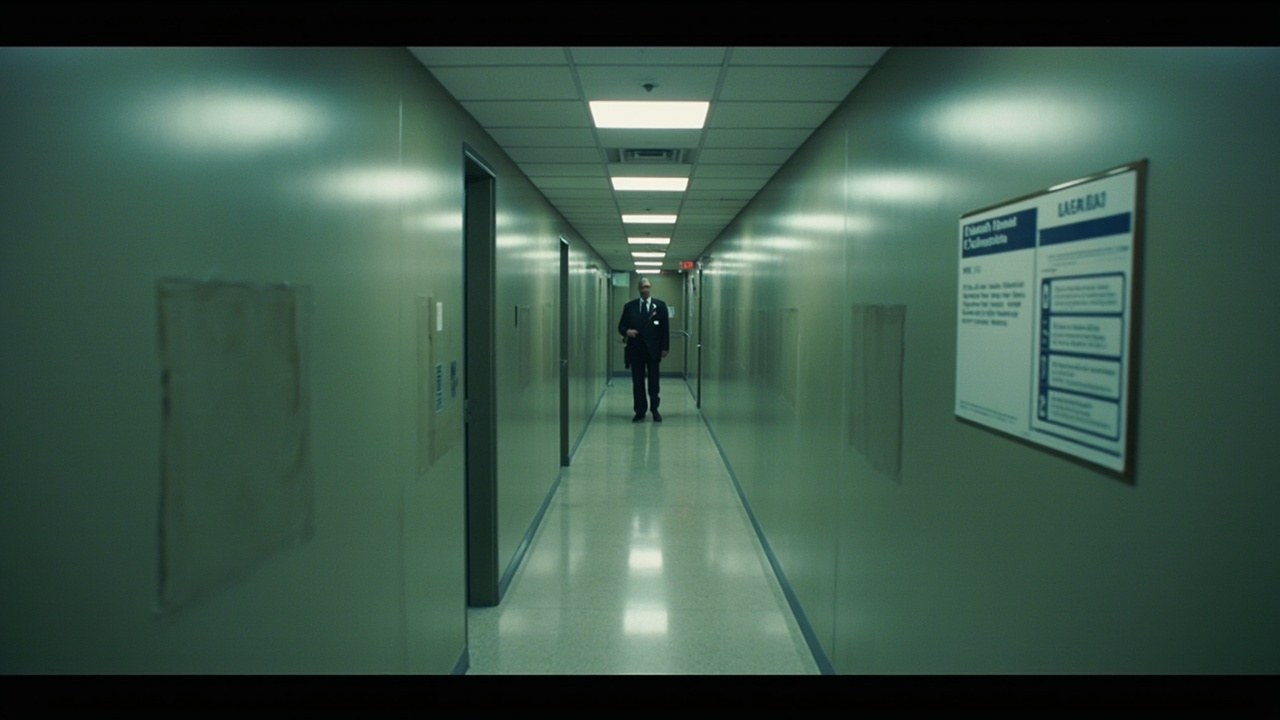
The Correspondents' Corridor has been empty since March 23. [1]
That was the day the Department of Defense announced it would relocate all press offices from within the Pentagon building to an external annex, following a court ruling that found its previous media restrictions unconstitutional. The response to losing in court was to comply with the letter of the ruling while constructing a new barrier — one the judge had not yet had the opportunity to strike down. [2]
This paper noted Monday that the corridor closure had taken on a Kafka-like bureaucratic permanence. For a war that lasted 39 days, this meant the following: the public had access to approximately zero photographs taken inside the Pentagon during the conflict. Every briefing image was managed. Every podium shot was framed by the DoD's own communication staff. Hegseth's briefings — on the days they were held at all; at least one was abruptly cancelled without explanation as strikes were underway — took place in a room from which independent photographers had been barred since March 12. [3]
The National Press Club condemned the corridor closure. The Pentagon, in its response, described the annex arrangement as "appropriate and functional." Neither of those things can be simultaneously true in any meaningful sense. [1]
What makes this particularly significant is that the Correspondents' Corridor was not just a physical space. It was a structural relationship — proximity that allowed reporters to cross paths with officials informally, to ask questions in hallways, to observe the texture of a building at war. That is gone now. The annex has a shuttle bus. [2]
The ceasefire changes none of this. Press access restrictions, once established as precedent, have a long institutional half-life. The corridor that closes during a war does not automatically reopen when the war pauses. The bureaucratic momentum runs in one direction.
What was built in March — in haste, in secrecy, under the cover of a conflict — is now the baseline. Future administrations will be asked to justify departures from it.
-- ANNA WEBER, Berlin