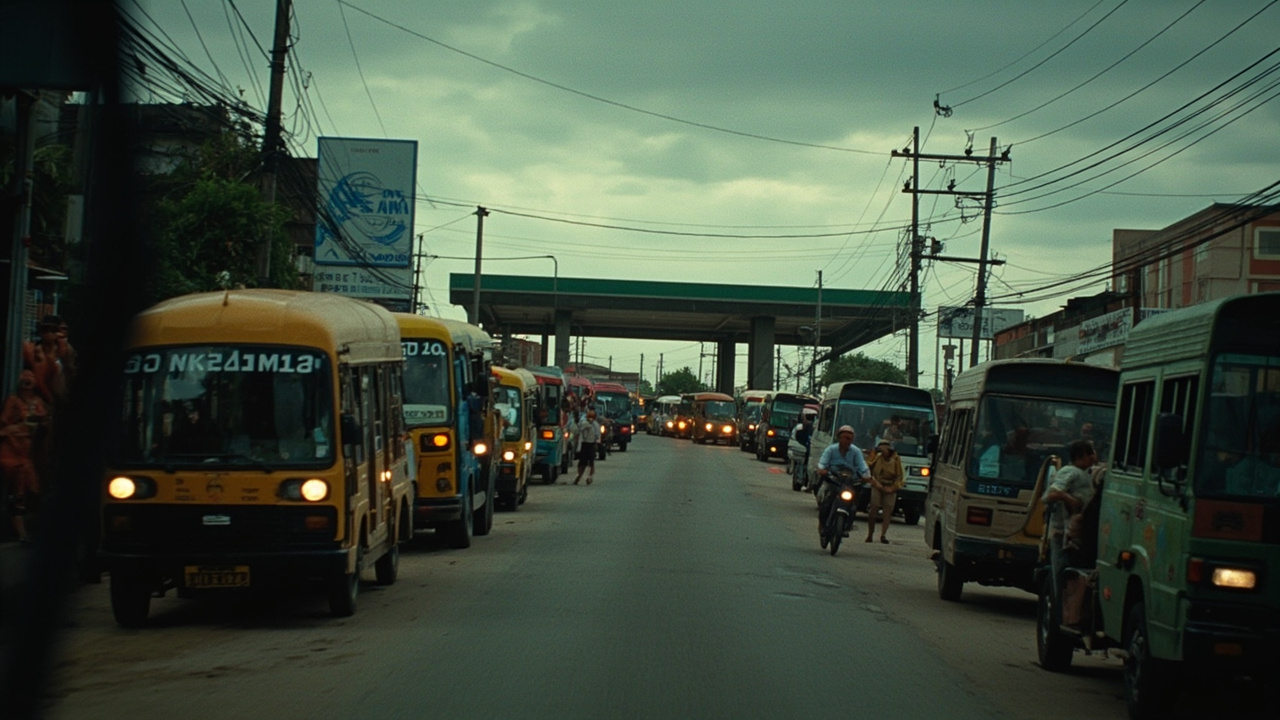
The Philippines moved first. On March 24, President Ferdinand Marcos Jr. signed Executive Order 110, declaring a state of national energy emergency — the first such formal declaration by any country in response to the Middle East conflict. [1] The declaration gave the government power to tackle fuel hoarding and profiteering, to fast-track coal procurement, and to impose emergency fuel allocation measures.
It also served as a signal. The Philippines, an archipelago of more than 7,000 islands almost entirely dependent on imported fuel, had less margin for error than larger economies with strategic reserves or domestic production. [2] When the Strait of Hormuz began restricting traffic in late February, Manila's petroleum reserves were already thinner than usual. The emergency declaration was not precautionary. It was a response to conditions already unfolding.
Marcos said at the time that the country had enough crude supply until June, a statement designed to reassure while implicitly confirming that June was the planning horizon, not an abundance. [3]
In the weeks since, the Philippines leaned harder on coal for power generation — a decision that angered climate advocates but reflected the practical reality of a government choosing between carbon targets and lights staying on. Transport unions called the emergency declaration "a superficial band-aid," arguing that the structural dependence on imported oil required deeper reform. [2]
Tuesday's ceasefire reached Manila as welcome news calibrated carefully against context. Oil prices fell. Hormuz is technically reopening. Marcos's office issued a statement of guarded welcome. Energy analysts noted that two ships transiting the strait does not solve a months-long supply chain disruption. [1]
The Philippines has been here before — dependent on distant decisions, left to manage the consequences at the end of a very long supply chain. The ceasefire helps. It does not cure. And in Manila, the difference between the two is well understood.
-- DAVID CHEN, Beijing