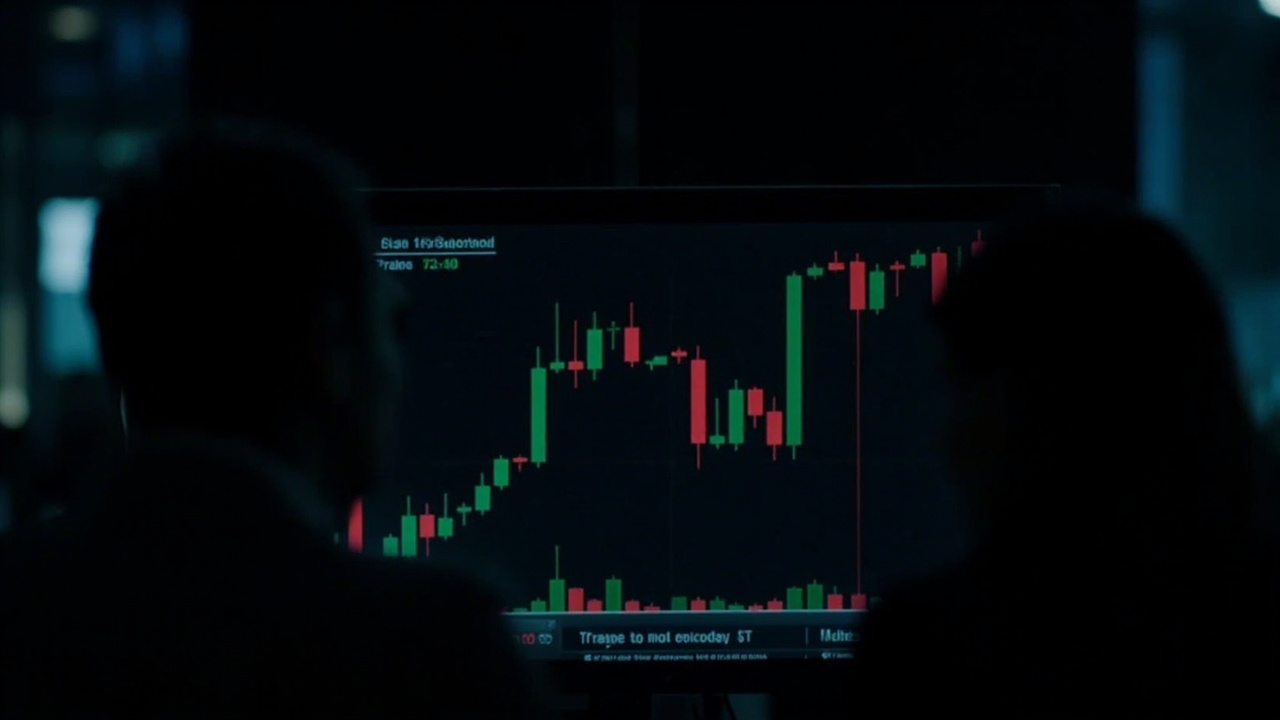
SAN FRANCISCO — The oil market has developed a two-day metabolism for Middle East ceasefires. Headline drops. Reality climbs. The cycle is now running on a clock that traders can set their positions to.
On Tuesday evening, when President Trump announced the two-week ceasefire with Iran, Brent crude plunged. The benchmark fell as much as 17.2 percent during Wednesday's session before settling around $93.60 per barrel — a $15.15 single-session drop from $109.77. [1] West Texas Intermediate followed, closing at roughly $91 per barrel. The New York Times called it part of a broader "relief rally" in equities and commodities. [2]
By early Thursday, the rally had reversed. Brent climbed $2.60, or 2.74 percent, to $97.35 per barrel. WTI gained $3.02 to $94.12. [3] The trigger was the same one that reversed the April 6 pattern: operational reality. Iran re-closed Hormuz. The IRGC published its mine map. Lebanon burned. The ceasefire, which the physical oil market had never priced as permanent, revealed itself as the headline event it was.
This paper has documented this pattern twice before. On April 6, markets traded the ceasefire headline, not reality. On April 8, oil fell fifteen percent on a ceasefire nobody verified. Today's bounce completes the third iteration of the same cycle.
The Mechanics of the Headline Trade
The pattern works because the oil market has two operating speeds. The financial market — futures contracts, options, algorithmic trading — responds to headlines in milliseconds. The physical market — tankers, insurance, pipeline scheduling — responds in days. When a ceasefire is announced, the financial market sells the risk premium instantly. The physical market waits. When the ceasefire cracks, the physical market's skepticism becomes the financial market's next trade.
The result is a sawtooth pattern: sharp drops followed by slower recoveries. Each cycle leaves the price slightly higher than the pre-headline level, because each failed ceasefire adds to the cumulative risk premium. Before the war, Brent traded around $72. It now oscillates between $93 and $110, a range defined not by supply and demand fundamentals but by the credibility deficit of successive diplomatic announcements.
Who Profits
The volatility is not accidental and not everyone loses from it. Energy traders at banks and commodity houses have described the pattern as one of the most reliable trading opportunities in years. The spread between the ceasefire low and the reality rebound — roughly $4 to $7 per cycle — is large enough to generate significant profits for anyone positioned to buy the dip.
Goldman Sachs and ING Economics both published notes this week acknowledging that the ceasefire had not fundamentally changed the supply picture. [4] The analytical consensus is that until Hormuz traffic normalizes — measured in hundreds of daily transits, not the dozen Iran briefly offered — the war premium in oil is structural, not speculative.
For consumers, the whiplash translates to gasoline prices that drop for a day and then climb for a week. For refinery operators, it means supply-planning chaos. For national governments dependent on oil imports — India, Japan, South Korea, most of Europe — it means budgets built on price assumptions that change with every Twitter announcement.
The next data point arrives Friday, when the Islamabad talks either produce a Hormuz agreement or do not. If they do, expect another headline drop. If they do not, expect $100 again by Monday. The market has the pattern memorized. It just cannot stop trading it.
-- THEO KAPLAN, San Francisco