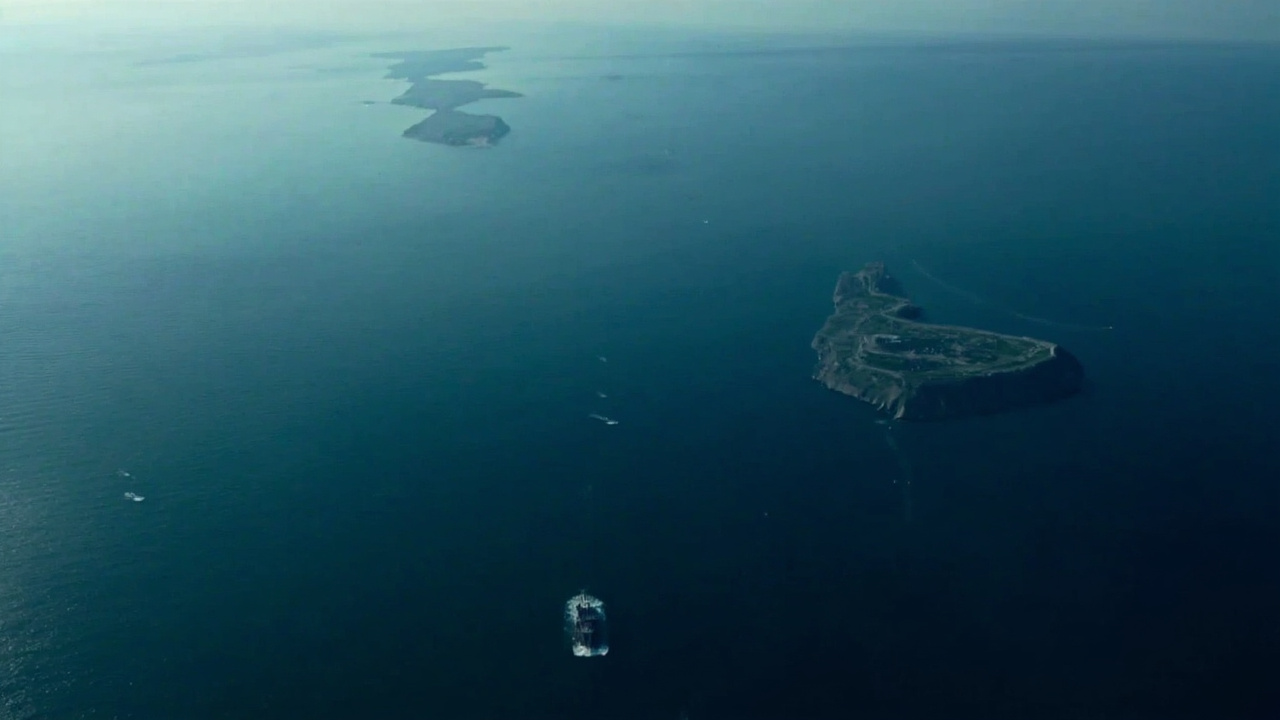
The ceasefire between the United States and Iran is twelve days old. In that time, ten vessels have transited the Strait of Hormuz — four tankers and six bulk carriers [1]. Before the war, the number was more than 135 per day.
That single comparison tells you everything the diplomatic language is designed to obscure. The Strait of Hormuz, through which roughly one-fifth of the world's oil supply passed before hostilities began, is not open. It is not reopening. It is, by every metric that matters to the people who move energy around the planet, functionally closed — and as yesterday's report on the IRGC mine map revealed, Iran's own military has effectively admitted as much by publishing alternative routing charts through Larak Island.
ADNOC's chief executive, Sultan Al Jaber, said it plainly this week in an industry briefing that was not intended for public consumption but was reported by several outlets: "The Strait of Hormuz is not open" [1]. He was not editorializing. He was describing a physical reality.
The Arithmetic of Paralysis
To understand why the Strait remains closed despite a ceasefire, you have to understand the system that the war broke.
Before the conflict, Hormuz functioned because of an invisible architecture of trust. Insurers underwrote vessels. Classification societies certified their seaworthiness. Port authorities on both coasts processed manifests. Pilots guided ships through the navigational channel, which is only two miles wide at its narrowest point. The entire system depended on the assumption that a ship entering the Strait would exit the other side — an assumption so fundamental that no one thought about it, the way you don't think about gravity until something falls.
The war destroyed that assumption. Iran mined the approaches. The IRGC Navy seized vessels. Air strikes hit port infrastructure on both sides. And now, even though the shooting has stopped, the architecture of trust has not been rebuilt [2].
The numbers make the paralysis concrete. According to Lloyd's List, approximately 800 ships are currently anchored or drifting in holding patterns east of the Strait, waiting for conditions that would allow transit. West of the Strait — in the Persian Gulf itself — some 3,200 vessels are stranded, including more than 400 tankers carrying crude oil, condensate, and refined products [1]. The International Energy Agency has called it "the most severe supply disruption in history," surpassing both the 1973 Arab oil embargo and the 1990 Iraqi invasion of Kuwait [3].
The Toll and the Mines
Two developments this week illustrate why reopening is not a matter of simply declaring the Strait safe.
First, the Financial Times reported that Iran has been charging an informal toll of approximately one dollar per barrel on the few vessels that have transited — a fee collected through intermediaries and justified by Tehran as compensation for "navigation services" [3]. The toll itself is almost trivially small in per-barrel terms. Its significance is jurisdictional: by charging for passage, Iran is asserting sovereign control over an international waterway, a claim that the United States, the United Kingdom, and every major maritime nation has rejected for decades. Paying the toll gets your ship through. It also concedes a legal principle that would reshape global maritime law.
Second, the IRGC this week published what amounts to a mine map — not labelled as such, but a set of navigational advisories identifying zones in the Strait where "unexploded ordnance may be present" and recommending alternative routes through the channel east of Larak Island [2]. The advisory is simultaneously a warning and a confession. It tells the world where the mines are. It also tells the world that the mines are still there.
Why Insurance Blocks the Door
Even if a shipowner were willing to pay the toll and navigate the mine-advisory zones, a more fundamental obstacle remains: insurance. War-risk premiums for Hormuz transit have risen to between 35 and 50 times their pre-war levels, according to industry sources cited by NBC News [2]. A tanker that once paid $50,000 for a single transit now faces a premium of $1.75 million to $2.5 million. For a bulk carrier with thinner margins, the numbers are prohibitive.
The insurers are not being irrational. They are pricing a real risk. The ceasefire has no verification mechanism for mine clearance. The IRGC's navigational advisory is not the same as a certified de-mining operation. And the precedent of the Tanker War of the 1980s — when Iraq and Iran attacked more than 500 commercial vessels over eight years — looms large in the actuarial models [3].
The result is a system locked in stasis. Ships cannot transit because insurers will not cover them. Insurers will not cover them because the mines have not been cleared. The mines have not been cleared because Iran considers them a bargaining chip in the negotiations that begin Friday in Islamabad. And so 3,200 vessels sit in the Gulf, burning fuel to power their generators and running down their provisions while diplomats in suits debate enrichment percentages in a hotel lobby [4].
"Very Poor Job"
President Trump addressed the situation on Thursday via Truth Social, writing that Iran was doing a "very poor job" of allowing tankers through — a remark that, characteristically, assigned blame without proposing a solution [1]. The post was accurate in the narrow sense that Iran controls the chokepoint. It was misleading in the broader sense that the blockade is sustained not by Iranian malice alone but by a system of interlocking failures — military, legal, financial, diplomatic — that no single actor can resolve unilaterally.
The Strait of Hormuz is 21 miles wide. The navigable channel is far narrower. And the distance between a ceasefire and an open waterway turns out to be measured not in miles but in trust — a commodity that is, at present, in shorter supply than the oil the world is waiting for.