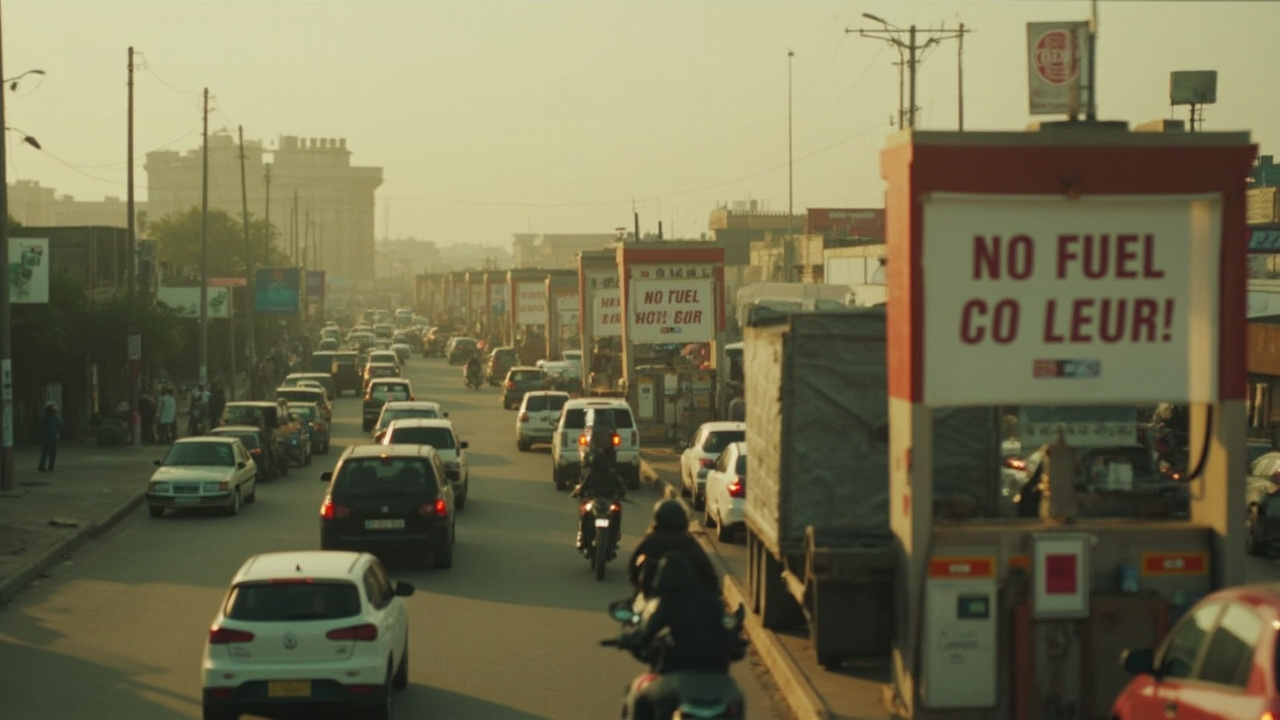
The ceasefire between the United States and Iran was supposed to bring relief. Six days in, Africa's fuel crisis is getting worse, not better.
Across the continent, pump prices are surging at rates that evoke the 1973 oil shock. Ghana raised petrol prices 15% and diesel 19% this week. Malawi imposed increases of 34% on petrol and 35% on diesel. Mauritania hiked petrol by 15.3%, with officials explicitly comparing the situation to the OPEC embargo that reshaped the global economy half a century ago [1][2].
The reason is brutally simple: the ceasefire has not restored oil traffic through the Strait of Hormuz. Physical crude prices have diverged sharply from futures markets, with North Sea Forties — the benchmark for much of Africa's imported petroleum — trading at $146.43 per barrel, a record [3]. Futures may reflect hope that hostilities will not resume. Physical prices reflect reality: tankers are not sailing, insurance remains prohibitive, and the barrels Africa needs are not arriving.
Shortages Spread
Kenya is experiencing acute fuel shortages at filling stations across multiple regions, with suppliers suspected of hoarding supplies in anticipation of further price increases [1]. Long queues have formed in Nairobi, Mombasa, and Kisumu, with some stations rationing purchases to 20 liters per vehicle. The Energy and Petroleum Regulatory Authority has opened investigations into potential market manipulation but has not yet intervened on pricing.
Ethiopia and Zambia are also reporting shortages, though official data remains limited [2]. In both countries, the crisis compounds existing economic pressures — Ethiopia is still managing the aftermath of civil conflict in its northern regions, while Zambia is navigating a debt restructuring that has constrained government spending.
South Africa, the continent's most industrialized economy, has taken preemptive action by reducing its fuel levy for one month to cushion consumers [1]. But analysts warn the gesture is largely symbolic: wholesale diesel prices would need to increase by more than 50% to reflect current crude costs, and the levy reduction absorbs only a fraction of that gap. When the temporary measure expires, South African motorists face a price shock that could rival any in the country's post-apartheid history.
The Physical Oil Problem
The disconnect between futures prices and physical delivery costs is at the heart of Africa's crisis. Global oil futures have moderated slightly on ceasefire optimism, with Brent crude trading around $128 on expectations that Hormuz traffic will eventually normalize [3]. But physical markets — where actual barrels change hands for actual delivery — tell a different story.
North Sea Forties crude at $146.43 represents a premium of nearly $20 over futures, reflecting the scramble among European and African refiners to secure non-Middle Eastern supply [3]. West African crude grades, traditionally priced at a discount to Brent, are now commanding premiums as Asian buyers who normally source from the Persian Gulf compete for Nigerian, Angolan, and Gabonese barrels.
The irony is painful: Africa's oil-producing nations are seeing their crude sold at record prices while their own citizens cannot afford fuel. The structural problem is refining capacity. Despite producing roughly 8 million barrels per day, Africa imports the majority of its refined petroleum products because it lacks sufficient refining infrastructure [4].
The Dangote Factor
Nigeria's Dangote refinery, the largest single-train refinery in the world at 650,000 barrels per day, has emerged as a potential lifeline — but only for Nigeria and a handful of West African neighbors [4]. The facility, which reached full capacity in late 2025, is now processing Nigerian crude and exporting gasoline and diesel to regional markets.
But Dangote cannot solve a continental crisis. Its output serves a fraction of Africa's needs, and the logistics of distributing refined products across the continent's vast distances and fragmented infrastructure remain daunting. East African nations like Kenya and Ethiopia, separated from Nigeria by thousands of kilometers and limited pipeline connectivity, derive no benefit from Dangote's operations [4].
Economic Cascade
The fuel price increases ripple through every sector of African economies with devastating multiplier effects. Transportation costs — already the single largest component of consumer prices in many African nations — are spiking, driving up food prices, construction costs, and the cost of basic services [1][2].
Inflation, which had been gradually declining across much of sub-Saharan Africa through 2025, is now reversing course. Ghana's year-over-year inflation, which had fallen below 15% in January, is projected to exceed 20% by June if fuel prices remain at current levels [2]. Malawi, already one of the world's poorest nations, faces the prospect of inflation exceeding 40%.
The humanitarian dimension is equally alarming. Higher fuel costs directly increase the price of food aid delivery, meaning that the same international assistance budgets reach fewer people. The World Food Programme warned this week that transportation surcharges have increased its operating costs by 30% across the continent since the Iran conflict began [1].
For Africa, the ceasefire has changed nothing that matters. Oil is not flowing. Prices are not falling. And a continent that had no role in starting this war is bearing its heaviest economic costs.
-- AMARA OKONKWO, Lagos