The Bureau of Labor Statistics released the March Consumer Price Index at 8:30 AM Eastern on Thursday, and the number that landed was 3.3 percent year-over-year — up from 2.8 percent in February and 2.4 percent in January, with a month-over-month increase of 0.9 percent that was the largest since June 2022 and the kind of figure that makes the Federal Reserve's rate-cut timeline evaporate on contact. [1] [2] This is the first CPI report that fully captures the energy shock of the Iran war, and what it captures is not a spike but an embedding. The war premium is no longer a line item. It is the price of everything.
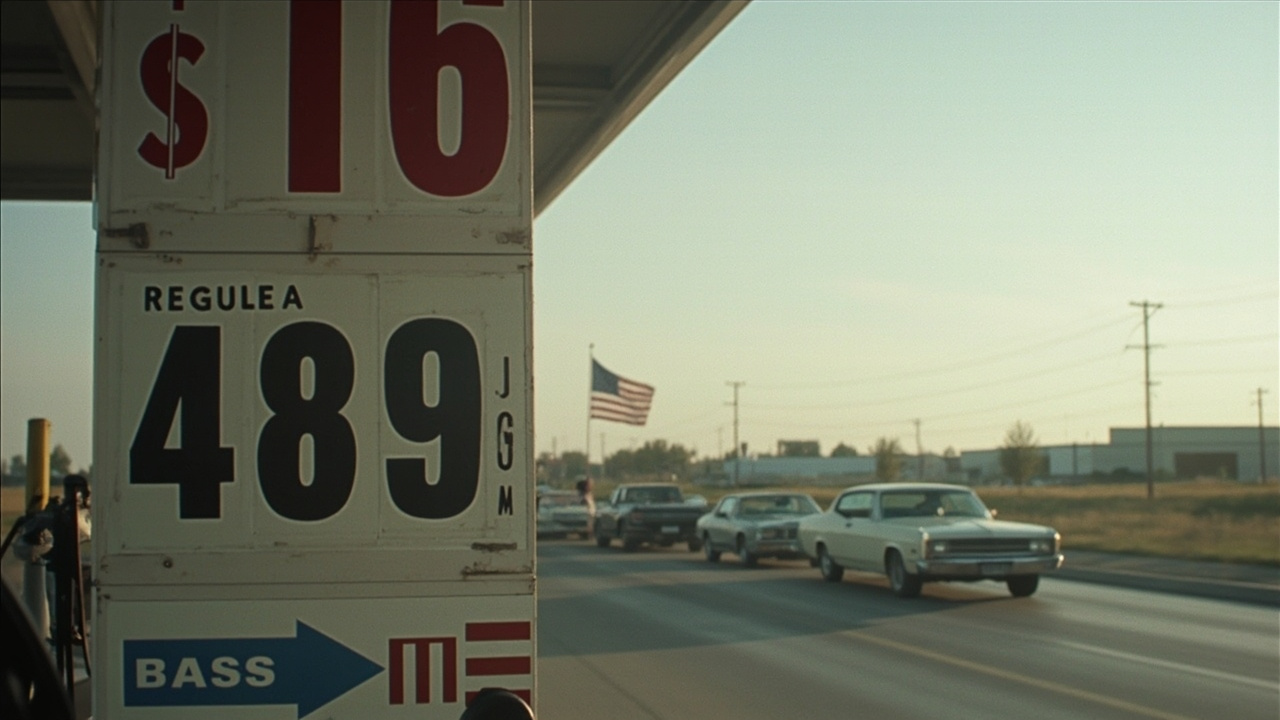
Gasoline did the damage. The energy index rose 10.9 percent year-over-year, but gasoline alone surged 21.2 percent month-over-month — the largest single-month increase since the Arab oil embargo of 1967, according to BLS historical tables, and the number that will define this report in the memories of anyone who filled a tank in March. [3] The national average price of regular gasoline hit $4.15 per gallon, up from $2.98 before the war began. Premium touched $4.89 in California. Gasoline accounted for approximately 75 percent of the headline monthly increase, a concentration that tells a precise story about causation: this is not broad-based inflation. This is Hormuz. [1] [4]
The Strait remains effectively closed, with fewer than ten vessels transiting per day compared to pre-war averages above 135. Every barrel of oil that used to flow through that chokepoint — roughly 20 percent of the world's petroleum supply — is now either rerouted around the Cape of Good Hope at significantly higher cost or simply not flowing at all. The International Energy Agency has called it "the most severe supply disruption in history." The March CPI is what that disruption looks like when it arrives at the gas pump, the grocery shelf, and the utility bill.
The Core Paradox
Here is the number that Wall Street will argue about for weeks: core CPI, which strips out food and energy, came in at 2.8 percent year-over-year — or, by the Bureau's own more granular calculation, closer to 2.6 percent. [5] [2] Core inflation actually cooled from February. Shelter costs, the single largest component of the CPI basket, decelerated for the fourth consecutive month. Used car prices fell 0.7 percent. Apparel was flat. Medical care services rose a modest 0.3 percent.
In an ordinary economic environment, a 2.6 percent core reading would be encouraging — close enough to the Federal Reserve's 2 percent target to justify the rate cuts that markets had been pricing in since late 2025. But this is not an ordinary environment. This is an environment in which headline inflation is being dragged upward by a single cause — energy — that the Federal Reserve cannot address with monetary policy. The Fed can raise rates to cool demand. It cannot reopen the Strait of Hormuz. [1]
The result is a paradox that will paralyze the Federal Open Market Committee for the foreseeable future. The economy does not have a demand problem. Consumer spending on non-energy goods is softening. Credit card delinquencies are rising. The labor market, while still tight by historical standards, added only 142,000 jobs in March, the weakest reading since the pandemic recovery. A rate cut would help. But headline inflation at 3.3 percent, with gasoline still climbing, makes a rate cut politically impossible for a Fed that spent 2022 and 2023 rebuilding its credibility as an inflation fighter. [4]
Market pricing on Thursday moved the first expected rate cut to late 2027. Not 2026. 2027. The two-year Treasury yield rose 14 basis points. The interest-rate-sensitive housing sector, already struggling under 7.2 percent mortgage rates, showed no path to relief. [2]
The War Tax
The most useful way to understand the March CPI is not as an economic statistic but as a war tax — a levy imposed not by Congress but by geography and physics. [3] Before the Iran war, the United States was experiencing the kind of disinflation that central bankers dream about: steady decline from the 9.1 percent peak of June 2022, with core measures approaching target. The war interrupted that trajectory with the precision of an artillery strike.
The transmission mechanism is straightforward. Hormuz closes. Oil supply contracts. Gasoline prices rise. Transportation costs rise. Food prices rise — because food travels by truck, and trucks run on diesel, and diesel is refined from the same crude oil that is not coming through the Strait. Electricity costs rise in regions dependent on natural gas, because LNG tankers are among the vessels not transiting. Airline fares rise. Shipping costs rise. The war touches every price that has a logistics chain behind it, which is to say every price. [3] [4]
What the March CPI shows is that this transmission is no longer a shock. It is a structure. Businesses are not treating elevated energy costs as temporary disruptions to be absorbed. They are passing them through to consumers and adjusting their pricing models to assume that the war premium is permanent — or at least as permanent as the war itself. [5] The BLS data shows that the gap between energy-included and energy-excluded inflation widened to 0.7 percentage points in March, the largest spread since the oil price collapse of 2014 in reverse. That gap is the war, measured in basis points.
For the American consumer, the arithmetic is blunt. A household that drives two cars and fills each tank once a week is paying approximately $250 per month more for gasoline than it was before the war. That is $3,000 per year — real money, taken from real budgets, spent not on goods or services but on the geopolitical consequences of a conflict most Americans cannot locate on a map. The war premium is now embedded in everything, and the March CPI is simply the first official document to say so.
-- THEO KAPLAN, Washington