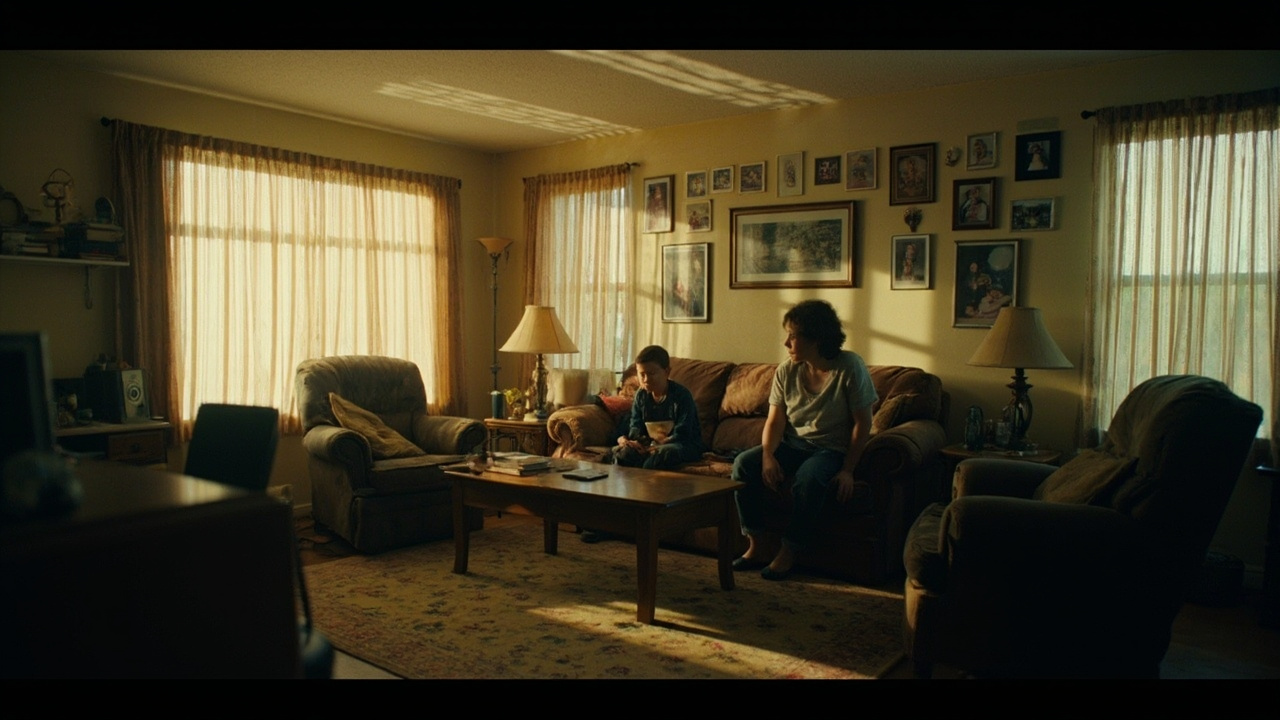
Twenty years after Malcolm Wilkerson looked into the camera for the last time, he is back. "Malcolm in the Middle: Life's Still Unfair" premiered on April 10 on Hulu and Disney+, dropping all four episodes of its limited revival at once [1]. The original cast has returned — Frankie Muniz as Malcolm, Bryan Cranston as Hal, Jane Kaczmarek as Lois, Christopher Kennedy Masterson as Francis, and Justin Berfield as Reese. The show that defined a generation of chaotic family comedy has come home, and home is exactly as messy as you remember.
The premise is straightforward and deeply in character. Malcolm, now an adult, has spent over a decade shielding himself and his teenage daughter Leah from the gravitational pull of his family [1][2]. He built distance deliberately — fewer phone calls, skipped holidays, a careful architecture of avoidance. But when Hal and Lois's 40th wedding anniversary arrives, the pull becomes unavoidable. Malcolm returns, daughter in tow, and the dysfunction reasserts itself with the inevitability of a physical law.
Cranston, who went on to become Walter White and one of the most celebrated actors of his generation, reportedly spent a decade nudging creator Linwood Boomer toward a revival [1]. The effort was not casual. Cranston has spoken publicly about how Hal remains one of his favorite roles — a man of boundless enthusiasm and questionable judgment, equal parts lovable and dangerous. Boomer, who created the original series and shaped its singular voice, returned to write and produce the revival. Ken Kwapis directed all four episodes, providing visual consistency across the limited run [2].
The new characters slot into the family ecosystem naturally. Keeley Karsten plays Leah, Malcolm's daughter, who carries echoes of her father's intelligence and her grandmother's stubbornness [2]. Vaughan Murrae appears as Kelly, Kiana Madeira as Tristan, and Caleb Ellsworth-Clark takes over the role of Dewey, the youngest Wilkerson brother, in a recast that the show handles without excessive explanation [1][2]. The original Dewey, Erik Per Sullivan, retired from acting years ago, and the production chose to keep the character rather than write around his absence.
The critical reception has been warm. The revival holds an 81% on Rotten Tomatoes, with reviewers largely praising the cast chemistry and the show's refusal to sand down its edges for nostalgia's sake [3]. The Wilkersons are not presented as a family that learned its lessons. They are older, somewhat more battered, and fundamentally unchanged. Hal still roller-skates. Lois still terrifies. Reese still operates on an intellectual plane that defies conventional measurement.
AP's coverage emphasized the emotional resonance of the reunion, noting that Muniz — who has spoken openly about memory loss related to his early career — approached the revival with genuine enthusiasm [1]. In the weeks before filming, Muniz posted on X that he had started rewatching the original series from the beginning: "Just started watching Malcolm in the Middle episode 1. Got 151 to catch up on before we start filming again in a few days!!! Can't wait to get back together with my old family." The post captured something authentic about what the revival means to its cast — not a paycheck, but a return to a creative family.
The original series ran for seven seasons on Fox from 2000 to 2006, winning seven Emmy Awards and establishing a template for single-camera family comedies that abandoned the laugh track and embraced controlled chaos [1][3]. It was ahead of its time in ways that became clearer in retrospect. The show's frank depiction of working-class family life, its refusal to romanticize poverty, and its willingness to let its characters be genuinely unpleasant all anticipated trends that would dominate television comedy in the following decades.
The revival joins a growing wave of 2000s nostalgia programming. Networks and streamers have learned that audiences who grew up with these shows now have disposable income and streaming subscriptions, making revivals a reliable way to generate attention in an overcrowded content landscape [3]. The question that hangs over every revival is whether it exists because the story demands it or because the algorithm does. "Life's Still Unfair" seems aware of this tension. Its four-episode structure suggests restraint — enough to revisit, not enough to overstay.
Produced by 20th Television and New Regency, the revival benefits from the compression of its format [2]. Four episodes allow for a single story arc — Malcolm's return, the anniversary, the confrontation with what he left behind — without the padding that plagues longer revival seasons. The pacing mirrors the original series at its best: dense, fast, and willing to cut away to a visual gag at the exact moment a scene threatens to become sentimental.
Whether this is a one-time event or the beginning of something longer remains formally unanswered. Cranston and Muniz have both expressed openness to more episodes, but Boomer has been characteristically noncommittal. The four episodes tell a complete story. Sometimes that is enough.