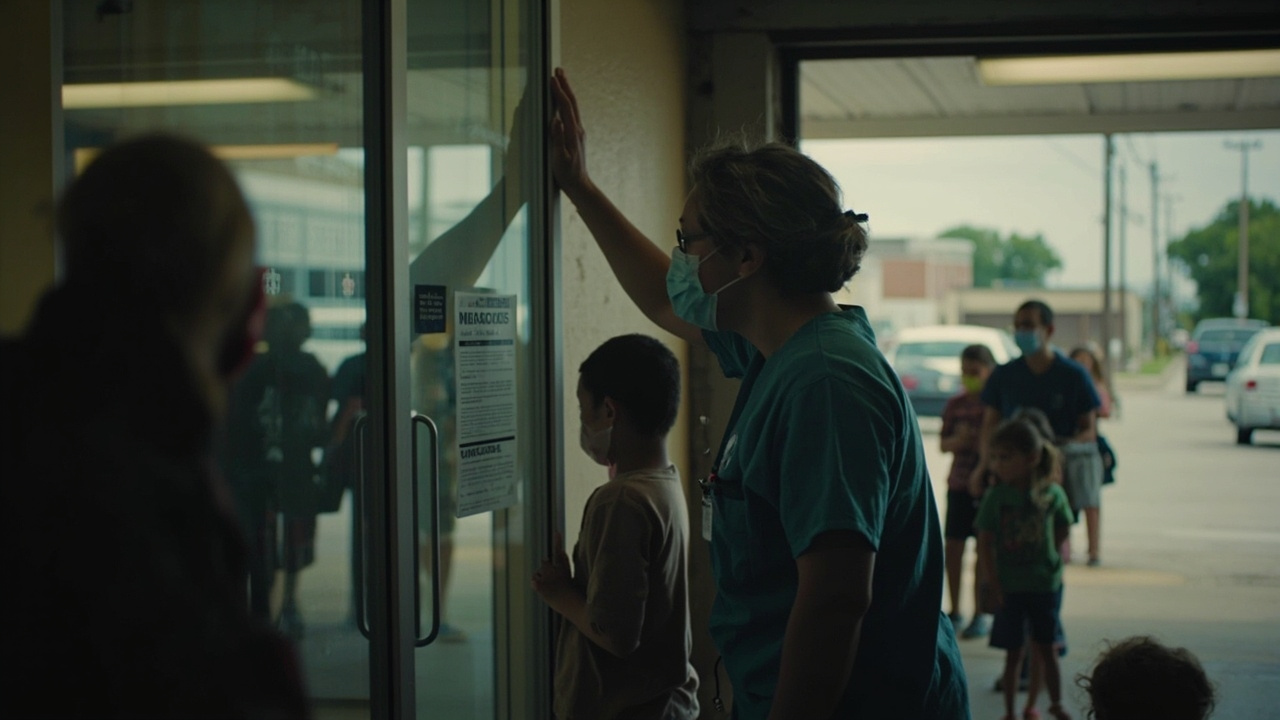
The cumulative measles case count in the United States reached 1,671 through April 2, according to data compiled from state health departments and the Centers for Disease Control and Prevention, making 2026 the worst measles year since 1994 — and the year is not yet one-third over. [1] South Carolina alone accounts for approximately 1,000 of those cases, nearly all concentrated in Spartanburg County, a community of 330,000 in the state's northwestern corner where vaccination rates had fallen below the herd immunity threshold before the first case was reported in late January. [1] Florida has recorded 144 cases, though its outbreak appears to be slowing. Across all reporting states, 94 percent of measles patients were unvaccinated. [2]
The context is worse than the numbers suggest. The United States declared measles eliminated in 2000 — meaning sustained domestic transmission had been interrupted. That status held for two decades. It no longer holds. The Spartanburg outbreak has been transmitting continuously for more than ten weeks, a chain of infection meeting the WHO definition of endemic transmission. [1]
Spartanburg
The outbreak began in a cluster of families associated with a private school where vaccination records were not required for enrollment. From there, measles spread through churches, grocery stores, emergency departments, and the ordinary infrastructure of daily life. Measles is among the most contagious diseases known — an infected person in a room will transmit the virus to 90 percent of unvaccinated people who share that air, and the virus remains infectious for up to two hours after the infected person has left. [2]
Spartanburg County's pre-outbreak MMR vaccination rate among kindergartners was 89 percent — five points below the 94 to 95 percent threshold required for herd immunity. [3] The gap sounds narrow. In practical effect, it is enormous. At 95 percent coverage, the virus cannot find enough susceptible hosts to sustain transmission. At 89 percent, it can, and it did.
The population most at risk is the one that cannot protect itself. The MMR vaccine is not recommended until twelve to fifteen months of age. Infants younger than one are, in the language of one pediatric infectious disease specialist, "sitting ducks." [2] They depend entirely on the vaccinated population around them. When that surrounding immunity erodes, the contract breaks.
A National Erosion
South Carolina's outbreak is the largest but not alone. The 2026 count is approaching the full-year 2025 total of 2,255, itself a post-elimination record. [1] Texas reported 87 cases through March. Ohio had 63. New York has 41, with no single community cluster — a pattern suggesting diffuse, low-level transmission rather than a focal outbreak. [3]
The CDC has confirmed 416 cases for 2026 in its most recent weekly report, a figure that lags state totals by weeks because of the agency's verification process. [1] The discrepancy has become a recurring source of confusion, with officials sometimes citing the lower number in ways that understate the outbreak's scale.
National kindergarten MMR vaccination rates have fallen from 95.2 percent in the 2019-2020 school year to below 93 percent in 2024-2025 — a 2.5-point decline translating to roughly 100,000 additional unvaccinated kindergartners per year. [3] The decline is uneven. Mississippi and West Virginia maintain rates above 95 percent through strong mandates. Idaho has fallen to 82 percent. Alaska to 84 percent. In some districts, rates are in the 60s and 70s.
The political context cannot be separated from the data. Robert F. Kennedy Jr., confirmed as HHS Secretary in February 2025, has spent decades as the nation's most prominent vaccine skeptic. His department has not withdrawn the CDC's MMR recommendation, but it has initiated a rewrite of vaccine information statements that public health advocates say downplays benefits and overstates risks. [2] The rewrite has not been finalized, but its existence has chilled vaccine confidence in communities where confidence was already fragile.
The Disease
Measles is not mild. Before the vaccine was introduced in 1963, measles infected three to four million Americans annually, hospitalized 48,000, and killed 400 to 500. One in every 1,000 infected children developed encephalitis. A rarer complication, subacute sclerosing panencephalitis, destroys the brain years later and is invariably fatal. [2]
Spartanburg has already seen hospitalizations. CIDRAP reported that multiple children under two required inpatient care, and at least one infant was admitted to a pediatric ICU. [1] No deaths have been reported, but measles kills at a rate of one to two per thousand in developed countries. With 1,000 cases in one county, the statistical probability of a death before containment is not negligible.
The MMR vaccine, introduced in 1971, provides 97 percent protection in two doses. It costs less than $25 at public-sector pricing. It is available in every pharmacy and pediatrician's office in the country. [3] The disease is not advancing because medicine failed. It is advancing because a growing number of Americans have declined to use the medicine that works.
-- NORA WHITFIELD, Chicago