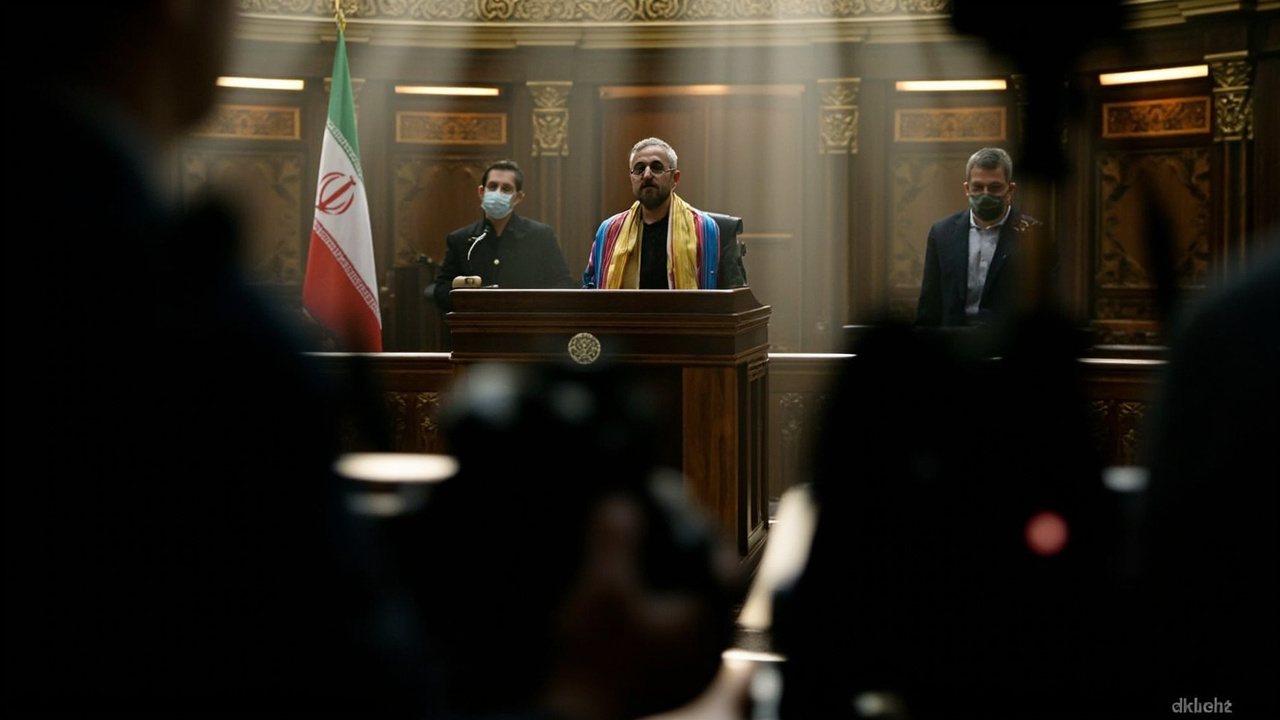
Iran's new Supreme Leader Mojtaba Khamenei declared the conflict with the United States a "decisive victory" on Thursday, invoking Quranic language in a nationally broadcast address [1]. Hours later, his chief negotiator boarded a flight to Islamabad, where ceasefire talks with the US are set to begin under Pakistani mediation [2].
The contradiction is the strategy. Yesterday's victory declaration was not aimed at Washington — it was aimed at Tehran. Mojtaba Khamenei inherited the Supreme Leader title after his father Ali Khamenei was killed in the February 28 strikes, and his grip on the role remains contested. He is closely tied to hardline IRGC factions, but wartime succession is inherently fragile. A victory narrative, however detached from battlefield reality, cements his legitimacy with the Revolutionary Guard and the clerical establishment simultaneously [1].
The Islamabad track tells a different story. Iran's willingness to negotiate — with Pakistan brokering and the ceasefire holding — suggests the regime knows the war's costs are unsustainable. The Strait of Hormuz remains partially disrupted, oil revenues are cratered, and infrastructure damage from US strikes is extensive [2].
Declaring victory while suing for peace is not new in the region. But it matters who is doing the declaring. A new Supreme Leader, untested and unelected even by Iran's managed standards, needs the narrative more than he needs the facts. The victory speech is consolidation dressed as celebration.