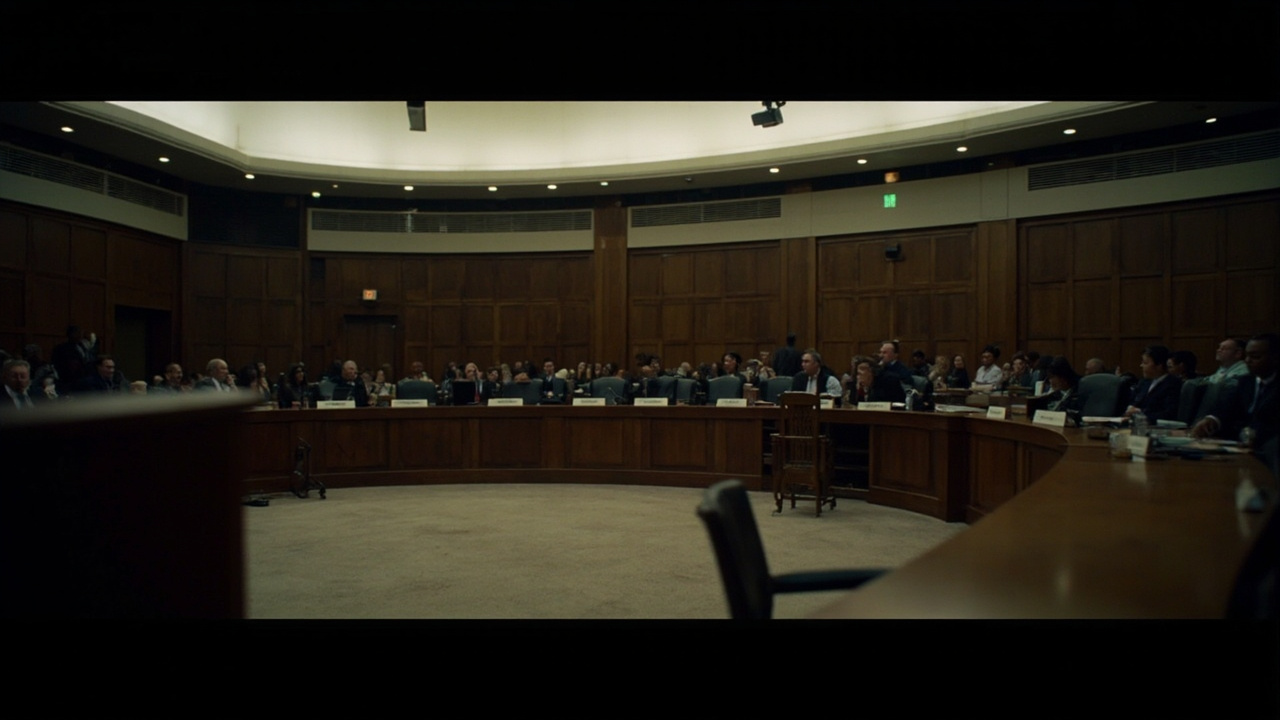
Health Secretary Robert F. Kennedy Jr. published a rewritten charter for the Advisory Committee on Immunization Practices on April 6, broadening the qualifications for membership and adding language about studying "the cumulative effects of vaccines and their constituent components." [1][2] The rewrite landed three weeks after a federal judge in Boston froze the committee entirely, ruling that Kennedy's appointees were "distinctly unqualified" and that the panel had been unlawfully reconstituted. [3] The committee cannot meet. The judge's preliminary injunction remains in force. And Kennedy is now trying to rewrite the rules that the judge said he broke.
The sequence matters. On March 16, U.S. District Judge Brian Murphy issued a preliminary injunction in AAP v. Kennedy, blocking 13 of Kennedy's ACIP appointments, invalidating every vote the reconstituted committee had taken, and staying the January 2026 overhaul of the childhood vaccine schedule that cut recommended immunizations from 17 to 11. [3][4] Murphy found that Kennedy had violated the Federal Advisory Committee Act by replacing all 17 previous expert members with a slate that included several vaccine skeptics, and that "even under the most generous reading, only six appear to have any meaningful experience in vaccines." [3]
Three weeks later, Kennedy's HHS published a new charter in the Federal Register that reads like a point-by-point response to Murphy's opinion. [1]
Rewriting the Qualifications
The previous ACIP charter, signed by Kennedy in December 2024, required members to be "knowledgeable about immunization practices and public health" with "expertise using vaccines in clinical practice or preventive medicine" or "expertise in vaccine research, or in vaccine efficacy and safety." [1][2] Judge Murphy used that language to conclude that most of Kennedy's appointees did not meet the committee's own stated requirements.
The new charter broadens those criteria substantially. It adds toxicology, biostatistics, pediatric neurodevelopment, and — notably — "recovery from serious vaccine injuries" to the list of qualifying expertise. [2][5] It mandates that membership be "fairly balanced" with "representation from diverse geographic areas and diverse viewpoints" and a "balance of specialty areas." [1]
The effect is architectural. By expanding what counts as expertise, the new charter could allow the same appointees Murphy rejected to re-qualify under the revised criteria. HHS spokesman Andrew Nixon called the changes "routine statutory requirements" that "do not signal any broader policy shift." [1] Two former ACIP members told Reuters the new charter appeared designed to legitimize the very appointments the court had blocked. [1]
The Anti-Vaccine Playbook
The charter rewrite did not emerge from HHS policy staff. It followed a March 25 letter from attorney Aaron Siri, representing the Informed Consent Action Network — a group critical of vaccine mandates that has long been aligned with Kennedy's views. [1] ICAN's letter urged Kennedy to "clarify committee member criteria" and argued that all 13 stayed appointees "do have the requisite experience." [1] The new charter tracks Siri's recommendations closely.
The language about "cumulative effects of vaccines and their constituent components" is particularly significant. [2][5] Anti-vaccine groups have long alleged that the number of childhood vaccines increases the risk of neurodevelopmental conditions such as autism. Researchers have studied this question for decades and have not found a link. [5] Embedding that language in the committee's governing charter elevates a fringe hypothesis to an official research priority.
STAT News reported that the revised charter also doubles the committee's budget from $410,000 to $1.08 million, with no explanation for the increase. [5] And it explicitly confirms that the HHS Secretary — Kennedy — personally selects and appoints all members, chair, and vice chair. [2]
The CDC Report That Disappeared
The charter rewrite is not the only front in this week's vaccine policy fight. On April 9, the Washington Post reported that acting CDC Director Jay Bhattacharya — a Trump appointee who also serves as NIH director — halted publication of a CDC study showing that COVID-19 vaccination reduced emergency department visits by 50 percent and hospitalizations by 55 percent among healthy adults during the 2025-2026 winter season. [6][7]
The report was cleared through the CDC's internal scientific review and scheduled for publication on March 19 in the Morbidity and Mortality Weekly Report, the agency's flagship epidemiological journal. [6] Bhattacharya intervened, citing concerns about the observational methodology — the same test-negative design the CDC has used for years to evaluate respiratory virus vaccines. [6][7]
Dr. Fiona Havers, a senior CDC epidemiologist who oversaw the study, resigned in protest. She told the Washington Post that the blocking of the report was "an escalation" of the administration's effort to undermine vaccine science. [6] An HHS spokesperson said the delay was "routine" and that "Dr. Bhattacharya wants to ensure that the highest scientific standards are met." [7]
Expertise as Disqualification
The deeper pattern is epistemological. Kennedy fired the 17 ACIP members who had decades of vaccine expertise and replaced them with allies. When a judge ruled the replacements unqualified, Kennedy rewrote the definition of qualified. When the CDC produced data showing vaccines work, the acting director blocked the data from publication.
At every step, the logic is the same. Expertise in vaccines is treated not as a credential but as a conflict of interest. Knowledge of the field is reframed as captured. The people who know the most are systematically replaced by people who believe the least.
The lawsuit continues. Judge Murphy's injunction is preliminary, not permanent. The Trump administration has not yet appealed but retains the option. [3] A hearing on the merits is expected later this spring. Meanwhile, the ACIP — the committee that has guided American vaccine policy since 1964 — sits empty. Its chairs are pushed back. Its microphones are off. And the man who emptied the room is rewriting the rules for who gets to sit down.