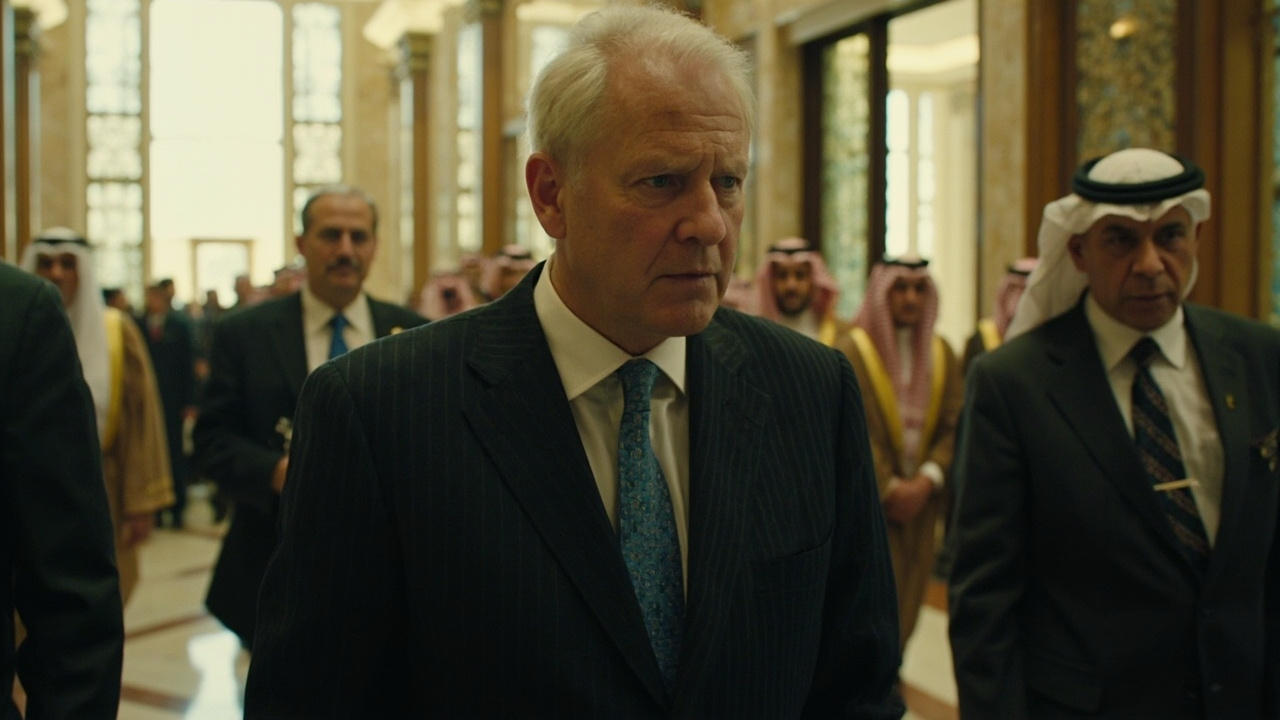
Keir Starmer continued his condemnation of Israeli strikes on Lebanon during his Gulf tour Friday, telling ITV News that Israel is "wrong" and "should stop" its attacks as a "matter of principle" [1]. It remains the strongest language any Western leader has used on the Lebanon front. It also remains contradicted by his own basing decisions.
Yesterday's condemnation marked a rhetorical break with Washington. Today's Gulf stops — Doha, Saudi Arabia, UAE, Bahrain, Qatar — are aimed at shoring up the fragile US-Iran ceasefire and reopening the Strait of Hormuz [1]. Starmer is positioning Britain as a diplomatic bridge, and the language on Lebanon is part of that positioning.
But the UK granted the US use of RAF Fairford and Diego Garcia for what it called "defensive" operations against Iran, even as it refused to participate in the initial strikes directly [2]. Iran has warned London that hosting American aircraft constitutes "participation in aggression." The UK's position is that basing rights are defensive. Iran's position is that the bombs are not.
Starmer is walking a tightrope that may not exist. Condemning Israeli strikes on Lebanon while enabling American strikes on Iran requires audiences in different capitals to hear different things. In Doha and Riyadh, the Lebanon condemnation builds credibility. In Washington, the basing agreements maintain the alliance. The contradiction is not a bug — it is the entire architecture of British foreign policy in a war it did not choose and cannot leave.