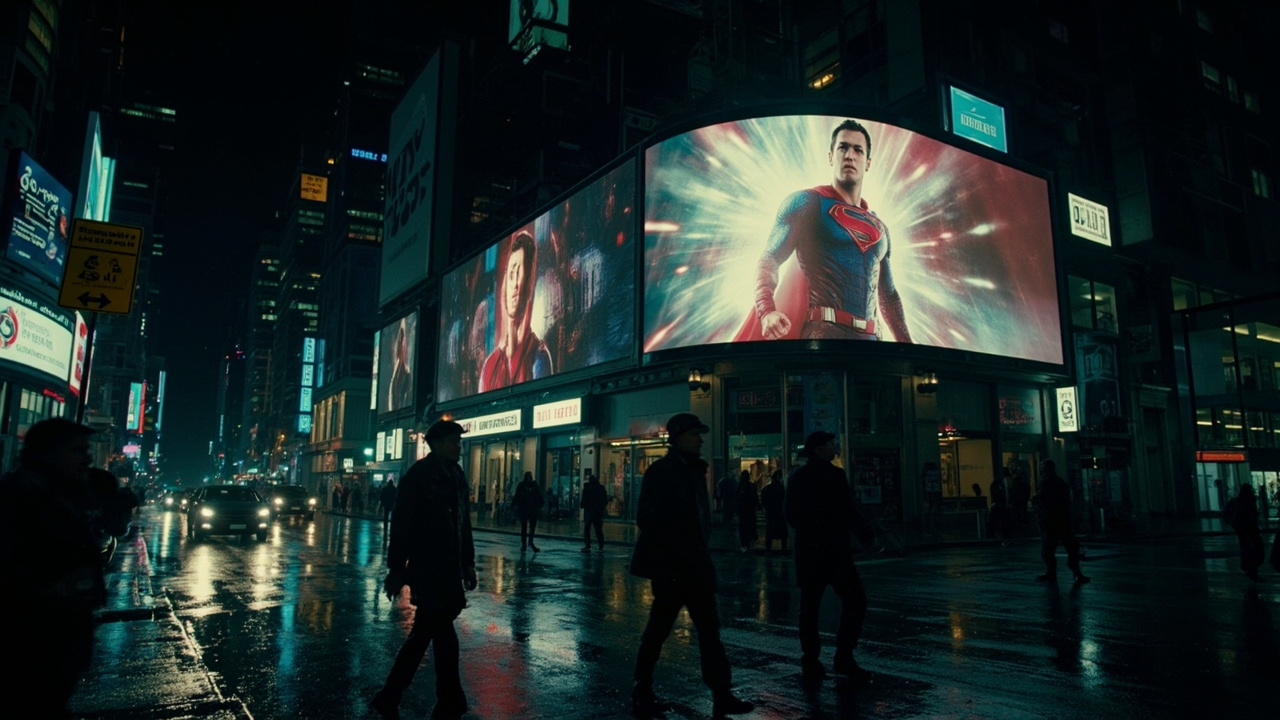
The Boys returned on April 8 with the first two episodes of its fifth and final season on Prime Video, and the show that spent four seasons satirizing the intersection of corporate power, political authoritarianism, and superhero worship has arrived at a moment when its fiction feels uncomfortably redundant [1]. The series holds a 98% approval rating on Rotten Tomatoes from 40 critic reviews. It is already tracking as the number two title globally on Prime Video. The question is no longer whether The Boys is good television. The question is whether America has made it obsolete by becoming the thing it warned about.
Showrunner Eric Kripke announced in June 2024 that this would be the final season, giving the writing team time to construct an ending rather than scramble for one [1][2]. The result is a season that opens with Homelander's America fully realized — a world where the superhero-turned-authoritarian has consolidated power, wrapped it in patriotic branding, and turned dissent into terrorism. Karl Urban's Billy Butcher returns with a virus engineered to wipe out all Supes, a genocidal solution to an existential problem. Jack Quaid's Hughie, along with Mother's Milk and Frenchie, finds himself in a "Freedom Camp" — the show's darkest metaphor yet for what happens to opposition in an authoritarian state [1][2].
Antony Starr's Homelander remains the show's gravitational center. Starr has built one of television's great villains across five seasons — a figure who combines Superman's power with the emotional architecture of a neglected child, capable of genuine tenderness and casual murder within the same scene. Erin Moriarty's Starlight continues to anchor the moral framework, and Jensen Ackles returns as Soldier Boy, a character whose arc has traced the dark side of American exceptionalism since his introduction in Season 3 [2][3].
The Supernatural reunion that fans anticipated has arrived. Jared Padalecki and Misha Collins both appear this season, joining Ackles and Kripke in a creative reunion that bridges two decades of genre television [3]. Kripke created Supernatural before The Boys, and the casting is both fan service and thematic continuity — actors who spent years playing monsters and monster hunters now inhabiting a world where the monsters wear capes and hold press conferences.
The world premiere took place on March 19 in Rome, a choice that placed the show's American political satire in deliberately international context [2]. Deadline's coverage of the premiere emphasized the show's willingness to push further in its final season, noting that the trailer featured Homelander seeking immortality — an ambition that doubles as a metaphor for the permanence of the systems he represents [2]. Power does not retire. It does not term-limit itself. It seeks to become permanent.
The two-episode premiere structure gives way to weekly releases, with the remaining six episodes airing through May 20 [1]. The pacing is a deliberate contrast to the binge model. Kripke has argued that weekly releases generate conversation, and The Boys is a show designed for conversation — each episode unpacking layers of political allegory that reward discussion and debate.
Radio Times highlighted the season's engagement with its own legacy, noting that The Boys has spawned a connected universe including Gen V, which concluded its second season and set up events for the final season, and the upcoming prequel Vought Rising [3]. The expansion is strategic. Even as the flagship series ends, the intellectual property continues. Amazon has invested too heavily in the franchise to let it conclude entirely. The question is whether spin-offs can sustain a world that derived its power from the specific chemistry of this cast and this showrunner.
Critics have noted that the show's satire has evolved from broad comedy to something closer to horror. Early seasons played Homelander's fascism for dark laughs. The final season plays it straight. The Freedom Camps are not funny. The surveillance apparatus is not funny. The media manipulation is not funny. The Rotten Tomatoes consensus describes a show that "stays true to its form and completes its" story with the intensity its subject matter demands [1].
The cultural timing is extraordinary. A show about a superhero who wraps authoritarianism in patriotism, who weaponizes media, who demands loyalty over competence, and who views any criticism as an attack on the nation itself — this show is concluding during a period when its premise requires less and less imagination to understand. The writers did not have to invent the world of Season 5. They just had to look out the window.
The Boys will end on May 20. The America it describes shows no signs of concluding.