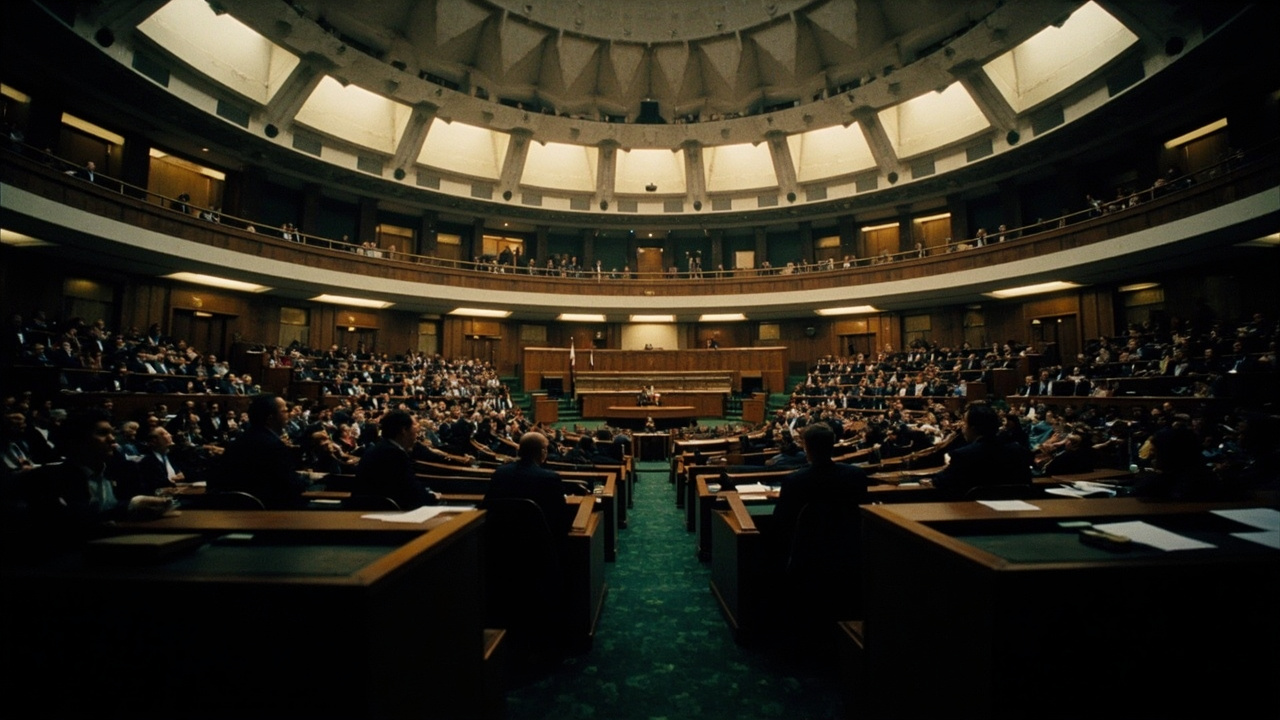
Iraq's parliament elected Nizar Amedi as the country's new president on Saturday, ending a five-month political deadlock that left Iraq without a functioning government while a war between the United States, Israel, and Iran raged across its borders. Amedi secured 227 votes in a second round of voting, defeating independent candidate Muthanna Amin Nader, who received 15. [1]
The presidency is largely ceremonial under Iraq's constitution. The job that matters — prime minister — now moves to the front of the line, and that is where the real confrontation begins. Under Iraq's sectarian power-sharing system, established after the 2003 U.S. invasion, the president must be Kurdish, the parliamentary speaker Sunni, and the prime minister Shiite. Amedi, a 58-year-old career public servant from the Patriotic Union of Kurdistan, fills the first slot. The Shiite Coordination Framework, an alliance of Iran-aligned parties holding a parliamentary majority, nominated former Prime Minister Nouri al-Maliki for the third. [1]
Maliki's candidacy is the fracture line. He served as prime minister from 2006 to 2014, the only Iraqi leader to hold the job for two terms since Saddam Hussein's removal. His tenure was marked by accusations of deepening sectarianism — particularly the marginalization of Sunni communities, which many analysts cite as a contributing factor to the rise of the Islamic State in 2014. President Trump threatened in January to withdraw U.S. support for Iraq, a major oil producer and security partner, if Maliki were designated to form a cabinet. [1]
Amedi now has 15 days under the constitution to formally task the largest parliamentary bloc's nominee with assembling a government. Caretaker Prime Minister Mohammed Shia al-Sudani stepped aside earlier this year to clear the path for Maliki, but whether the Coordination Framework proceeds with that nomination or recalculates remains uncertain. The Kurdistan Democratic Party, the State of Law Coalition, and the Hoquq Movement boycotted Saturday's session — a signal that the political alliances needed to govern have not yet solidified. [1]
The geopolitical backdrop makes every domestic decision heavier. Iraq was caught in the crossfire of the U.S.-Israeli war on Iran, with Iran-backed militias launching attacks from Iraqi soil and U.S. and Israeli strikes hitting targets within Iraq's borders. Senior American and Iranian officials are meeting in Islamabad this weekend in the highest-level direct talks between Washington and Tehran in half a century. Iraq, which has spent two decades balancing its relationships with both countries, now faces a government formation process shaped by which patron it leans toward. [1]
"I am fully aware of the scale of challenges facing our country," Amedi told parliament after the vote. He has been a public servant for decades — a former environment minister, an aide to two presidents, and the head of the PUK's political bureau in Baghdad since 2024. He becomes Iraq's sixth head of state since 2003. [1]
The country has gone nearly 150 days without a new government since November's parliamentary elections. The presidency was supposed to be filled within 30 days of parliament's first session in December. It took until April. The prime ministership, constitutionally due within 30 days of the presidency, will test whether Iraq can move any faster the second time. [1]
-- YOSEF STERN, Jerusalem