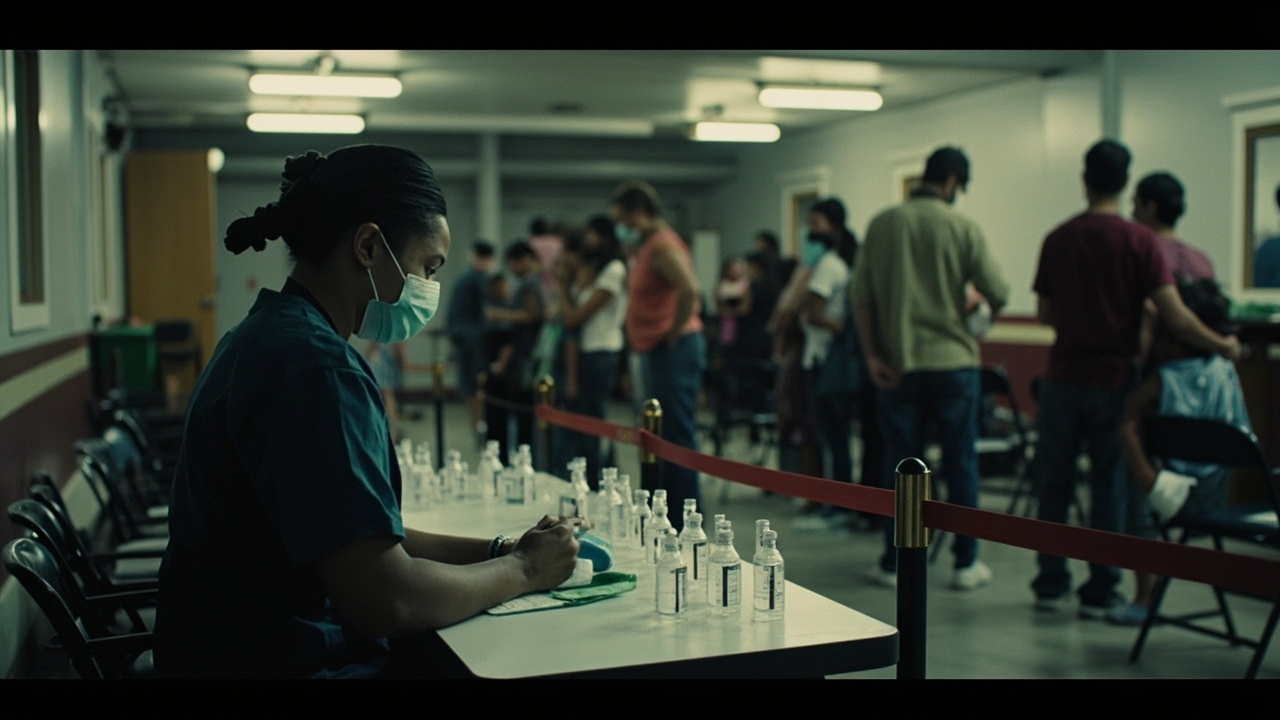
WASHINGTON — The Centers for Disease Control and Prevention reported Thursday that the United States has recorded 1,714 confirmed measles cases in 2026, up 43 from the previous week. Thirty-two states and New York City have reported cases. Ninety-four percent are associated with one of 17 active outbreaks. Ninety-two percent of patients are unvaccinated or have an unknown vaccination status. The country will likely lose its measles elimination status — which it gained in 2000 — when the Pan American Health Organization reviews the data in November. [1]
The trajectory is not subtle. The United States recorded 2,286 cases in all of 2025, already the highest since 1991. At the current pace, 2026 will surpass that by summer. Utah alone has reported 408 cases this year. South Carolina's outbreak, centered in the upstate region, became the largest in U.S. history since elimination was declared. Florida has 144 cases. Texas has 176.
The clinical picture: 96 patients have been hospitalized, a rate of 6%. Twenty-one percent of cases are children under five. Seventy-three percent are children and young adults under 19. No measles-related deaths have been confirmed in 2026 — the three deaths last year remain the most recent — but the hospitalization rate represents a disease that was supposed to be gone. [1]
Elimination status is a technical designation. It means that domestic transmission of the virus had not persisted for more than a year. PAHO was originally scheduled to review U.S. status in April but delayed the meeting to November, citing the "scope of analysis currently being undertaken by U.S. authorities." The question PAHO must answer: are the multiple outbreaks across the country linked by a continuous chain of transmission from the January 2025 Texas outbreak, or are they separate introductions from abroad? [2]
CDC Principal Deputy Director Ralph Abraham, appointed under HHS Secretary Robert F. Kennedy Jr., has publicly downplayed the prospect. "Losing elimination status does not mean that the measles would be widespread," he said in a January briefing. Asked if the loss would be significant, he replied: "Not really." He called it "the cost of doing business with our borders." [3]
Public health experts disagree sharply. Former CDC National Center for Immunization director Demetre Daskalakis said in a January press briefing: "Measles elimination is a vital sign of our public health system. That public health system is blue in the ICU. I don't need to check its pulse to know the answer." [3]
The policy backdrop matters. Kennedy's HHS has moved to restructure the Advisory Committee on Immunization Practices. Vaccination rates among U.S. kindergartners dropped to a record-low share seeking exemptions last school year. The Infectious Diseases Society of America this week urged Kennedy to uphold the scientific integrity of CDC's vaccine advisory process. [1]
A country that eliminated a disease in 2000 is watching it return in 2026. The virus has not changed. The infrastructure that stopped it has.
-- NORA WHITFIELD, Washington