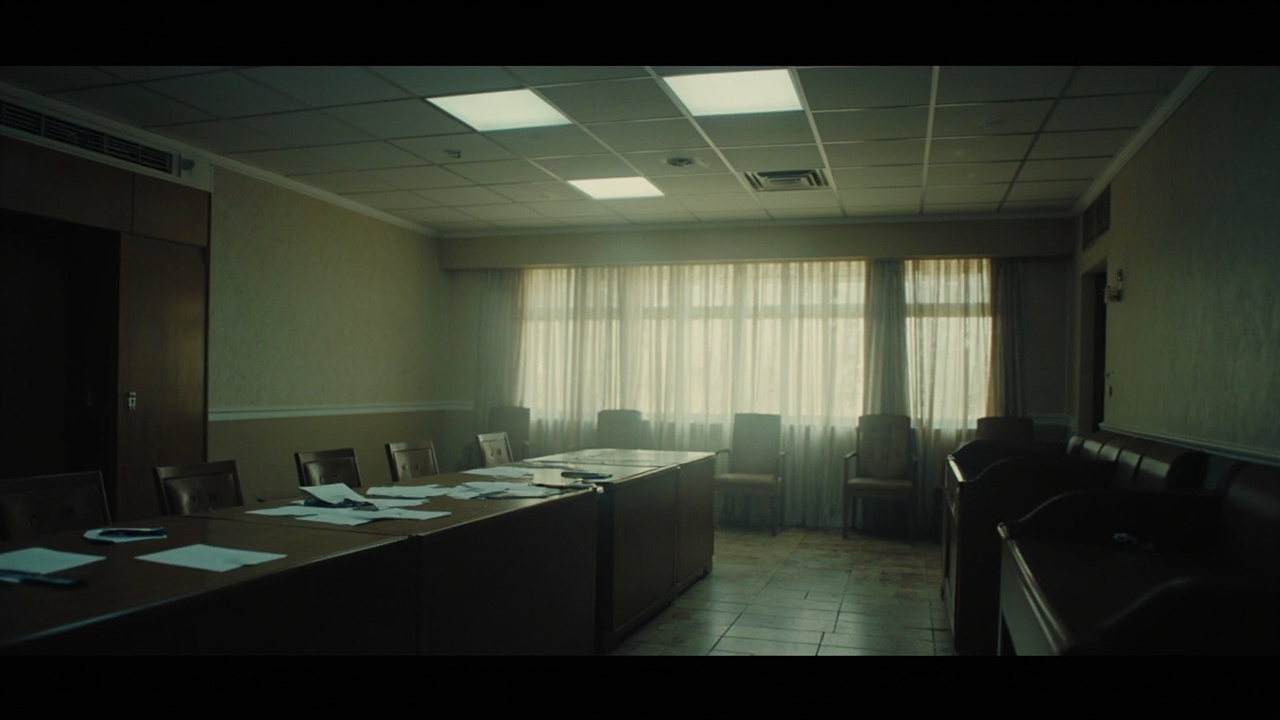
Iran's Foreign Minister Abbas Araghchi posted on X within hours of the Islamabad talks' collapse: "In intensive talks at highest level in 47 years, Iran engaged with U.S in good faith to end war. But when just inches away from 'Islamabad MoU', we encountered maximalism, shifting goalposts, and blockade. Zero lessons earned." [1] Vice President JD Vance, standing before cameras at dawn in Islamabad, told a different story: "They have chosen not to accept our terms." [2]
This paper reported Saturday on Vance's departure after twenty-one hours of fruitless negotiation, noting the "final offer" left on the table and the vice president's warning that failure would be "bad news for Iran." Today, two sharply divergent narratives about those twenty-one hours have crystallized, and the speed of what followed — a naval blockade announced eight hours after Vance's plane left Pakistani airspace — suggests one version may matter less than the timing.
The American version, delivered in a three-minute press conference that caught Pakistani mediators off guard, centered on nuclear weapons. "We need to see an affirmative commitment that they will not seek a nuclear weapon, and they will not seek the tools that would enable them to quickly achieve a nuclear weapon," Vance said. [2] He described the American position as "quite flexible" and "quite accommodating," and left what he called "a very simple proposal, a method of understanding that is our final and best offer." [2]
The Iranian version, articulated through Araghchi's X post and amplified by state media, frames the collapse as American maximalism. Iranian media reported that the two sides had reached agreement on several issues, but that US demands for zero enrichment and the removal of nearly nine hundred pounds of stockpiled uranium at sixty percent purity were non-starters. [3] Parliament Speaker Qalibaf, who led the Iranian delegation of approximately seventy officials, said Iran had presented "forward-looking initiatives" that the American side failed to reciprocate. [4]
The BBC's reporting suggests both narratives are incomplete. A US official familiar with Vance's negotiations, speaking to the BBC, "spelled out a much longer list of disagreements" than the vice president publicly acknowledged. [5] The five sticking points the BBC identified — nuclear enrichment, Strait sovereignty, proxy force funding, sanctions relief, and reparations — indicate that the talks were not close at all, despite Araghchi's "inches away" language. [5]
But Araghchi's reference to a specific document — the "Islamabad MoU" — is revealing. It implies that a draft memorandum of understanding existed, that both delegations had worked on its language, and that the gap narrowed far enough to produce a near-final text. No such document has been published. Neither side has denied its existence.
The most telling detail may be what the Pakistani mediators believed. AP reported that two Pakistani officials said a third round of discussions between delegation heads had finished and that talks would resume after a break. [2] Then Vance abruptly addressed the press and headed for the airport. The Pakistanis, who had staked significant diplomatic capital on hosting the talks — it was the country's largest diplomatic achievement in years — were left explaining that the process was not over even as the American delegation was airborne. [6]
Eight hours after Vance departed Islamabad, Trump announced the blockade. [7] The European analysis outlet EuropesSays framed the timeline bluntly: the speed of the military response suggested the blockade was not a reaction to the talks' failure but a contingency activated on schedule. [7] During the negotiations themselves, CENTCOM had sent two destroyers through the Strait for "mine-clearing" operations — military preparation concurrent with the diplomatic process. [8] And Trump, from Miami, told journalists during the talks: "We're sweeping the strait. Whether we make a deal or not makes no difference to me." [5]
The fifteen-point American proposal, as described by a White House official, demanded an end to all uranium enrichment, dismantlement of major facilities, funding cuts to Hamas, Hezbollah, and the Houthis, and a fully open Strait with no tolls. [3] Iran's ten-point counter-proposal demanded an end to the war, US troop withdrawal, sanctions relief, reparations, and continued enrichment — along with recognition of Iran's sovereignty over the Strait of Hormuz. [4] The two documents do not describe a negotiation that was "inches away." They describe two sides that had not yet agreed on what they were negotiating about.
So both versions are partially true and fundamentally misleading. Iran was inches away from a document it wanted. The United States wanted a document Iran would never sign. The gap between those positions is not a negotiating distance — it is a structural incompatibility. And the blockade that followed was not a consequence of the talks' failure. It was, on the available evidence, the alternative that had been prepared all along.
Iran's Foreign Ministry spokesman Esmaeil Baqaei offered perhaps the most honest assessment from either side: the talks took place in "an atmosphere of mistrust," and it was "unrealistic to expect a deal in a single round." [4] Whether there will be a second round, with warships now enforcing a blockade in the waters both sides claim to control, is a question neither capital seems eager to answer.
-- PRIYA SHARMA, Delhi