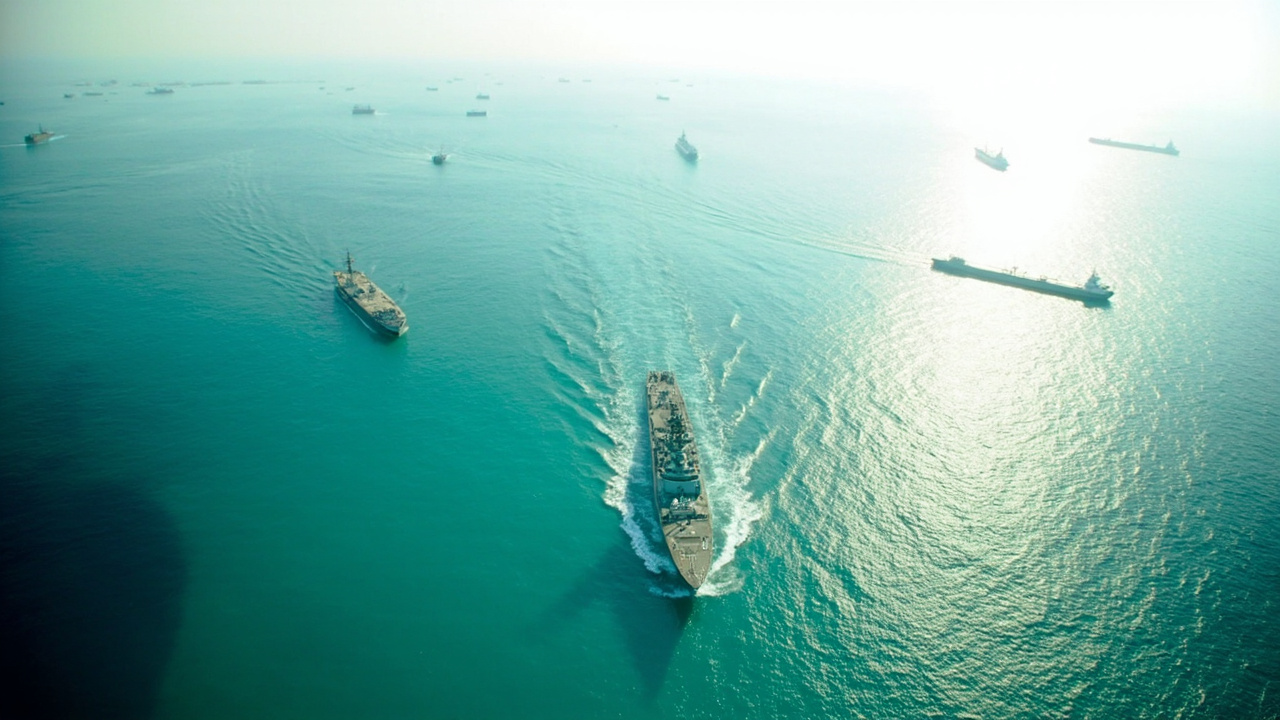
At 10:01 a.m. Eastern on Monday, the Malawi-flagged tanker Rich Starry — Malawi is a landlocked nation with no ship registry, making the flag itself an artifact of sanctions evasion — was twenty nautical miles northwest of the Strait of Hormuz, loaded with Iranian crude from Kharg Island and bound for Ningbo, China. [1] Twenty minutes later, she reversed course. Her AIS transponder showed the turn in real time to anyone with a MarineTraffic account. The first ship to test the American blockade did not require a boarding party, a warning shot, or a radio challenge. She turned because she saw what was waiting.
What was waiting, according to CENTCOM, was the blockade this paper described in Sunday's lead analysis of how Trump ordered a naval blockade during an active ceasefire and in the companion piece on how CENTCOM narrowed the president's language from the entire Strait to Iranian ports only. The enforcement began at 14:00 GMT, six hours after Trump's Truth Social post declared the Strait closed to "any and all Ships." CENTCOM's operational reality, as this paper documented, was something considerably narrower. Monday's first twelve hours confirmed that the narrower version is the one the Navy is actually running.
The Rich Starry turned. The Elpis did not.
The Elpis is a Comoros-flagged tanker, already on the U.S. sanctions list, carrying Iranian crude loaded at Bushehr. [2] She was outbound through the Strait when the blockade took effect. According to OSINT analyst Chris Rollins, the Elpis went dark on AIS for approximately two hours in the Gulf of Oman, then reappeared 0.3 knots off the coast of Pakistan, heading southeast toward the Indian Ocean. [3] She was not boarded. She was not stopped. She was not interdicted. She sailed through the blockade carrying sanctioned Iranian crude and the U.S. Navy watched her do it.
The Elpis is the story inside the story. A blockade that allows a sanctioned tanker carrying Iranian oil to transit the Strait without challenge is not a blockade in any operational sense recognizable to the San Remo Manual or the Prize Court tradition. It is a selective enforcement regime — closer to what maritime lawyers call a "pacific blockade," which historically applies only to the blockaded state's own vessels and cannot legally prevent third-party shipping from passing. [4] The distinction matters because under international law, a belligerent blockade must be effective to be legal. A blockade that lets the Elpis through is broadcasting its own ineffectiveness.
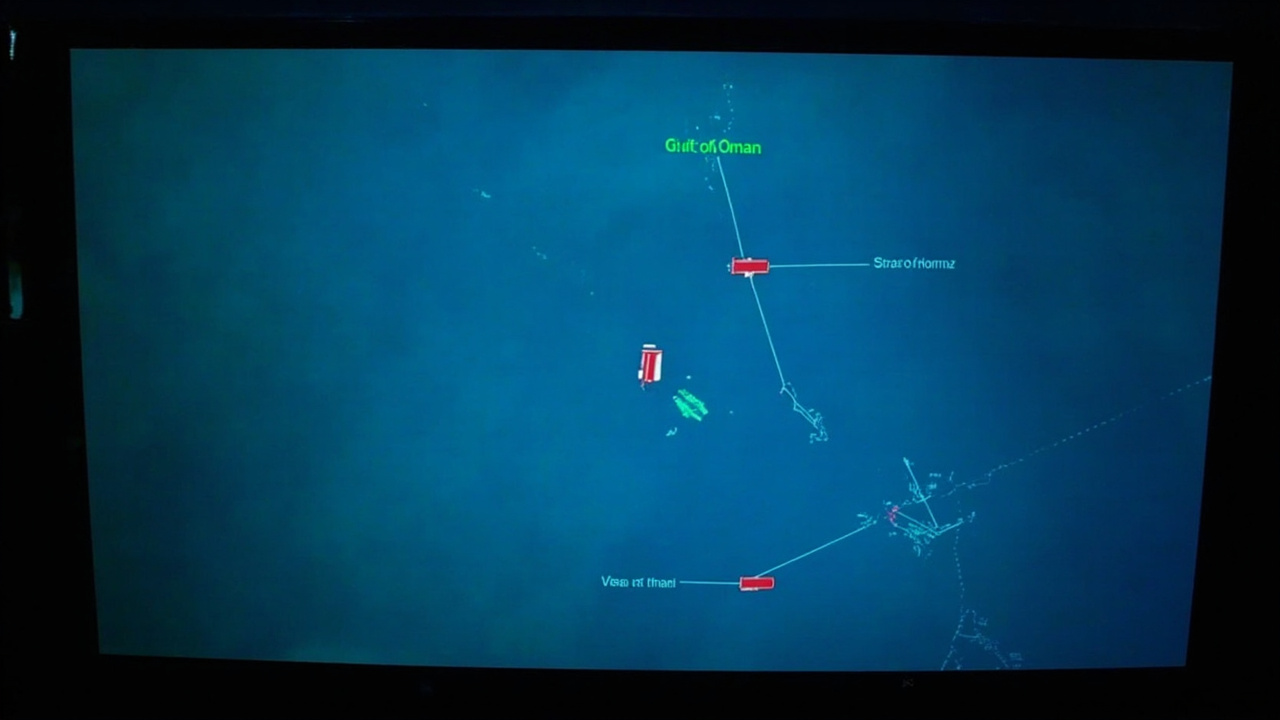
OSINT accounts turned the enforcement into a public scoreboard within hours. Shanaka Anslem Perera, an independent analyst whose thread compiled the day's ship-by-ship data, summarized the results by evening: "The blockade did not close the strait." [5] The data supported the assessment. The Rich Starry and one other tanker — the Aframax-class vessel Ostria, also loaded with Iranian crude — reversed course near the Strait's western approach. [1] But other vessels, including at least three that appeared to be carrying non-Iranian cargo, transited the Strait without incident in both directions. CENTCOM forces challenged vessels on VHF Channel 16, asked for their port of origin and destination, and waved through those bound for non-Iranian ports. [6] The United Kingdom Maritime Trade Operations confirmed that "access restrictions" were being enforced on Iranian ports specifically, language that matched CENTCOM's narrower scope rather than the president's broader declaration. [7]
The 800 ships tell the other side of the story. gCaptain reported that approximately 800 commercial vessels were "stranded or rerouted" as of Monday evening, including bulk carriers, container ships, and LNG tankers whose operators chose to hold position rather than test the blockade zone. [4] The stranding is not a direct result of CENTCOM turning ships away — most of those 800 vessels stopped themselves. Insurance companies pulled war-risk coverage for the transit. Lloyd's of London and the International Group of P&I Clubs issued notices advising members to avoid the Strait's approaches until further clarity emerged. [4] A ship without war-risk insurance is a ship that cannot legally carry cargo for most charterers. The blockade's primary enforcement mechanism, it turns out, is not the Navy. It is the insurance market.
The oil price reacted in a way that no analyst predicted. Brent crude, which had surged to $103.11 per barrel on Sunday's blockade announcement, fell to $97.42 by Monday's close — a decline of more than five percent on the first day of enforcement. [8] The drop is counterintuitive until you look at what the market actually saw. Traders expected a hard blockade. They got a selective one. The Rich Starry turned, but the Elpis sailed through. The Strait remained open for non-Iranian traffic. Saudi Arabia confirmed its East-West pipeline was operating at seven million barrels per day, providing a bypass for some Gulf production. [9] And OPEC+ members, sensing both danger and opportunity, began signaling willingness to accelerate production increases beyond the 206,000 barrels per day already scheduled for May. [8]
The price drop does not mean the blockade is benign. It means the market priced in a worse scenario than what materialized. The physical crude market — where actual barrels trade for actual delivery — still shows extreme stress. Reuters data from early April had European refiners paying near $150 per barrel for immediate delivery. [10] The futures-physical gap narrowed slightly on Monday but remained at historically extreme levels. What fell was the fear premium, not the supply premium. Traders bet that if the Navy is willing to let the Elpis through, it is willing to negotiate the blockade's edges — and edges are where prices live.
The Iranian response was simultaneously defiant and restrained. The IRGC Naval Command issued a statement reaffirming that "all traffic in the Strait is under the full control of the armed forces of the Islamic Republic," but no IRGC vessels approached the American naval formation during the day's operations. [2] No mines were deployed. No fast-attack boats made runs at destroyers. The ceasefire, which this paper has argued is simultaneously held and violated by the blockade's existence, appeared to hold in the kinetic sense even as it was being hollowed out in the legal sense.
The operational picture at the end of Day One looks like this: two tankers with Iranian crude turned back. One sanctioned tanker with Iranian crude sailed through. Approximately 800 commercial vessels held position voluntarily, most due to insurance constraints rather than naval intervention. Non-Iranian traffic continued through the Strait. Oil fell six dollars. The IRGC did not respond kinetically. And the ceasefire, which expires on April 22, held in name while the blockade undermined it in fact.
The gap between announced policy and operational enforcement — the gap this paper identified on Sunday — has now been measured in hulls and barrels. The Navy is enforcing CENTCOM's narrower blockade, not the president's broader one. It is stopping some ships and allowing others through based on criteria that have not been publicly articulated beyond the general directive to target Iranian ports. The Elpis — sanctioned, Comoros-flagged, loaded with Iranian crude — is now somewhere in the Arabian Sea, AIS transponder intermittently broadcasting, cargo intact, destination unknown.
A blockade's credibility is established in its first hours. What Monday established is that the United States is willing to deter compliant vessels with its presence but unwilling — or unable — to stop defiant ones. The Rich Starry turned because her operators calculated that the risk was not worth the cargo. The Elpis sailed through because her operators calculated that it was. Both calculations were correct. The blockade, on Day One, produced data. It did not produce dominance.
The question for Day Two is whether the data changes the calculus — whether more ships test the line now that Elpis has shown it can be crossed, or whether the insurance market's refusal to cover transits accomplishes what the Navy's selective enforcement did not. The 800 stranded ships are the leverage. The Elpis is the crack. And the six-dollar oil drop is the market's verdict: this blockade, in its current form, is negotiable.
Congress returns tomorrow. The ceasefire expires in eight days. The sanctions waiver decision comes in five. And somewhere in the Gulf of Oman, two guided-missile destroyers are clearing mines while a Comoros-flagged tanker they chose not to stop carries Iranian crude into the Indian Ocean.
-- YOSEF STERN, Jerusalem