Airgas, the largest U.S. distributor of industrial and medical gases, declared force majeure in mid-March and informed customers it would deliver no more than 50 percent of their contracted monthly helium volumes. [1] The declaration cited "supply disruptions beyond our control" — corporate language for the fact that Qatar's Ras Laffan helium complex, the world's largest, has been functionally unreachable since the Hormuz crisis began in late February. [2]
This paper reported Sunday on hospitals beginning to ration MRI schedules as helium supplies thinned. The situation has worsened. Helium spot prices have doubled in fourteen days, from roughly $350 per thousand cubic feet in late March to over $700 by April 11. [1] The price is not the primary concern. Availability is. Hospitals that can afford to pay more are discovering there is simply less helium to buy.
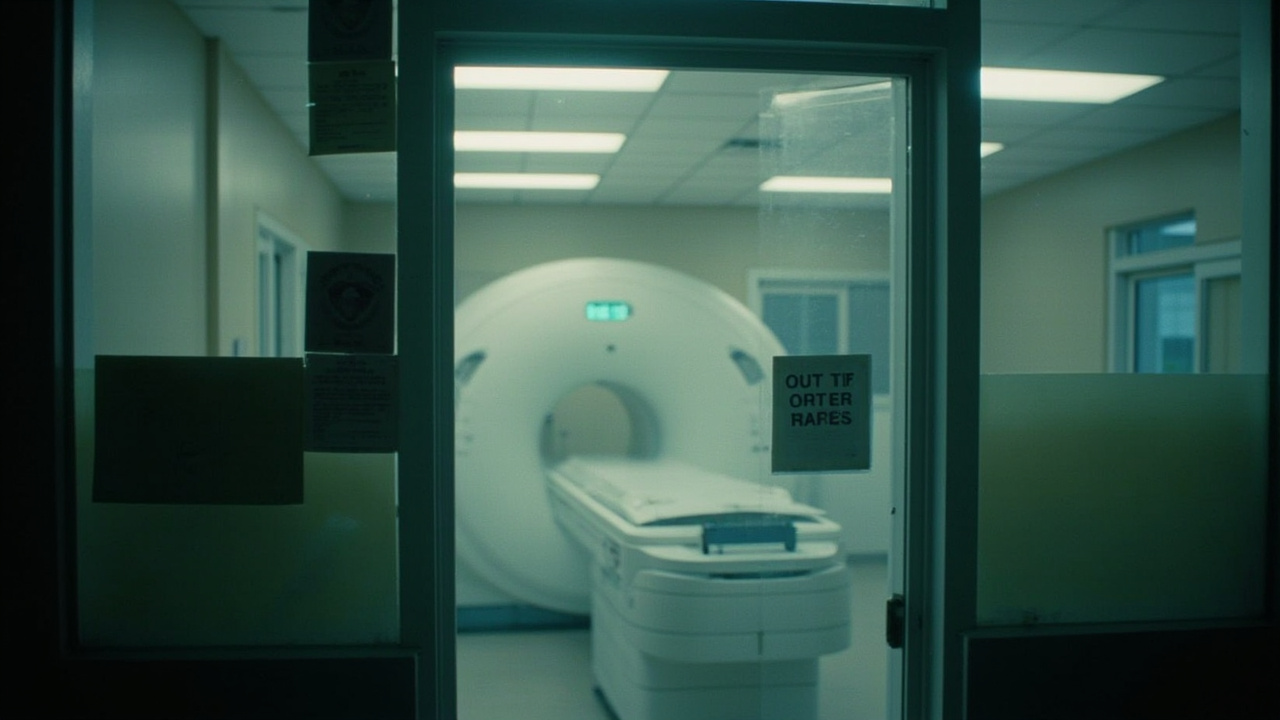
MRI machines require liquid helium cooled to minus 269 degrees Celsius to maintain the superconducting state of their magnets. There is no substitute. More than 14,000 MRI machines operate worldwide, each depending on periodic helium refills as the cryogenic fluid slowly boils off. [3] When a magnet "quenches" — loses its superconducting state — the repair cost can exceed $500,000.
Qatar normally supplies roughly 25 percent of global helium output. [1] The ceasefire announced on April 8 did nothing to reopen physical helium deliveries. Cryogenic tanker ships require specialized ports and handling; they cannot reroute the way a crude oil tanker can.
The United States lost its own strategic helium buffer in 2023, when the Federal Helium Reserve in Amarillo, Texas, completed its congressionally mandated wind-down. [4] Algeria and Russia, the other major producers, have faced their own production issues. The market entered 2026 with no slack.
Hospital systems are responding with triage protocols that would have been unthinkable a year ago. Oncology and emergency scans take priority. Routine imaging — the kind that catches early-stage cancers and guides surgical planning — is being deferred by weeks. [1]
On X, laboratory technicians at universities and semiconductor manufacturers are sharing their own force majeure letters, documenting a shortage that extends well beyond hospitals into research, chip fabrication, and aerospace. [2] The ceasefire paused the bombs. It did not reopen the shipping lanes.
-- KENJI NAKAMURA, Tokyo