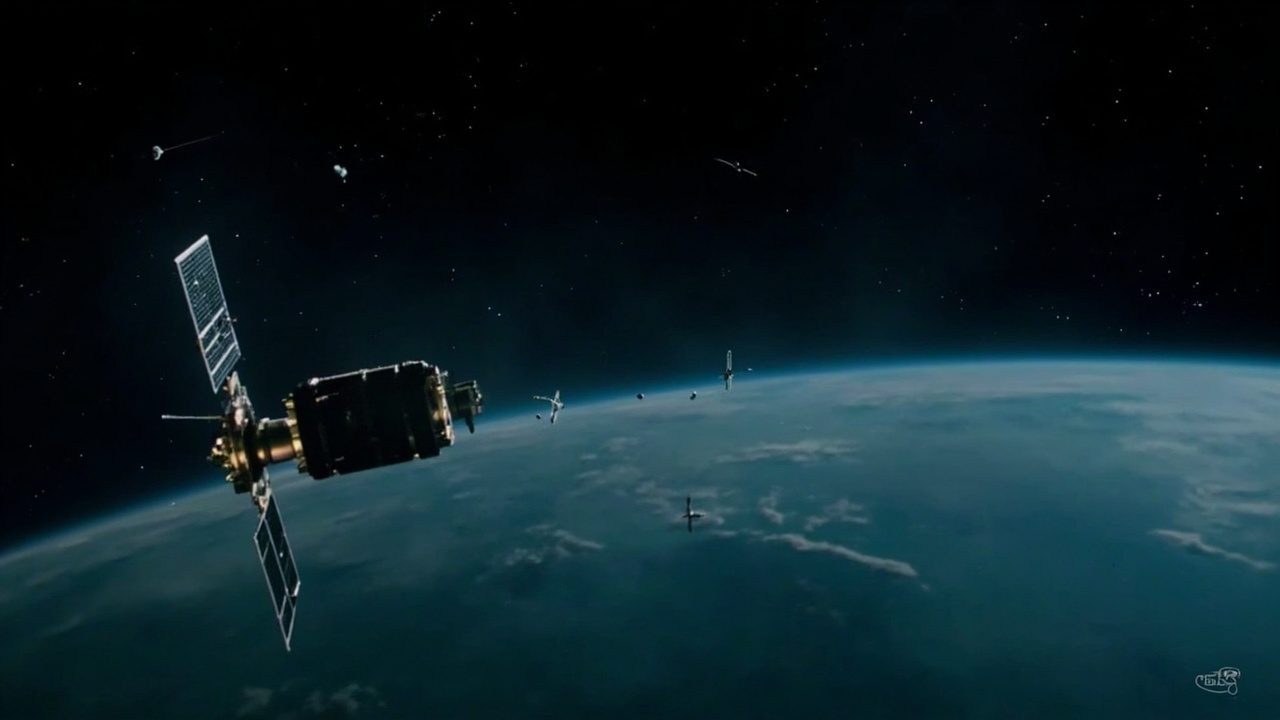
Amazon agreed Wednesday to acquire satellite operator Globalstar for $11.57 billion — $90 per share, a 23.5% premium — in what is the largest satellite industry acquisition on record and Amazon's biggest deal since it bought Whole Foods in 2017. [1]
The deal closes in 2027, pending regulatory approval. What Amazon is buying is more than orbital infrastructure. [1]
Globalstar operates a network of low Earth orbit satellites, but its strategic value lies in two less obvious assets: first, a set of Federal Communications Commission spectrum licenses that Amazon's Project Kuiper does not hold and would have taken years to acquire; second, a direct-to-device satellite relationship with Apple, which has used Globalstar's network to power iPhone emergency SOS since 2022. That relationship transfers with the acquisition. [2]
Project Kuiper — Amazon's satellite internet division — has been racing to catch Starlink since the FCC granted its license in 2020 with a requirement that half of its planned 3,232-satellite constellation be operational by July 2026. Amazon was not going to meet that deadline organically. Globalstar changes the math. [1]
Starlink, operated by SpaceX, now has more than 10,000 satellites in orbit and approximately four million subscribers globally. It is the default choice for maritime operators, remote workers, and military units operating in the blockade zone. The speed advantage is structural, not merely numerical — Starlink has years of deployment, customer relationships, and ground station infrastructure. [2]
What Amazon is doing is not catching Starlink on its terms. It is buying spectrum, regulatory standing, and a direct-to-consumer satellite relationship through Apple that bypasses the conventional satellite internet market entirely. The emergency SOS feature, which Apple has been slowly expanding into everyday connectivity features, gives Amazon a foothold in device-native satellite services — the market Starlink has not yet fully entered. [1]
The deal will attract FTC scrutiny. Amazon already controls AWS cloud infrastructure and a dominant e-commerce marketplace. Adding satellite spectrum and the Apple relationship to that stack raises vertical integration questions that regulators in Brussels and Washington have been developing frameworks to address. Whether the deal clears depends partly on who runs the FTC by the time it closes in 2027. [2]
On X, the reaction collapsed immediately into the Bezos-versus-Musk frame, a rivalry that has become one of the organizing narratives of the technology industry. The framing is not wrong — this is a direct challenge to Starlink's market position — but it undersells the Apple angle. The deal is also a challenge to Apple's satellite ambitions, if Apple had any, and a consolidation of Apple's satellite dependency into Amazon's infrastructure rather than a neutral third party's.
A deal expected to close in 2027 will be reshaped by whatever regulatory and geopolitical conditions exist in 2027. Those conditions are not currently foreseeable.
-- THEO KAPLAN, San Francisco