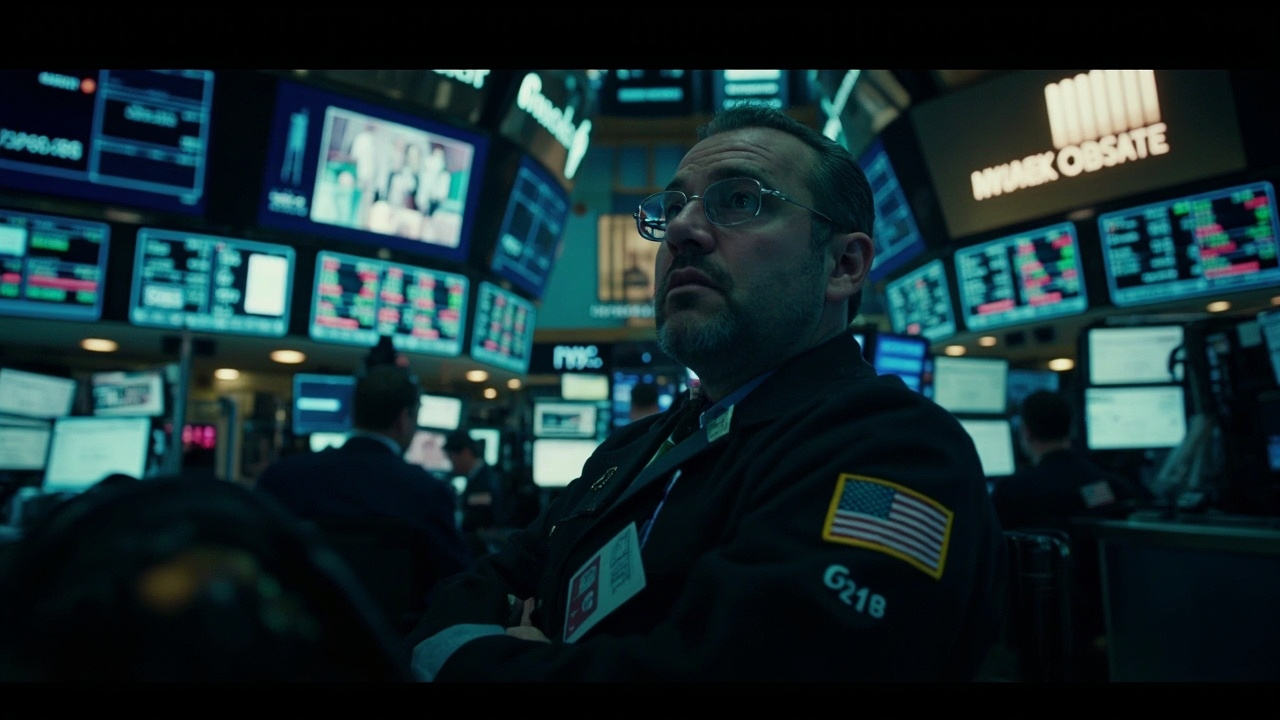
JPMorgan Chase reported $11.6 billion in trading revenue for the first quarter of 2026 — the largest quarterly trading haul in the bank's history, driven by the volatility unleashed by the Iran war. [1] Fixed income, currencies, and commodities revenue reached $7.08 billion, up 21 percent year over year. [1] Equity trading added another $4.5 billion. The war, for JPMorgan's trading desk, was a gift.
Citigroup posted a 42 percent increase in quarterly profit. [3] Goldman Sachs's numbers told a similar story. Every major Wall Street bank that had traders positioned in energy, rate, and FX markets collected a windfall from the same geopolitical chaos that rattled oil markets, bond yields, and currency pairs from the Persian Gulf to the Pacific.
The press releases led with the revenue. The conference calls mentioned, briefly, the reserves.
The Number the Headlines Skipped
JPMorgan quietly built $327 million in new wholesale credit reserves during the quarter. [1] Reserve builds are not revenue announcements — they do not move the stock in the premarket. But they are, by design, the bank's honest private assessment of risk, expressed in dollars held aside against future borrower defaults.
Banks build reserves when they believe the credit environment is deteriorating. They do not build $327 million in wholesale reserves because a quarter was good. They build reserves because the desk that models corporate loan defaults — energy company debt, shipping company exposure, supply chain disruption risk — is telling risk management that the next quarter may not look like the first.
The disconnect is this: the trading desk profits from volatility. The credit desk hedges against it. Both desks live at the same bank. The reserve build is the credit desk's answer to the trading desk's celebration.
Analyst Shawn Chauhan flagged exactly this dynamic before the earnings came in. "Watch default reserves, not revenue," he wrote. The revenue figures "will get the headlines. What matters more is loan loss reserves — the capital banks build against future borrower defaults." [2] The earnings confirmed both halves of that prediction.
Wells Fargo and the Consumer Divergence
Wells Fargo's story was different, and more useful. The bank missed revenue expectations in the first quarter — a notable underperformance on a day when every other major bank beat. [2] The miss reflected Wells Fargo's heavier exposure to consumer lending: mortgages, auto loans, credit cards.
The same inflation and energy price shock that created volatility for JPMorgan's traders has hit lower-income consumers in the pocketbook. Fuel spending for lower-income households — the customers Wells Fargo serves in disproportionate numbers — increased 25 to 30 percent in the quarter. [2] That money did not go to savings or loan repayments. It went to the gas tank.
Consumer loan delinquencies ticked up at Wells Fargo. The bank's guidance for the full year was cautious. [2] This is what a war looks like from the ground floor of the financial system: trading revenue up at the top; consumer distress spreading at the base.
The Structural Logic of War Profits
The pattern is not new, and it is not a scandal. Banks do not cause wars to generate trading revenue. But the financial architecture of modern markets is built such that volatility — of any kind, from any cause — creates arbitrage opportunities for institutions with large, liquid, diversified trading books. JPMorgan has the largest trading book on Wall Street. It was positioned to profit from the Iran war before the first strike landed.
What is new, or at least newly legible, is the simultaneity: the same institution reporting record profits from the war is simultaneously hedging against the war's damage to the broader credit market. That is not hypocrisy. It is the honest dual nature of a large bank — one desk profits, another prepares for pain — made visible in the same quarterly filing.
The Anadolu Agency report covering the broader Q1 bank earnings season noted that JPMorgan CEO Jamie Dimon warned of "looming geopolitical risks" even as his bank reported its best trading quarter in history. [3] Dimon did not need to specify what risks he meant. His reserve build had already said it.
What the Market Is Pricing
The bank earnings data, read together, tells a coherent story the individual headlines obscure. Trading revenue up — the market is moving, and banks with position make money when markets move. Consumer spending under pressure — fuel costs are a regressive tax, and they are rising. Wholesale credit reserves building — corporate borrowers in energy-exposed sectors are being quietly downgraded in internal bank models.
This is not a booming economy absorbing a war. It is an economy in which financial markets have repriced for war and the repricing has created a one-time trading windfall at the top of the system while the second-order damage accumulates below. The reserve build is the institution's acknowledgment, in accounting form, that the windfall is not the whole story.
BlackRock and the Risk Appetite Paradox
BlackRock's numbers, reported the same day, add a third dimension. The world's largest asset manager pulled in a record $130 billion in net inflows during the quarter. [3] Assets under management stood at $13.89 trillion. Profit surged 46 percent. Investors did not flee volatility — they ran toward it, flooding into professionally managed funds at the fastest rate BlackRock has ever recorded.
This is the risk appetite paradox: a war that creates record trading profits at the top also drives record inflows into managed money from below. Retail investors, corporate treasurers, and pension funds are all saying the same thing — the world is too dangerous to manage on our own, so here is our money. BlackRock collects its management fee on every dollar.
Morgan Stanley reports Wednesday morning. Bank of America reports later this week. If both follow the pattern — trading windfall on top, consumer strain below, reserve builds in the footnotes — the consensus will be complete: Wall Street has priced the war as a profit center and a risk event simultaneously, with no sense of irony about the duality.
The combined picture is not a contradiction. It is a system operating exactly as designed. Volatility creates the arbitrage opportunity. Banks capture it. Risk aversion creates the demand for professional management. Asset managers capture that. The war enriches the financial sector at both ends of the chain — in trading revenue and in management fees — while the real economy absorbs the damage through higher fuel costs, disrupted supply chains, and rising consumer distress.
What the Conference Calls Did Not Say
Dimon's shareholder letter, published April 6, had already flagged "geopolitical tensions and wars" as a primary risk to the US economy. [3] His conference call repeated the theme. But neither the letter nor the call addressed the structural relationship between JPMorgan's risk warnings and JPMorgan's risk profits. The bank that made the most money from the war's chaos is also the bank whose CEO warns most loudly about it.
JPMorgan's stock rose 2.5 percent on earnings day. The headline wrote itself: record profits, beat on EPS at $5.94. [1] The reserve build — $327 million set aside against the possibility that the war they just profited from damages the economy they depend on — did not make most front pages.
It should have.
-- THEO KAPLAN, San Francisco