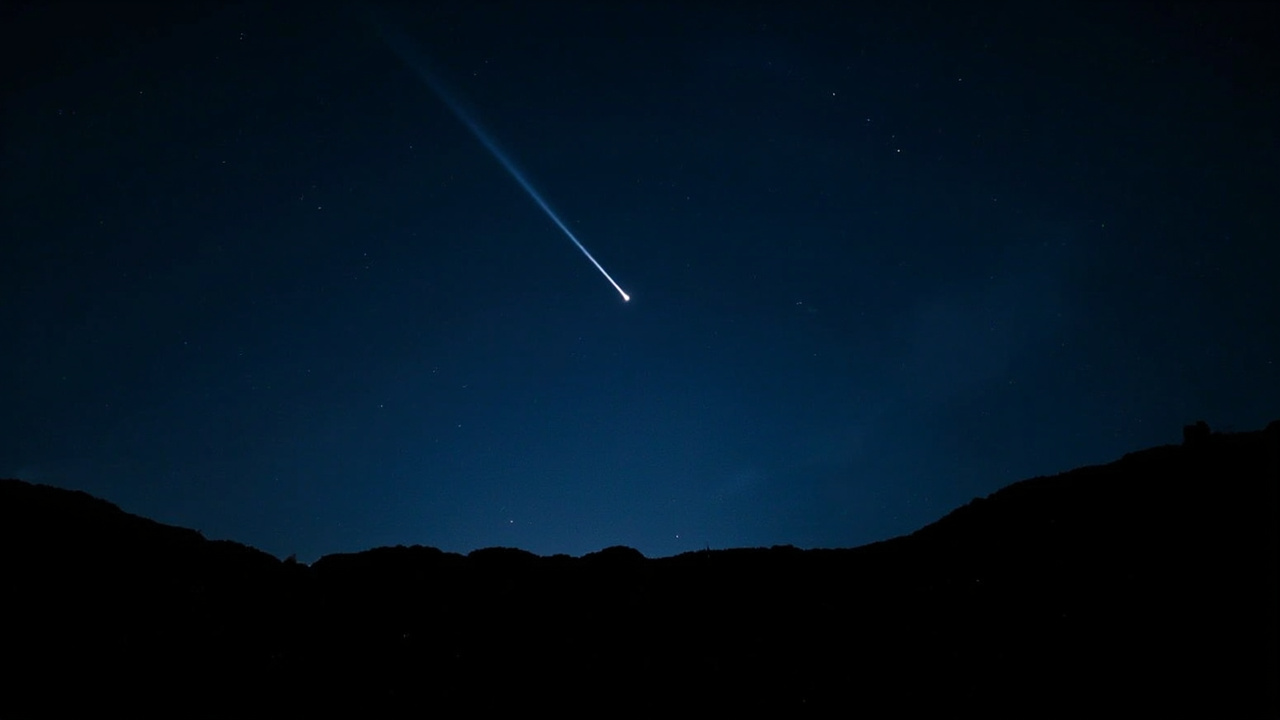
Comet C/2025 R3 PanSTARRS is visible to the naked eye this week in pre-dawn skies — a long-period visitor from the outer solar system on its first pass through the inner solar system in approximately 170,000 years [1].
The comet reached its closest approach to the Sun — perihelion — around April 20, and is currently near peak brightness as it swings through the inner solar system [1]. Current estimates place its magnitude near 2.5 under good conditions, bright enough to see without optical aid from dark-sky locations.
Viewing window: before dawn, low on the eastern horizon, from now through April 20. Binoculars will reveal the coma — the diffuse haze around the nucleus — and a short tail. The longer tail is camera-visible with exposures of 10 to 30 seconds [2].
NASA's Astronomy Picture of the Day featured PanSTARRS on April 12 — a validation for a comet that had been classified as a possible but uncertain naked-eye object as recently as March [2].
The comet's long orbital period means its composition is essentially primordial — it has not been processed by multiple passes near the Sun the way shorter-period comets have. What you see now is material that formed in the early solar nebula, preserved for 170 millennia in the cold outer reaches.
A second comet, C/2026 A1 MAPS, was expected to offer a simultaneous double feature this month but disintegrated on approach to the Sun in early April. PanSTARRS is the sole remaining act.
-- KENJI NAKAMURA, Tokyo