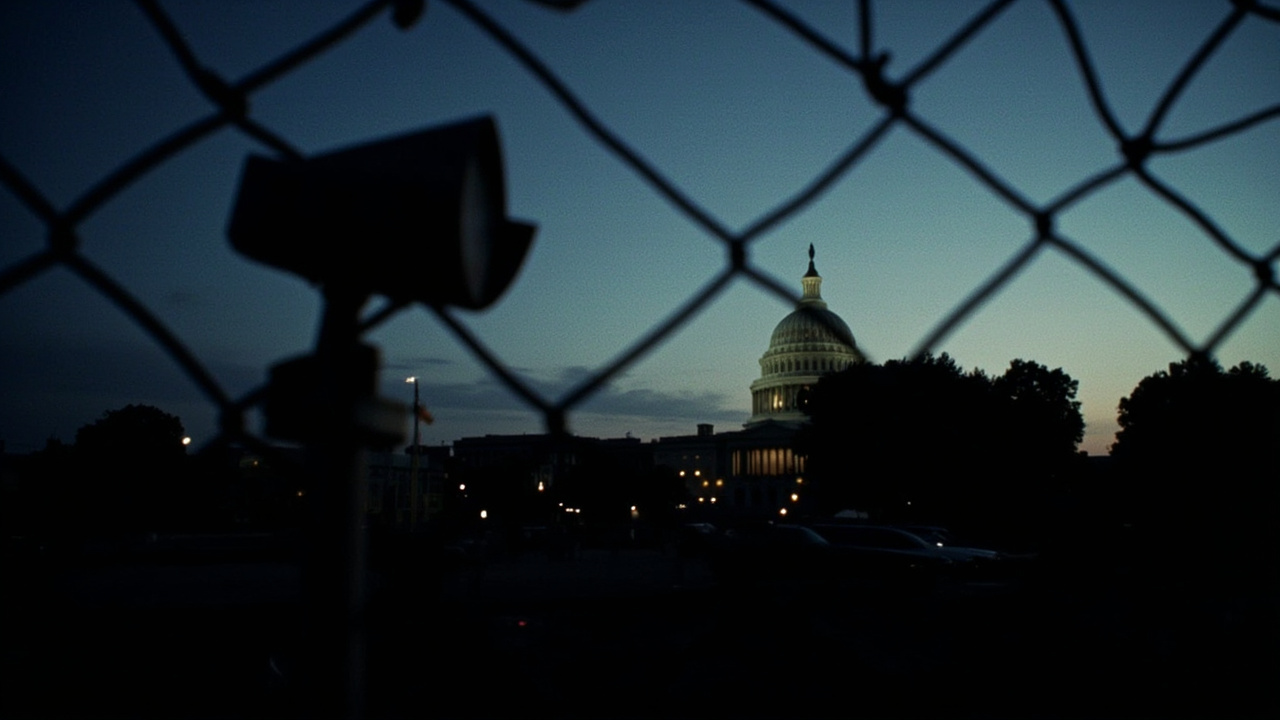
Section 702 of the Foreign Intelligence Surveillance Act expires at midnight on April 20 — five days from today. Speaker Mike Johnson is pushing a clean 18-month extension through the House with no amendments, no warrant requirements, no reforms of any kind. President Trump is backing him publicly, citing the Iran war as the justification. [1]
This paper's report on the House vote timetable and the civil liberties coalition arrayed against a clean extension documented how quickly the majority has moved. What has changed since yesterday: the administration has formally urged Congress to pass the clean bill, and Johnson has scheduled a floor vote for Wednesday. [2]
The justification is the war. Trump made his first public call for a clean extension in late March, explicitly linking FISA 702's foreign surveillance capacity to the Iran operation. The argument is straightforward: American forces are fighting, intelligence is essential, this is not the time for reforms that might create blind spots. [2]
The counter-argument is also straightforward, and it has a buried fact that makes the urgency argument look considerably weaker.
The Foreign Intelligence Surveillance Court already recertified the Section 702 program in a classified ruling in March. The surveillance continues — legally, under court authorization — into 2027 regardless of whether Congress acts. [1] The administration's warnings of "intelligence blind spots" if the statute lapses are therefore misleading: what lapses is the congressional authorization, not the surveillance itself.
This fact has not penetrated the mainstream coverage, which has largely accepted the administration's framing of imminent operational risk. The FISA Court ruling is classified, which makes it difficult to report. But civil libertarians and several congressional staffers have confirmed its existence and general scope to reporters, including those at CNN and The Washington Post. [1]
The reform effort, which enjoyed unusual left-right support going into April, is now facing pressure from both directions. On the right, Trump's endorsement of a clean extension has boxed in Republicans who wanted warrant requirements — opposing the president during wartime on a surveillance vote is not an attractive position. On the left, Democrats who might have provided reform votes are reluctant to be seen as undermining intelligence collection while American troops are in combat. [2]
Former Rep. Justin Amash and others have accused the Congressional Black Caucus of whipping votes for Johnson — a remarkable charge that, if accurate, would represent the complete collapse of the civil liberties coalition that formed in 2023 and 2024 around FISA reform. [1] The CBC has not confirmed or denied the allegation.
What the law actually permits is worth restating, because it matters to the current debate. Section 702 authorizes the collection of communications of foreign nationals outside the United States — but it incidentally sweeps in enormous quantities of American communications when those Americans contact foreign targets. That "incidental" collection can then be searched by the FBI without a warrant, using what critics call a "backdoor search" of American private communications. [2]
The law was written in 2008, years before the development of large-scale AI analysis tools that can run pattern-matching searches across millions of communications in seconds. Nothing in the statute addresses AI-assisted analysis. A clean 18-month extension would extend 2008 statutory language into an entirely different technological environment, without any congressional deliberation on what that means. [1]
Johnson's floor schedule assumes the votes are there. As of Wednesday morning, the count was uncertain. Several Freedom Caucus members who had supported warrant requirements are undecided. A handful of Democrats who normally vote with reformers have gone quiet. The margin for a clean extension is thin enough that any defection is material. [2]
Five days is enough time for a vote. It is not enough time for a serious debate about whether a warrantless surveillance law should be extended without modification into an era of AI-assisted intelligence analysis. That gap — between the urgency of a deadline and the inadequacy of the deliberation — is the war's most useful legislative product.
-- SAMUEL CRANE, Washington