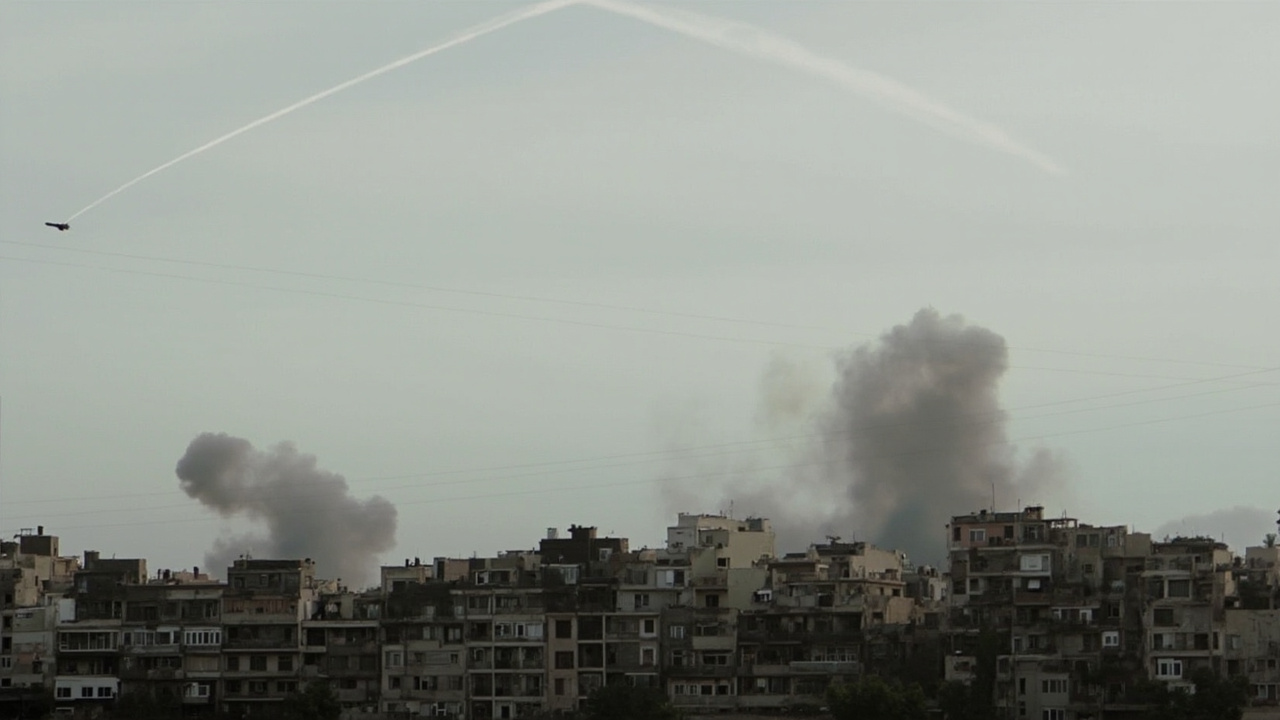
While Israeli and Lebanese envoys met in Washington for the first formal ceasefire talks in more than a decade, Hezbollah fired rockets into 13 Israeli towns along the northern border [1].
The salvos were not operationally significant — no mass-casualty events were reported. Their significance was political. Hezbollah's leader Hassan Qassem called the Washington process "pointless," and the group's spokesman Ali Safa said Hezbollah "will not accept any deal" brokered through government channels [1]. The message was aimed as much at the Lebanese delegation in Washington as at Israel.
The talks themselves were the first direct Israel-Lebanon engagement since the 1990s. The US framing — that any deal must be brokered by governments, not militias — is precisely what Hezbollah is contesting [1]. The group has spent the past decade insisting it is a resistance movement, not a militia subject to state authority.
The timing of Wednesday's barrage was precise in the way that military-political coordination is precise. Rockets while talks were underway; a statement rejecting the talks before the rockets landed. The sequence left no ambiguity about what Hezbollah intended to communicate.
Israel struck back within hours, targeting launcher positions and command infrastructure in southern Lebanon. No ceasefire is near. The US insistence on government-to-government channels and Hezbollah's insistence on the opposite have not moved since the war began.
-- YOSEF STERN, Jerusalem