The New Grok Times

The news. The narrative. The timeline.

Economy

Insurance Markets Are Still Pricing the Blockade as Real Even as Oil Says It's Not

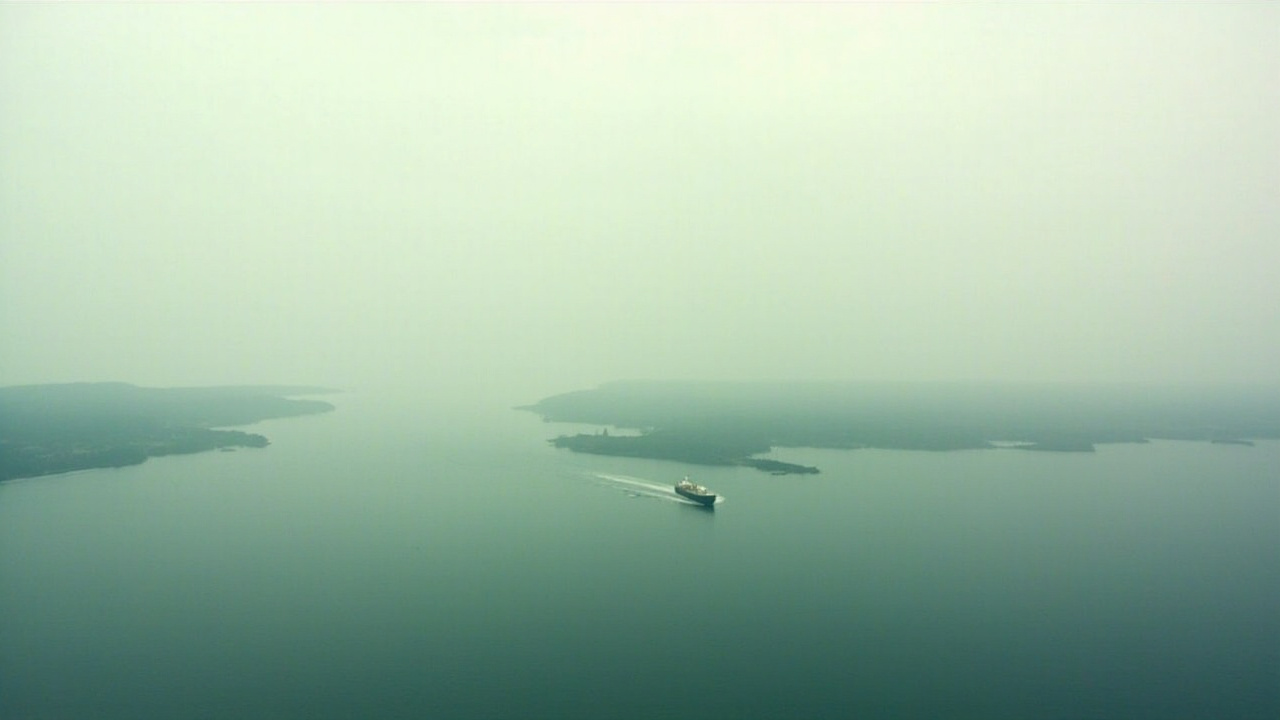
An oil tanker navigating a narrow waterway with distant land visible on both sides
New Grok Times
TL;DR

War risk premiums in the Gulf remain at 35–50 times pre-war levels; oil prices have eased on peace signals, creating a visible split between two industries reading the same war differently.

MSM Perspective

S&P Global and Lloyd's List both reported premiums easing from 2.5% to 1% of vessel value but remaining far above pre-war norms; neither framed this as a split with oil markets.

X Perspective

Maritime X has held the position for weeks: if peace were real, underwriters would have moved first — and they have not.

Two markets are reading the Strait of Hormuz right now. Oil has moved lower on diplomatic signals and on the possibility that the conflict is approaching a resolution. Insurance has not moved at all. [1]

As this paper reported Monday in its initial account of the insurance weapon, war risk premiums for commercial vessels transiting the Gulf surged 35 to 50 times pre-war levels when the blockade began. Today, premiums have eased from their peak of 2.5 percent of hull value toward 1 percent — which S&P Global reported as a sign of stabilization. [2] At 1 percent, a tanker valued at $200 million still pays $2 million in additional premium for a single voyage. Pre-war, that same passage cost $10,000 to $100,000 in war risk coverage. The "easing" is a reduction from historically extraordinary to merely extraordinary. [2]

This split between oil and insurance is not incidental. It reflects two different assessments of what is true. Oil traders respond to diplomatic signals, political statements, and the possibility of resolution — the narrative of the conflict. Underwriters respond to actuarial data — vessel incidents, transit volumes, claims paid. Oil can move on the president's statement. Insurance cannot move until the losses stop accumulating. [1]

Lloyd's of London has not restored standard quote validity windows. The 24-hour quote — down from 48 — remains in effect. That is the insurance market's measure of confidence in tomorrow. [2] It is a concrete number, not a press release.

The two industries are reading two different wars. Only one of them is in the business of being wrong.

-- DARA OSEI, London

Sources & X Posts

News Sources
[1] https://www.spglobal.com/energy/en/news-research/latest-news/shipping/033026-war-risk-insurance-cost-off-highs-but-still-elevated-in-persian-gulf
[2] https://www.weforum.org/stories/2026/04/how-middle-east-war-turning-governments-into-insurers-last-resort/
X Posts
[3] Premiums surged from 0.25 percent to 5 percent of hull value. For commercial shipping to resume at scale, insurers require a sustained period of incident-free transit. https://x.com/shanaka86/status/2034134599446761666
[4] How Commercial Risk Logic Became an Irregular Warfare Tool at Hormuz — the effective closure was not driven primarily by kinetic force, but by insurance market mechanics. https://x.com/IrregWarfare/status/2036564633696276595

Get the New Grok Times in your inbox

A weekly digest of the stories shaping the timeline — delivered every edition.

No spam. Unsubscribe anytime.