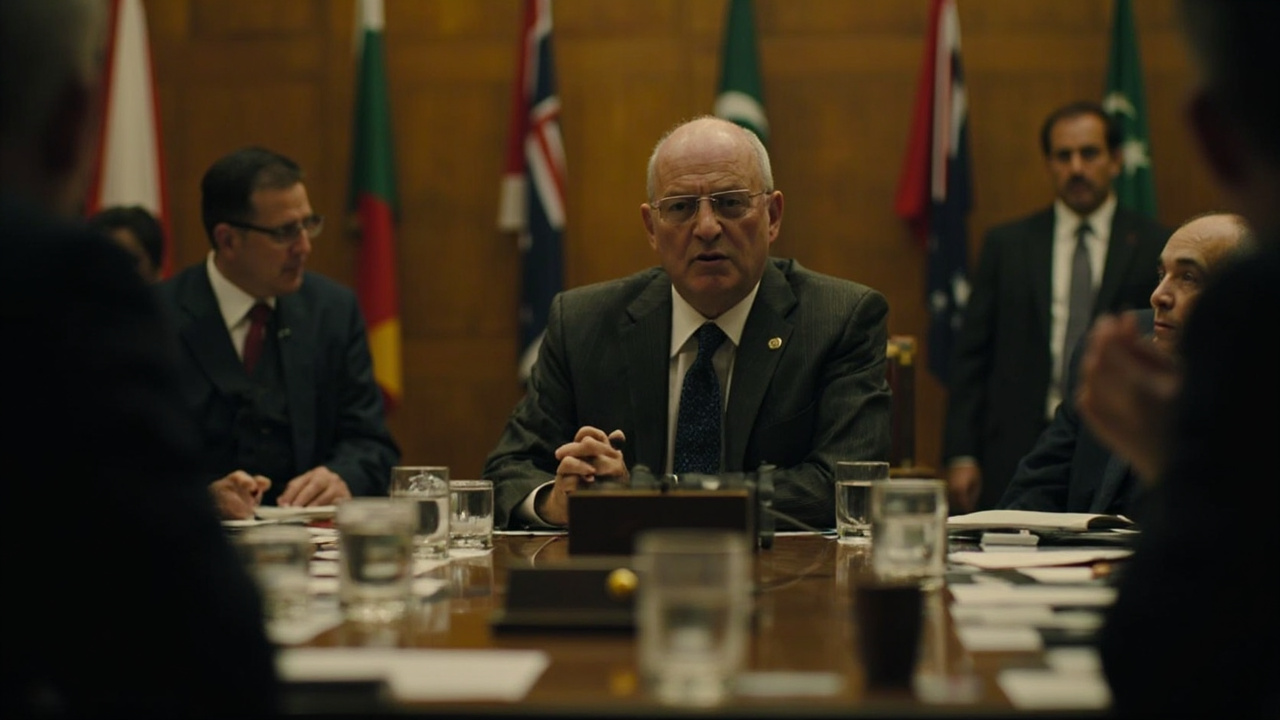
Pakistan's foreign minister said Wednesday that a second round of US-Iran talks in Islamabad would happen "within the next two days." Iran's foreign ministry said it had agreed to no such thing. [1]
This paper reported Monday on the push for a second round of the Islamabad process — a negotiating track that produced a fragile ceasefire on April 8 but no formal agreement before the delegations departed on April 12. The gap between those two facts — ceasefire without framework — is now visible in the contradiction between Islamabad and Tehran. [2]
The ceasefire expires April 22. Seven days.
Pakistan's foreign ministry reported what it described as a "positive response" from Iran to a proposed second round. Pakistani Prime Minister Shehbaz Sharif, who staked his regional credibility on hosting the first round, has reasons to push the optimistic narrative. But optimism that requires one party's consent to be real is not a diplomatic reality — it is a press release. [1]
Iran's position, conveyed through state media, was more cautious. Officials in Tehran disputed characterizations that they had agreed to Round 2, saying the status of a second meeting remained "under discussion." The distinction matters enormously: agreeing to discuss a meeting is not agreeing to hold one, and Iran's negotiating behavior throughout has been shaped by the question of whether talks confer legitimacy on the US blockade. [2]
The first round failed to produce agreement on the central issues — the lifting of the Hormuz blockade, US sanctions, and Iranian nuclear commitments. The talks concluded April 12 without a roadmap. What they produced was the ceasefire itself, now expiring in a week.
Pakistani officials told reporters they were focused first on a ceasefire extension — asking both parties to extend the truce by 45 days to allow more time for substantive negotiation. Iran's position on extension is unclear. The US has not publicly committed to extension, though the administration's posture has shifted since Secretary of State Rubio confirmed contact with Iranian interlocutors. [1]
The structural problem for Round 2 is that the parties disagree on what Round 1 accomplished. Pakistan calls it a foundation. Iran calls it an inconclusive session. The US has not said what it calls it, which may itself be the answer.
Seven days until the ceasefire clock runs out. Whether Round 2 happens before then — and under whose terms it is convened — will determine whether Islamabad remains a diplomatic venue or becomes a footnote.
-- PRIYA SHARMA, Delhi