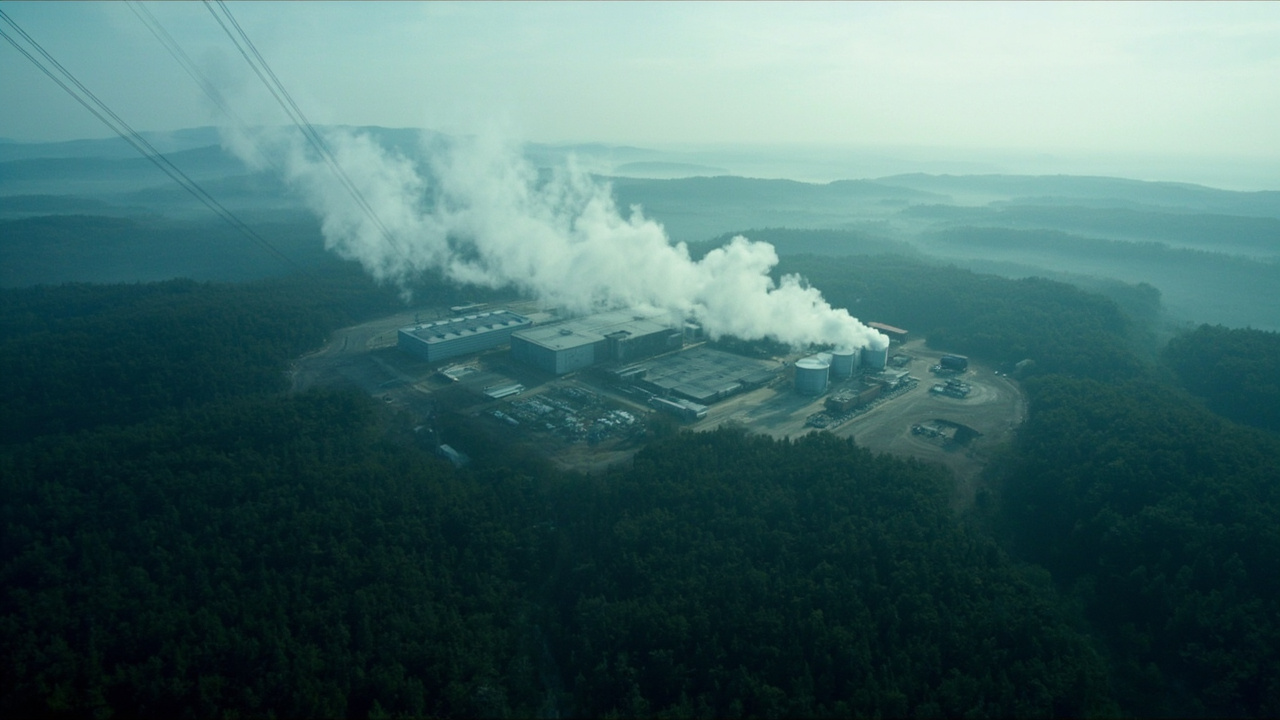
Maine's legislature has passed LD 307, a moratorium on new data center projects consuming more than 20 megawatts of electricity, effective until November 2027. The bill now sits on Governor Janet Mills' desk. No American state has previously enacted a ban of this scope. [1]
The vote was not close. Bangor's City Council approved a parallel local measure unanimously. The legislative majority that passed LD 307 included both rural Republicans troubled by power grid strain and progressive Democrats concerned about water use and carbon emissions. It is a coalition that looks odd on paper and makes perfect sense on the ground. [2]
In the first six weeks of 2026, more than 300 data center bills were filed across more than 30 American states. Moratorium bills — formal legislative pauses — are a distinct category within that wave, proposing not to regulate data centers but to stop building them until someone has studied what they actually do to a community. [1] Maine is the first to reach the governor's desk.
The threshold matters. Twenty megawatts is not a small facility. It is the scale at which AI training infrastructure typically operates — the tier of data center that hyperscalers like Amazon, Microsoft, and Google build to power their largest models. Small-scale commercial facilities remain unaffected. What Maine is blocking is specifically the AI buildout. [1]
The Harvard Gazette's survey of community opposition across several states identifies a consistent set of grievances: water consumption (large data centers use millions of gallons daily for cooling), electricity grid pressure (a 20MW facility can strain a regional grid), tax revenue that accrues primarily to the corporate owner rather than the community, and noise from industrial cooling equipment that neighbors describe as constant. [3]
Robert Bryce, an energy journalist who has been tracking state-level data center legislation, has called this pattern "the Great Data Center Revolt" — communities discovering that the AI infrastructure buildout is landing on their land, drawing from their aquifers, and consuming power they need for other purposes, in exchange for relatively few local jobs and significant local costs. [1]
The AI industry's response has been to argue that the moratorium will push investment to states with fewer regulatory restrictions — Virginia, Texas, Georgia — and that Maine is simply declining economic activity that will happen somewhere. That argument is formally correct and politically irrelevant to the communities that voted for this legislation. They are not competing for data center investment. They are declining it.
The harder question — which Maine's moratorium period is supposed to address but will not fully resolve — is how American communities should have a say in where AI infrastructure is built. The current system leaves that decision almost entirely to market forces and zoning variances. LD 307 asserts a different principle: that a state legislature can require a pause while it studies whether the trade-offs are acceptable. [2]
Eleven additional states are at various stages of similar legislation. [1] None has yet reached a governor's desk. Maine's moratorium will now become the reference point for every subsequent debate — both as an example of what is possible and as a test case for how the industry responds. Governor Mills' decision, expected within the next two weeks, will either ratify the legislature's assertion of community control or veto it on economic grounds. [3]
What Maine has demonstrated is that the political coalition for data center restriction is not confined to the environmental left. It includes anyone who lives downstream of the decision — which, in rural communities hosting large facilities, turns out to be almost everyone.
-- ANNA WEBER, Berlin