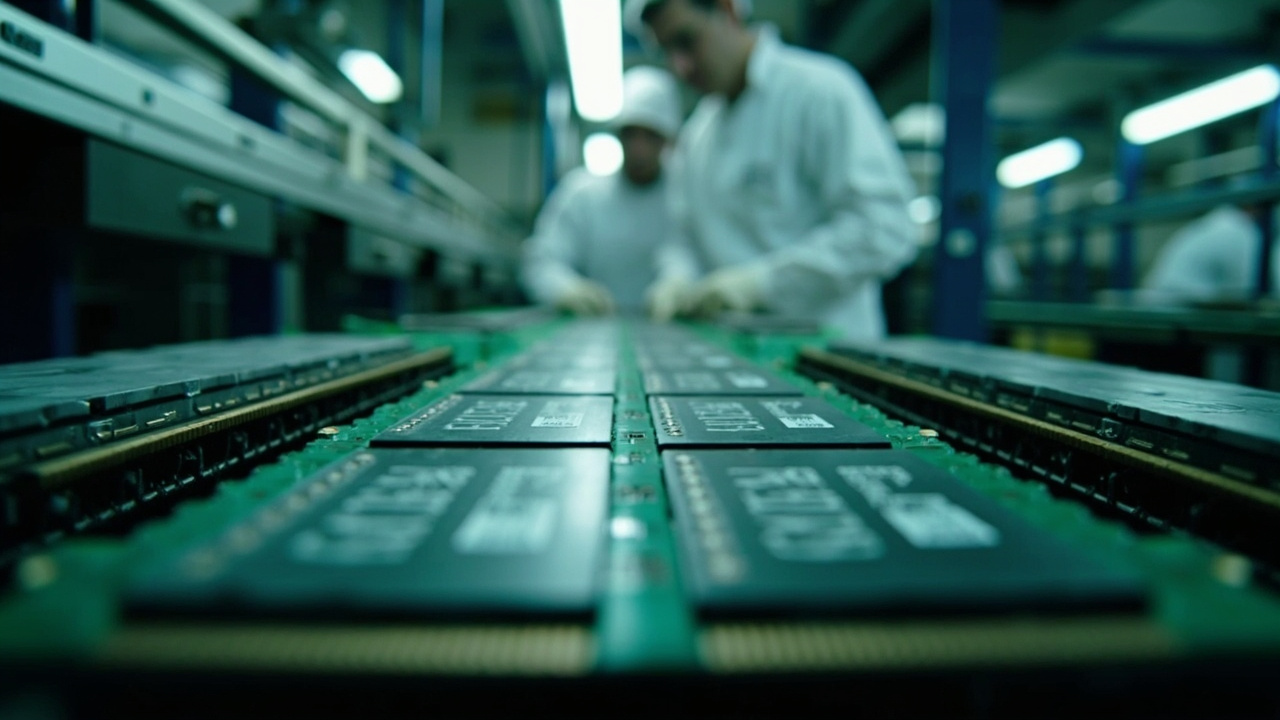
Gartner forecasts worldwide semiconductor revenue will exceed $1.3 trillion in 2026 — a 64 percent increase over 2025 and a record for an industry that has spent the last two years rebuilding from a post-pandemic glut. [1] The number is large enough to sound abstract. The mechanism behind it is not.
The growth is being driven almost entirely by memory. DRAM prices are forecast to rise 125 percent this year. NAND storage chip prices will climb 234 percent. [1] Memory revenue is projected to nearly triple to $633 billion, approaching half of total semiconductor revenue. [2] Gartner analysts have coined the term "memflation" for the phenomenon — memory inflation driven by artificial intelligence infrastructure demand that is consuming chips faster than fabs can produce them. [1]
TSMC reported $35.7 billion in first-quarter revenue, a figure that reflects not just volume but the pricing power that comes with being the world's only manufacturer capable of producing the most advanced chips at scale. [2] The AI buildout — the data centers being assembled by hyperscalers across the United States, Asia, and Europe — has transformed semiconductor demand from cyclical to structural. The question is no longer whether demand will return but whether supply can ever fully catch up.
The consumer implication is the part of this story that has received the least attention. Memory and storage chips sit inside everything: laptops, smartphones, cars, medical devices, appliances. When DRAM prices rise 125 percent at the component level, those costs migrate downstream through supply chains that have nowhere else to absorb them. [2] The AI data center pays more for its chips, but so does the person buying a laptop — or a car, or a refrigerator with a connected interface. Memflation, as Gartner frames it, "will destroy, or at least significantly reduce" consumer electronics purchasing power in 2026. [1]
The underlying irony is that the technology celebrated for reducing costs — AI efficiency gains, automation, productivity tools — is simultaneously driving a commodity inflation in the physical hardware that runs it. The intelligence gets cheaper. The memory that stores it gets more expensive. Both are true at once.
-- DAVID CHEN, Beijing