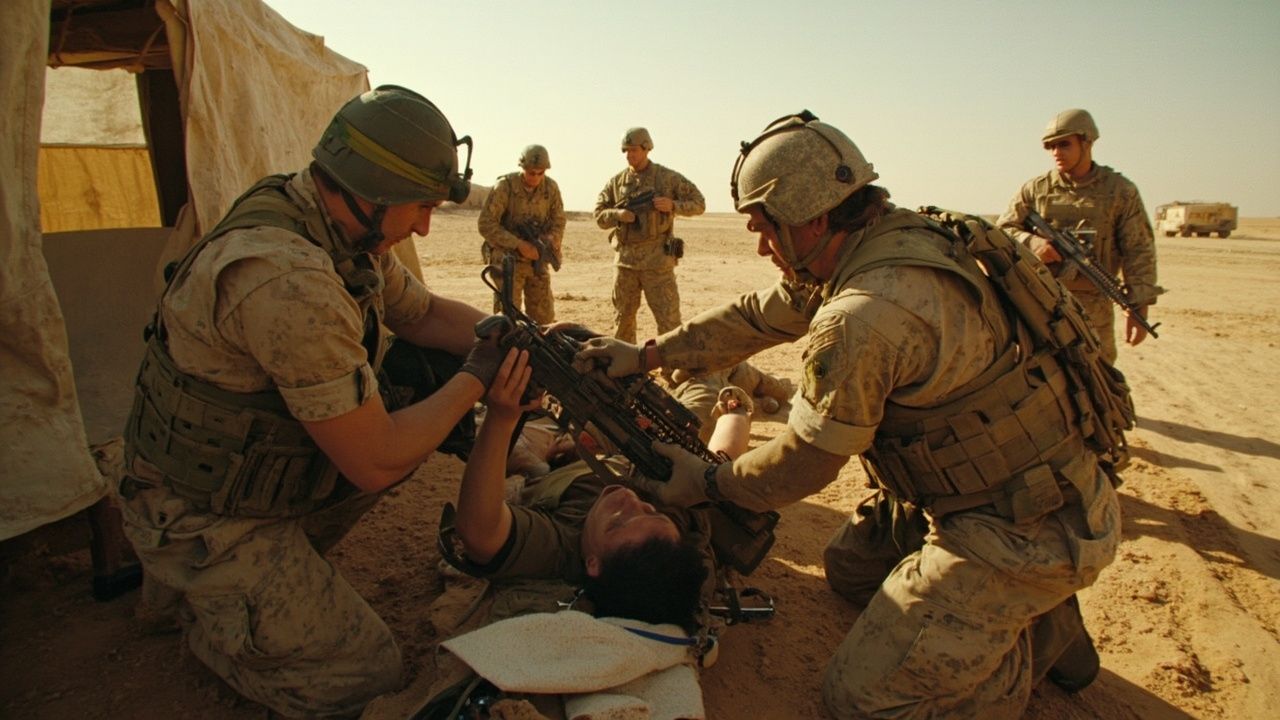
US Central Command's casualty database for Operation Epic Fury shows 399 wounded in action and 13 to 15 killed in 47 days of combat. Of the wounded, 354 have returned to duty. [1] That last figure is doing significant rhetorical work in official communications — it converts a number that suggests a grinding attritional conflict into something that sounds more like a clean, manageable operation.
The numbers themselves are not hidden. They appear in CENTCOM's operational updates, in Newsweek's Iran war liveblog, in Military.com and Military Times' dedicated tracking. [1] What is absent is the front-page treatment. No major American broadcast network has led with the casualty count as a standalone story. No major newspaper has put the 400-wounded figure in a headline. The Times of India ran a segment asking "America Hiding Losses?" [2] That framing originated abroad.
Compare this to the early months of Iraq and Afghanistan. The first 400 US wounded in Operation Iraqi Freedom in 2003 generated extensive dedicated coverage — wall-to-wall reporting on military hospitals, veterans' organizations, rehabilitation programs, the mechanics of modern trauma care that allowed soldiers to survive wounds that would have killed them in previous wars. The coverage was not anti-war by design. It was war coverage, which includes what war does to the people fighting it. [1]
The difference in 2026 is not primarily about media hostility to the story. It is about media structure, audience segmentation, and the specific editorial conventions that developed around the Iran war's early framing as a quick, decisive operation. When the initial narrative is speed and precision, casualty reporting requires editors to make an active decision to swim against the current. Most have not made that decision. [2]
The Pentagon's messaging reinforces this. CENTCOM emphasizes the 354 who returned to duty, the surgical precision of the strikes, the degradation of Iranian military capacity. The 399 wounded figure appears in data releases but is not what the Pentagon's spokesperson leads with. What the Pentagon leads with is operational success. [1]
The Times of India's framing — "America Hiding Losses?" — is imprecise. The numbers are available. What is happening is not concealment but omission: a systematic choice by most large American media outlets to not make the casualty count the organizing fact of their war coverage. The effect on the audience is similar to concealment, even though the mechanism is different. [2]
Military.com, Military Times, and Defense Scoop have all published dedicated casualty-count pieces. Their readership is primarily active duty, veterans, and defense community families — exactly the population with the strongest interest in the numbers. The civilian news audience, which consumes the war through the lens of strategy, geopolitics, and economic impact, encounters the casualty count as a secondary data point in a live-blog scroll, if at all. [1]
The 354 returned to duty is worth examining more closely. Returned to duty means medically cleared for operational activity. It does not mean uninjured. Traumatic brain injuries — which CENTCOM's own data identifies as the primary wound type from Iranian drone and ballistic missile strikes at Prince Sultan Air Base — are often invisible on initial assessment and debilitating over months. Many soldiers who return to duty after mild TBI develop chronic symptoms that don't manifest until they are out of the operational theater. [1]
At 47 days, Operation Epic Fury's casualty rate is running significantly lower than comparable periods in Iraq and Afghanistan, partly because of advances in body armor and combat medicine and partly because the conflict has not yet involved sustained ground combat. The blockade phase, which began Monday, changes the operational environment in ways that may alter that rate. [2]
The question of whether 399 wounded constitutes a large or small number in the context of a significant military operation has no neutral answer — it depends entirely on what one thinks the operation is for and whether one thinks the cost is proportionate to the objective. What should not require a value judgment is whether the number deserves to be in the headline.
-- SAMUEL CRANE, Washington